

For years, my family planned our finances around irregular payments because the money took days to arrive due to “processing times,” and to create a buffer, extra money was sent.
Then, the situation changed as transfers became faster and more reliable; something deeper changed. Families like mine didn’t just gain convenience; we gained control. We could plan with greater confidence and accuracy. This reshaped how households like mine plan, support one another, and prepare for the future.
It didn’t stop with mine. I spoke with five real families to understand how faster transfers changed how they plan.
1. My Son’s Tuition Didn’t Have to Wait
I usually had an unplanned calendar. When my son was accepted to a university abroad, the tuition deadlines terrified me more than the tuition itself. I’d send transfers three or four days early, just in case. I’d call the bank to confirm. I’d screenshot everything. I’d lose sleep waiting for confirmation.
Then our bank introduced instant transfers. The first time I used it was during his second semester. We were short on time because his financial aid adjustment came late. I remember sitting at my kitchen table, hands slightly shaking, entering the amount. I pressed “Send.”
Within seconds, he texted me: “Got it! Thanks”
This changed things. When he had to pay for things unexpectedly, I didn’t have to dip into emergency savings days in advance. I could keep funds where they were earning interest until the exact moment he needed them.
It’s not just faster money. It’s calmer planning. We’ve stopped planning around fear of delay and started planning better.
2. My Parents Don’t Have to Wait for Help Anymore
I send money to my parents every month. They live in a small town, and for years, I relied on traditional transfers that took two or three days to arrive.
Once, when my dad urgently needed some funds for medicine, I transferred the money immediately, but it didn’t arrive until after the weekend. I felt helpless, knowing the money was “in transit” yet unusable.
Now I use real-time payment apps. Last week, there was a family emergency. My mom called me, sounding worried but trying not to show it. I opened my phone, sent the money instantly, and stayed on the call.

“Check your account,” I said. She paused. “It’s here already.” I never felt any better. Now, transfers are instant, and I no longer over-send “just in case.” I have set a monthly budget, and when emergencies arise, I can respond within minutes. It makes me feel good.
3. We Finally Split Expenses Without Stress
When my sister and I started managing our aging mother’s expenses together, things got complicated. She would pay for foodstuff and prescriptions; I’d cover utilities and home care. Then we’d “settle up” at the end of each month, but bank delays meant our balances were always slightly off. Sometimes she’d say, “Did you send it?” and I’d reply, “Yes, it’s probably pending.” Pending became our least favorite word.
Once we both switched to instant transfers, everything changed. Now we transfer exact amounts on the same day expenses happen. We track everything in a shared spreadsheet, and the numbers match immediately. We stopped building buffer amounts to cover timing mismatches. Instead of rounding up by a few hundred “to be safe,” we send exact figures. That precision helped us budget more for long-term care planning.
4. Our Emergency Fund Finally Feels Strategic
I run a small business, and my income fluctuates. My wife and I used to keep a large chunk of money sitting idle in our account because we don’t know when we will need it.
If payroll hit before a client payment cleared, we needed a cushion. If a big bill came in early, we needed a cushion. Now, with faster interbank transfers, we manage money better.
Last month, when our car broke down unexpectedly, we transferred from our high-yield savings instantly and paid the mechanic on the spot. We restructured our emergency fund. Instead of keeping everything in a single low-interest account, we spread funds across higher-yield options, knowing we can access them at a moment’s notice.
5. We Plan Big Moments Differently Now
When my daughter chose a destination wedding, we knew the logistics would be complicated. Vendors wanted deposits quickly. Exchange rates fluctuated. We were coordinating across time zones.
In the past, international transfers took days and came with uncertainty. We would send money early and hope it cleared before deadlines, but now, using modern real-time and near-real-time cross-border services, we could move funds almost instantly.
When the venue requested a final adjustment due to changes in guest count, we transferred the balance the same day. Confirmation arrived within minutes, and because transfers were fast, we didn’t pre-fund everything months in advance. We kept the money invested until payments were due. That flexibility helped us manage cash flow without sacrificing returns.
One thing this saved us was stress. You can imagine what it’s like to manage logistics for a destination; it was such a stress reliever.

How Faster Transfers Changed How Families Plan
With the families, the biggest change wasn’t speed alone; it was control. Speed is just the surface benefit. What truly changed for families was the ability to decide when money moves, where it sits, and how it works for them. That shift, from waiting to directing, reshaped how households think about planning.
Reduced the Need for Oversized Cash Buffers
Before instant transfers, families often kept extra money sitting idle in checking accounts “just in case.” With faster transfers, families no longer have to overfund low-interest accounts simply to manage timing gaps. Money can stay in higher-yield savings, investments, or dedicated goal accounts until the exact moment it’s needed.
Allowed More Precise Budgeting
When transfers take days, budgeting becomes approximate. Families round up. They pad numbers. They delay reimbursements.
Instant settlement allows for real-time adjustments. Shared expenses can be reconciled the same day. Emergency costs can be covered immediately. Transfers between accounts reflect actual balances instead of pending estimates.
Improved Family Collaboration
Money delays often create friction. When transfers are instant, those conversations disappear. Shared financial responsibilities become smoother.
Faster movement reduces miscommunication. Everyone sees the same numbers at the same time. Decisions can be made collaboratively.
Enabled Quicker Emergency Response
Medical needs, home repairs, car breakdowns, and travel disruptions demand immediate action. Faster transfers mean families can respond within minutes, and this responsiveness can prevent late fees, service interruptions, or additional borrowing. It also reduces the need to rely on high-interest credit simply because liquid cash is “in transit.”
Increased Confidence in Financial Planning
When money moves predictably and immediately, long-term planning becomes normal.
Families feel more comfortable in keeping funds invested longer, automating savings goals, managing irregular income streams, and coordinating cross-border obligations
Faster transfers reduce friction, and reduced friction builds confidence.
Signup Accrue For Fast Transfers Around Africa & the US
The real transformation in these stories was about eliminating uncertainty: families knew that when they pressed “send,” support arrived. Plans don’t stall, emergencies don’t wait, and opportunities aren’t missed because funds are “processing.”
That’s where Accrue comes in.
Accrue enables faster, reliable transfers across Africa and the United States, bridging continents without the delays that used to define cross-border payments. Are you paying tuition, family support, and business payments? Accrue helps you move money when you need it to move.
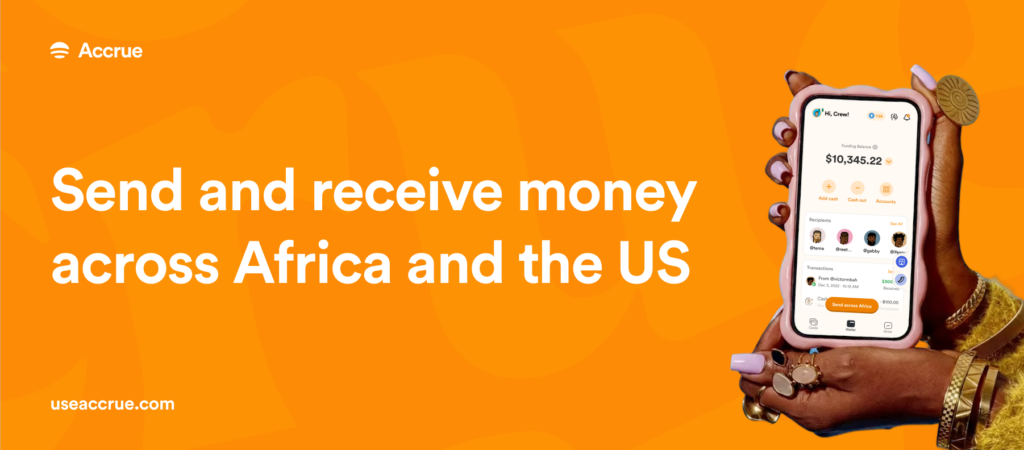
Sign up with Accrue today and take control of how your money moves.

I’ve lived many lives, but one lesson ties them all together: money is only as powerful as its utility. Through my work, I share stories about money and create guides for Africans who want to get the best out of theirs.