

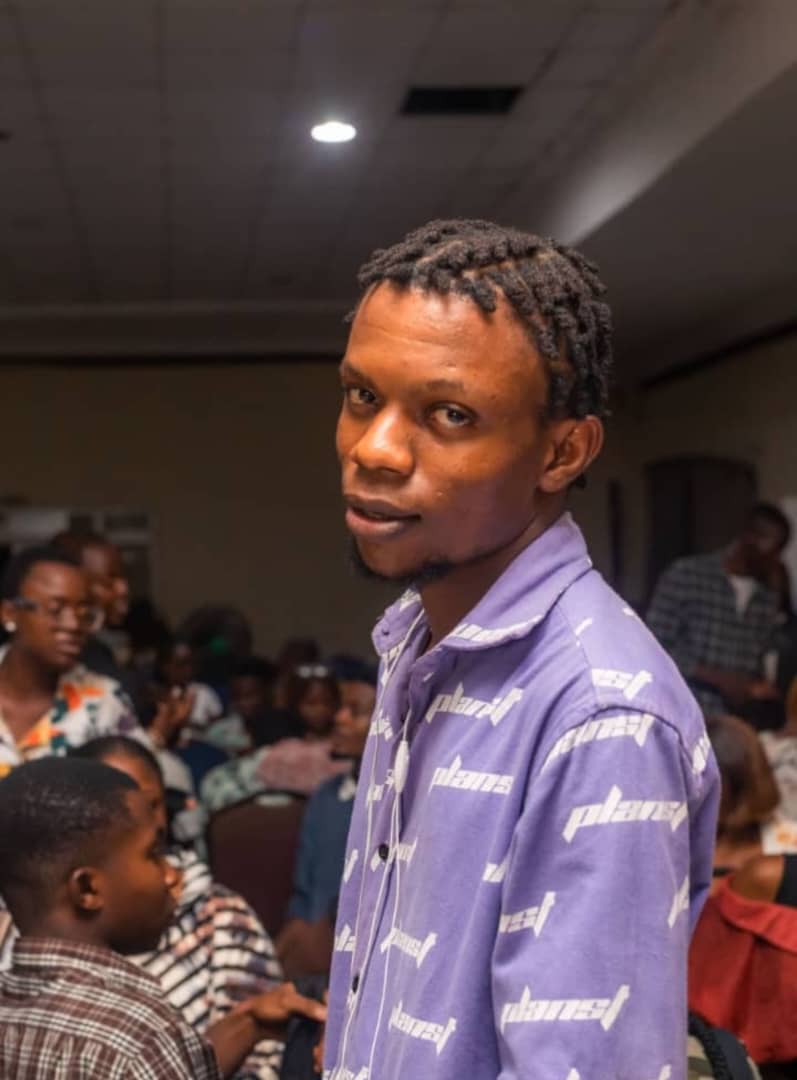
Joyce Yetsa Amable is a biomedical engineering student at Kwame Nkrumah University of Science and Technology, juggling a career in social media and content marketing while still in school.
In this episode of Money Story, I sat with Joyce to discuss the small businesses she started as a child, how a random Instagram job application led to her first remote writing role, the lessons she’s learned working in financial literacy, and how she is building savings and investments before graduating from university.
Tell us, what do you do now?
My name is Joyce Yetsa Amable. I’m Ghanaian and currently a final-year biomedical engineering student at Kwame Nkrumah University of Science and Technology (KNUST). Alongside school, I work as a social media and content marketing manager.
I have about four years of experience working in social media and content marketing. About two years ago, I started freelancing as well, so right now I balance school with managing social media and marketing content for brands.
One of the main places I work is a financial literacy company in Ghana called Investment Friend, where I manage their social media and content. I have garnered over 100K followers across Instagram and TikTok for the platform since I started working for them in August 2024, while also increasing revenue by a large margin.
What’s the first thing you ever did for money?
The first thing I can clearly remember doing for money was in primary school.
There’s a bracelet called Shambala that people make using ropes. A friend showed me how to weave them, and my twin sister and I started making them. One day, we went to the market, bought ropes in bulk, made dozens of them, and started selling them to our classmates.
Eventually, my mom noticed what we were doing and helped us scale it a bit. She connected us with someone at the local market who sold similar products. We would make the shambalas, and he would sell them in bulk for us.
Looking back, it was a pretty good arrangement.
Did you try other ways of making money growing up?
Yes, my grandmother had a huge influence on that.
She was extremely entrepreneurial and believed in finding any legal way to make money. At one point, my family was renovating our house, so there were lots of construction activities happening.
My grandmother would go to the construction site early in the morning and collect rocks and materials that contractors needed. Once they reached a certain quantity, she would sell them to other people working on construction projects.
She recruited me, my sister, and some neighbourhood kids to help her gather the rocks. We would work during vacation periods, and she would pay us for helping out. We didn’t see it as a chore because it was fun.
I don’t remember exactly how much she gave us for helping out, but I remember we were very happy with the money.
When did you start working professionally?
I would say I started working professionally during my gap year after secondary school. That was between 2021/2022.
My sister and I took a gap year before university, and during that time we were helping out in our mom’s shop and teaching at our former junior high school.
One day, while scrolling Instagram, I saw a post from a company in Accra looking for a content writer. The job was remote. I didn’t even know what content writing was at the time, but I knew they would pay me to write, and that was enough for me.
I quickly put together a resume in about ten minutes and sent it to the WhatsApp number listed in the post. I didn’t know anything about job application etiquette at the time, so I just sent it. They hired me.
They initially paid me about 350 Ghana cedis a month, which was roughly around $58 at the time.
Did that salary change over time?
Yes, and that happened because of someone who’s now my mentor. About a month after I started the job, I told him that I was working as a content writer for a YouTube channel. He asked how much they were paying me.
When I told him, he said, “Content writing is professional work. You should ask for a salary increase.”
So I did. That same month, my salary was increased to 500 Ghana cedis, which was around $80+ per month, and at that time, it felt like a lot of money, especially because it was more than what I was earning as a teacher.
You were teaching as well?
Yes. During that gap year, my sister and I were also teaching at our former junior high school. The teaching job paid around 400 Ghana cedis a month, which was roughly $60–$70 at the time.
So, combined with my writing job, I was earning a little over $100 a month, which felt like a lot for someone who had just finished secondary school.
What did you do with your first salary?
Interestingly, I didn’t spend it. I saved the money for about three months. I literally kept the cash in an envelope because I didn’t want to touch it.
After saving for a while, my twin sister and I decided to start a business together. My mom runs a shop selling provisions and trades in authentic Kente, and she also rents umbrellas, chairs, and canopies to market women on market days. My sister and I used our savings to buy additional canopies so we could rent them out ourselves.
Market women would rent them from us during market days, and we managed both our canopies and our mom’s, and at one point, we had about 12 canopies in total, and we rented each for about 15 Ghana cedis per market day. We felt incredibly rich.
How long did that business last?
We ran it for about 11 months, almost a year, but eventually we both got admitted into university and started school in 2023, and running the business required supervision. Even though we hired some younger people to help us, it became difficult to manage once we moved to school.
So when we started university, the business stopped.
How did you get into social media management?
When I came to university, I knew I wanted to do something that could bring in income, but I didn’t want to keep selling physical products. Before that, I had also started a food blog on Instagram and TikTok, creating content around low-budget meals, and I wanted to learn how to grow the pages. This was still during the gap year. I applied for a digital marketing scholarship from Ingressive for Good, and that program introduced me to digital marketing and social media management.
That’s how I learned the skills. Later, I got a small internship working as a social media manager for a brand. It was almost unpaid; they gave me around 50 Ghana cedis occasionally for airtime, and sometimes they delayed payment. Eventually, I left.
Afterwards, I did a six-month internship with Cheflifestyle, a well-known food blogger in Ghana who had started a digital food agency. That was where my skills really improved.
How did you get your current role?
I had become very interested in personal finance and saving money. Then, I was following Investment Friend, a financial literacy platform on Instagram and had also joined their WhatsApp Community. One day, they announced they were hiring a social media manager.
I quickly put together a more structured portfolio and applied. I went through an interview and got the job.
That’s how I started working with them, and I’ve been there ever since.
What has working at a financial literacy company taught you?
Honestly, it changed how I think about money. When I applied, my main motivation was to learn about money management myself. I figured that if I worked there, I would naturally learn about investing and personal finance, and that’s exactly what happened.
Now I understand the fundamentals of investing, saving, and managing money better. The job gave me income, and it also improved my financial knowledge.
How do you balance work, school, and everything else?
It hasn’t always been easy.
My life isn’t just school and work, I’m also involved in extracurricular activities and at some point it was really difficult to manage everything, but over time I learned how to organise my schedule better. I am a planner by default, with daily to-do lists and calendar schedules that help me stay on top of my busy life. I also have friends who are very focused academically, and studying with them has helped me stay disciplined and maintain my scholarship. I always thank God for the amazing friends I’ve met in university. If they’re reading this, shout-out to them.
You’re a scholarship student. How did that happen?
During my gap year, the same mentor who advised me about negotiating my salary told me about the Mastercard Foundation Scholarship at KNUST.
He helped me prepare for it, connected me with people who had previously applied to review my essays, and helped me prepare for interviews.
I applied and was privileged enough to get it.
What does the scholarship cover?
The scholarship covers quite a lot.
They pay for:
- My school fees
- My hostel accommodation
- A laptop
- A monthly stipend
- And even free supper every day
The food arrangement is interesting; they partner with restaurants around campus, and scholarship students go to the assigned restaurant in the evening to pick up their meals.
There are also students from different African countries on the scholarship.
How do you manage your money today?
Working in financial literacy has definitely influenced my habits.
I wouldn’t describe myself as a big spender. Since I’m still in school and my major expenses are covered by the scholarship and my mom, who still gives us a monthly allowance, most of the money I earn goes into my emergency fund, savings and investments.
Right now, over 90% of the money I earn goes into investments or savings.
What’s next for you?
I’m graduating soon. The semester ends in September, but the official graduation ceremony has been moved to February next year.
For now, I want to keep building my career in marketing while continuing to learn about finance and investing. I’m still early in my career, but I’m already thinking a lot about long-term financial security.
I’ve lived many lives, but one lesson ties them all together: money is only as powerful as its utility. Through my work, I share stories about money and create guides for Africans who want to get the best out of theirs.