
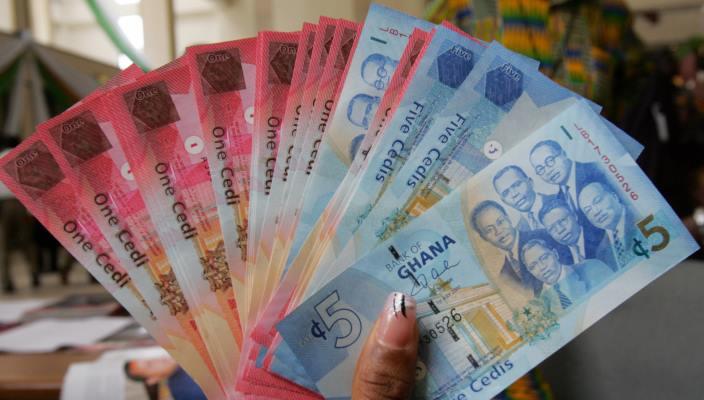
If you’ve ever sent money across Africa or you’re planning a trip from Ghana to another African country, you may have wondered how the Ghanaian cedi stacks up against other currencies on the continent. The cedi has had a volatile few years, but in nominal exchange-value terms, it still sits above a number of African currencies.
Currently, 1 USD trades at about 11.00 to 11.04 GHS, which means 1 Ghanaian cedi is worth roughly 0.09 USD. That also means any African currency trading at far more than 11 units to the US dollar is lower than the cedi in face value.
That said, nuance matters. A lower nominal currency does not automatically mean a weaker economy in every sense, nor does a higher nominal currency always mean long-term stability. Some currencies have low face values because of inflation, some because of redenomination history, and others because of how the currency system is structured.
How Currency Strength Compares
Before we look at the countries with currencies lower than the Ghanaian cedi, it’s worth clarifying what “currency strength” actually means. In everyday financial content like this, people often mean nominal unit value, in other words, how many units of a currency are needed to buy 1 US dollar.
By that measure, the cedi is stronger than currencies like the naira, shilling, franc, or leone when those currencies require tens, hundreds, or thousands of units to buy 1 USD, but the nominal value is only one lens. It does not tell you everything about inflation, stability, purchasing power, or monetary credibility.
A currency can be lower in face value yet more stable than a higher-valued one. That distinction is especially important in Africa, where some currencies are market-driven, some are heavily managed, and others are pegged.
Countries with lower currencies than Ghana
1. Sierra Leone (Sierra Leonean Leone – SLE)
The Sierra Leonean leone is lower than the Ghanaian cedi in nominal value. It currently trades at about 22.96 SLE to 1 USD, which means 1 GHS gets you roughly 2.08 leones.
This is one of the more interesting comparisons on the list because the gap is not as extreme as it once was. Sierra Leone redenominated its currency, so the leone’s face value looks less dramatic than before, but the underlying pressures of inflation, trade imbalance, and fiscal weakness still remain. So while the cedi is higher than the leone, the story is more complex than just comparing note values.
2. Guinea (Guinean Franc – GNF)
The Guinean franc is far lower than the cedi. It currently trades at about 8,772.8 GNF to 1 USD, so 1 GHS gets you roughly 795.6 Guinean francs.
Despite Guinea’s rich mineral resources, the franc remains weak due to political instability, infrastructure gaps, and inefficiencies in turning resource wealth into broad economic strength. This is a classic example of a country with natural wealth but a correspondingly weak currency.
3. Madagascar (Malagasy Ariary – MGA)
Madagascar’s ariary is also well below the Ghanaian cedi in nominal terms. It currently trades at around 4,140.89 MGA to 1 USD, so 1 GHS gets you about 375.54 ariary.
Madagascar’s economy remains heavily dependent on a narrow range of exports, while climate shocks and fiscal constraints continue to affect stability. The ariary’s low value reflects those broader structural pressures.
4. Uganda (Ugandan Shilling – UGX)
The Ugandan shilling is another currency that is higher than the cedi. It currently trades at roughly 3,698.09 UGX to 1 USD, meaning 1 GHS gets you about 335.38 Ugandan shillings.
Uganda’s currency has faced pressure from inflation, trade deficits, and broader external-sector weakness. If you’re sending money to Uganda regularly, this is the kind of corridor where the headline exchange rate looks appealing, but what really matters is the final rate after conversion. With Accrue, users can get more transparent pricing and better deals when moving money across borders, instead of losing value to poor spreads and hidden charges.
5. Burundi (Burundian Franc – BIF)
The Burundian franc trades at about 2,975.94 BIF to 1 USD, so 1 GHS gets you roughly 269.89 Burundian francs.
Burundi’s limited industrial base, low export earnings, and dependence on aid all contribute to the franc’s low nominal value. It is one of those currencies in which structural economic constraints are clearly reflected in the exchange rate.
6. Tanzania (Tanzanian Shilling – TZS)
The Tanzanian shilling currently trades at around 2,603.54 TZS to 1 USD, which means 1 GHS gets you about 236.11 Tanzanian shillings.
The shilling is weaker than the cedi in nominal terms, though it is worth noting that Tanzania’s currency has sometimes appeared steadier than others with similar face values. Rising import costs and pressure on foreign exchange reserves still weigh on it, but its lower face value alone does not tell the whole story.
7. Democratic Republic of Congo (Congolese Franc – CDF)
The Congolese franc trades at about 2,321.25 CDF to 1 USD, so 1 GHS gets you roughly 210.51 Congolese francs.
Despite the DRC’s vast mineral wealth, conflict, governance problems, and infrastructure shortfalls continue to undermine currency stability. For people receiving payments in the DRC or sending money there from Ghana, the exchange rate matters a lot, but so do transfer costs and payout speed.
8. Malawi (Malawian Kwacha – MWK)
Malawi’s kwacha currently trades at around 1,736.36 MWK to 1 USD, which means 1 GHS gets you about 157.47 kwacha.
The kwacha’s weakness reflects chronic foreign exchange shortages, external imbalances, and past devaluations. It is one of the clearer examples of a currency that is well below the cedi in face value and still under real structural pressure. In a corridor like this, every margin matters. Using Accrue to access competitive rates and fast payouts can help preserve more of the value that would otherwise disappear during conversion.
9. Rwanda (Rwandan Franc – RWF)
The Rwandan franc trades at about 1,458 RWF to 1 USD, so 1 GHS gets you roughly 132.23 Rwandan francs.
Rwanda is often viewed as relatively orderly in macroeconomic management, which makes this a useful reminder that a lower nominal currency does not automatically mean a currency is poorly run. It simply means the unit value is lower than the cedi.
10. Nigeria (Nigerian Naira – NGN)
The Nigerian naira currently trades at about 1,373.21 NGN to 1 USD, meaning 1 GHS gets you roughly 124.54 naira.
So yes, the cedi is currently higher than the naira in nominal unit value, but the naira is one of Africa’s most heavily watched currencies, and its movements are tied to oil revenues, FX reforms, liquidity conditions, and central bank policy.
For Ghanaians sending money to Nigeria, this difference can make the exchange rate look attractive at first glance, but the actual value depends on the deal you get after fees and spreads. That is where Accrue comes in, helping users get better deals and more transparent transfers across major African corridors.
11. Angola (Angolan Kwanza – AOA)
The Angolan kwanza trades at roughly 927.55 AOA to 1 USD, so 1 GHS gets you about 84.12 kwanza.
Angola’s heavy dependence on oil exports and limited economic diversification continue to weigh on the kwanza. It remains lower than the cedi in nominal value, even though both currencies have faced periods of pressure.
12. Sudan (Sudanese Pound – SDG)
The Sudanese pound currently trades at about 600.17 SDG to 1 USD, which means 1 GHS gets you roughly 54.43 Sudanese pounds.
Years of conflict, sanctions, and inflation have severely weakened the currency. In this case, the low face value is closely tied to deep political and economic instability.
13. Somalia (Somali Shilling – SOS)
The Somali shilling trades at roughly 571.47 SOS to 1 USD, so 1 GHS gets you about 51.83 Somali shillings.
Somalia’s weak monetary institutions, large informal economy, and prolonged political fragility all contribute to the shilling’s low nominal value. It remains one of the currencies the cedi is higher than.
14. West African CFA Zone (West African CFA Franc – XOF)
The West African CFA franc currently trades at about 561.50 XOF to 1 USD, meaning 1 GHS gets you roughly 50.92 XOF.
This is where nuance becomes especially important. The cedi is higher than the XOF in nominal terms, but the XOF is pegged to the euro and is often seen as more stable and predictable than many floating African currencies. So while it is lower in face value, that does not automatically make it weaker in every practical sense.
15. Central African CFA Zone (Central African CFA Franc – XAF)
The Central African CFA franc trades at around 559.18 XAF to 1 USD, so 1 GHS gets you roughly 50.71 XAF.
Like the West African CFA franc, it has a low nominal value but benefits from a euro peg. That gives it a degree of stability that pure face-value comparisons can easily miss.
Why is the cedi higher than these currencies?
The cedi has a higher nominal unit value
At around 11 GHS to 1 USD, the cedi simply trades in a smaller unit scale than currencies like the naira, shilling, franc, kwacha, or leone. That is the basic reason it appears higher than them in straightforward comparisons.
Monetary history
Redenomination, inflation history, and policy design affect what a currency looks like on paper. Sierra Leone is a good example: the currency was redenominated, but that did not erase the broader structural pressures behind its weakness. Face value gives you one useful snapshot, not the whole economic picture.
What does this mean for you?
Sending money from Ghana has more value
If you’re a Ghanaian professional, business owner, student abroad, or member of the diaspora sending money to family or partners in countries like Nigeria, Uganda, Malawi, or Sierra Leone, the exchange rate directly affects what your recipient actually receives and because the cedi is higher than these currencies in nominal value, your transfer can convert into a large amount on the receiving side, but only if you’re getting a fair rate. A strong-looking conversion means very little if too much of it is swallowed by hidden fees or poor exchange spreads.
Receiving money across weaker-currency corridors
If you receive payments from Ghana in a country with a lower-valued currency, timing and conversion matter. Whether the money is coming from an employer, a client, a relative, or a business partner, converting at the right rate can make a real difference to the local value you receive.
Freelancers and remote workers should treat FX as part of their income
If you’re a freelancer or remote worker in Nigeria, Uganda, Rwanda, or Malawi working with Ghanaian clients, the exchange rate is effectively part of your pay. Getting paid in cedis, dollars, or another stronger currency can work in your favour, but only if you convert strategically and use a platform that does not quietly eat into your earnings. In practice, your payment terms are not just about what you charge. They are also about when and how you convert.
Cross-border trade changes your costs and margins
For traders and small businesses moving goods between Ghana and countries with lower currencies, exchange rates can shape your pricing, sourcing costs, and profit margins.
If you’re buying from Ghana, where the local currency is weaker, imports become more expensive. If you’re selling into Ghana from one of these markets, your goods may look more competitively priced. Either way, understanding the currency gap helps you price more intelligently and avoid being caught off guard by fluctuations.
Protecting yourself from currency swings
Exchange rates do not stand still. A rate that looks good today can move against you tomorrow, especially in African FX corridors where liquidity, policy changes, and sentiment can shift quickly. If you send or receive money regularly, it pays to watch the rate, compare your options, and use a service that gives you competitive live pricing instead of leaving you exposed to unnecessary losses.
Send money across Africa with Accrue
When you’re sending money from Ghana to Nigeria, Uganda, Malawi, Rwanda, Tanzania, or the DRC, or receiving payments from across the continent, understanding the exchange rate is only the first step. What really matters is the value that arrives after conversion. You can check live rates on Accrue Currency Converter.
Accrue makes it easier by offering competitive rates, low transfer fees, and fast payouts to bank accounts and mobile money wallets across Africa. When you’re moving money across borders, the right platform can make just as much difference as the exchange rate itself.
Disclaimer: Exchange rates mentioned in this article are approximate figures and are subject to change. This article is for informational purposes only and does not constitute financial advice.

I’ve lived many lives, but one lesson ties them all together: money is only as powerful as its utility. Through my work, I share stories about money and create guides for Africans who want to get the best out of theirs.