

When Daniel, a Lagos-based fabrics dealer, sent $12,000 to his Ghanaian supplier for fabric, his bank charged a $60 wire transfer fee. He did the math, approved the transfer, and moved on.
Two weeks later, his supplier called: only $11,540 had arrived.
Where did the missing $400 go?
Welcome to the jig-saw world of hidden fees in international payments, also known as cross-border payments, where what you’re quoted rarely matches what’s delivered.
For many like Daniel, sending money across borders is essential to support family, invest in businesses, purchase supplies, and manage finances across countries, but the true cost of international transfers often hides in layered fees that quietly add up.
Understanding these charges can help you keep more of your money and choose smarter, more cost-effective options.
In this guide, we’ll unpack the real fees behind international transfers, show you how to minimize them, and explore why Accrue offers a better way to move your money globally.
What Are International Money Transfer Fees?
Making cross-border payments or sending money abroad is rarely as simple as clicking “transfer” or “send.” Behind every cross-border payment is a chain of institutions, banks, payment networks, and foreign exchange providers, each taking a small cut. Some of these charges are obvious. Others are quietly built into the exchange rate or deducted along the way.
The total cost of an international transfer typically depends on three factors:
- Who you use (bank vs. fintech platform)
- Where the money is going
- How it’s delivered (bank deposit, cash pickup, mobile wallet, etc.)
Fees may appear as a flat charge, a percentage of the amount sent, or a less visible markup embedded in the exchange rate.
Understanding how these fees work is the first step to avoiding unnecessary losses.
The Main Types of International Money Transfer Fees
1. Transfer Fees
This is the most visible charge: a fee applied per transaction. It may be fixed (e.g., $20 per wire) or variable (e.g., 1–3% of the amount sent). The exact cost can change depending on destination, payment method, and urgency.
Traditional banks often fall on the higher end, particularly for international wires.
2. Exchange Rate Markups
The exchange rate you see on financial news sites is the mid-market rate, the rate banks use when trading currencies with each other.
Consumers rarely get this rate. Instead, providers add a margin to it. The difference may look small, perhaps a few naira (or your local currency), but across large transfers, that gap can quietly cost far more than the upfront fee.
In many cases, the exchange rate markup is the single biggest expense in a transfer.
3. Intermediary Bank Charges
International wires often pass through one or more intermediary banks before reaching the recipient. Each institution in that chain may deduct a processing fee.
These charges are unpredictable because they depend on the payment's routing path and are often not disclosed upfront.
4. Receiving Fees
The recipient may also incur costs. Some banks charge for incoming international wires. Mobile wallet providers may deduct withdrawal fees. Even small deductions on the receiving end reduce the final amount delivered.
5. Structural or “Hidden” Fees
Beyond transaction-level costs, some providers impose ongoing account fees, inactivity charges, or maintenance costs that aren’t obvious at first glance. These may not significantly affect a single transfer, but over time they compound.
How to Reduce the Cost of Sending Money Abroad
1. Compare the total cost
Look at the exchange rate offered and calculate the final amount the recipient will receive.
2. Prioritize transparency.
Choose a platform like Accrue that clearly shows both the fee and the exchange rate before you confirm the transaction.
3. Minimize currency conversions.
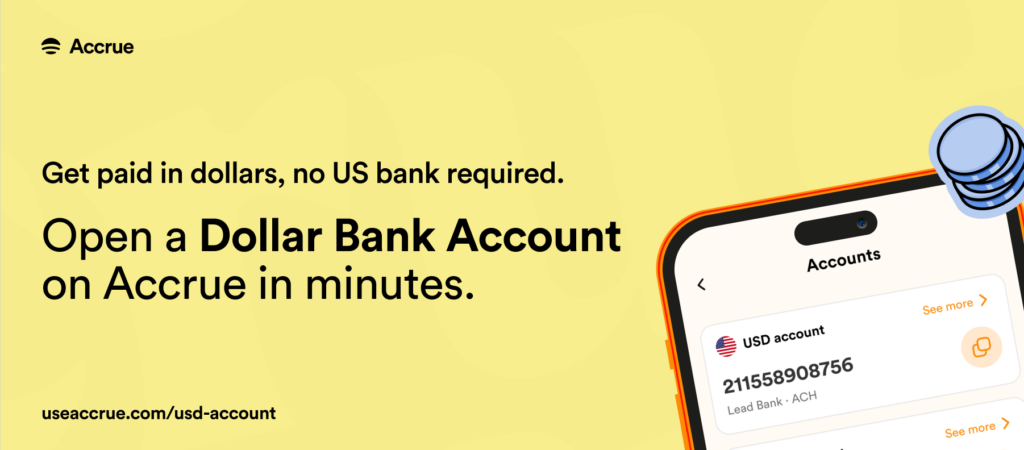
Holding funds in foreign-currency accounts can help you avoid recurring exchange-rate conversion charges.
4. Avoid complex banking routes.
Direct payment networks reduce the likelihood of intermediary deductions.
5. Be strategic about timing and volume.
If fees are fixed, consolidating transfers may reduce the average cost per transaction.
How Accrue Protects You from Hidden Fees in International Money Transfers
Accrue is designed for African remote workers, freelancers, content creators, digital business owners, and global entrepreneurs who move money across borders regularly and need predictability.
With Accrue, you get:
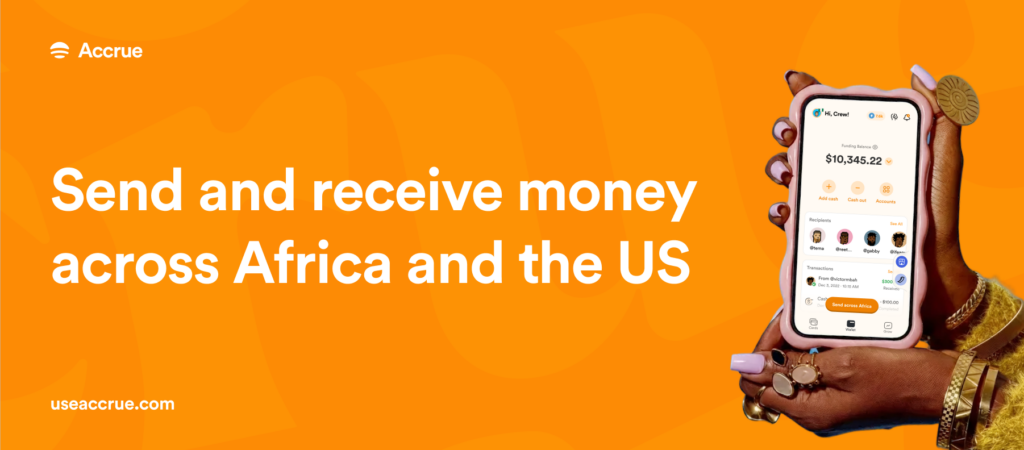
- A dollar account that allows you to hold and receive Dollars globally.
- A flat $2 transfer fee reduces uncertainty.
- Transparent pricing, so you know exactly what’s being charged.
- Fast, secure transactions without the complexity of traditional banking chains.
Download Accrue to enjoy low fees with no hidden markups. Accrue helps ensure that more of your money reaches its destination.
When you understand where fees originate, from exchange rate margins to intermediary deductions, you gain control over your financial decisions.