How Adesuwa Omoruyi Went From Teaching To Building Accrue
Alex Omenye
May 20, 2026
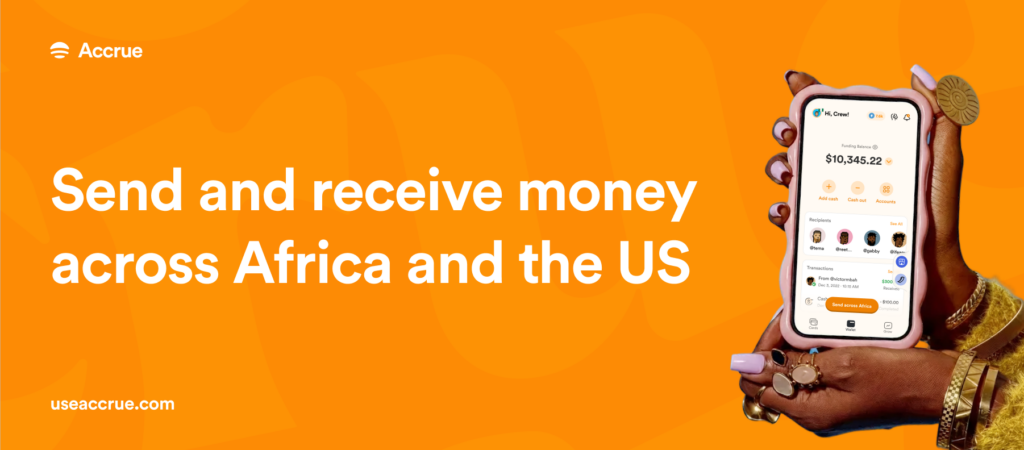
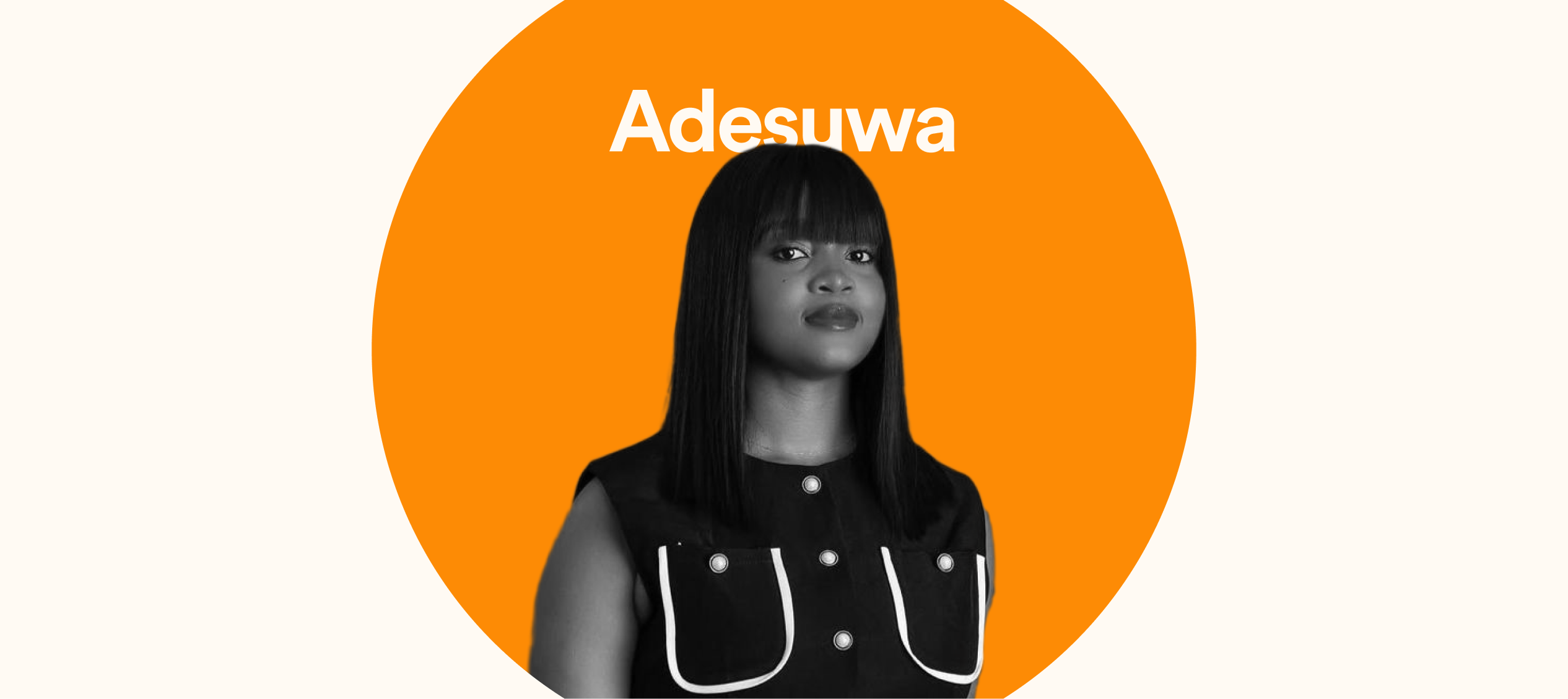
Adesuwa Omoruyi is the co-founder of Accrue, a cross-border payments startup helping Africans send and receive money across Africa and the US.
Prior, she was a student entrepreneur selling cupcakes, later, she took up teaching after university before landing her first professional role at Helicarrier, where she eventually found her way into marketing and, later, startup building.
I sat with Adesuwa to discuss her earliest money memories, how she built small businesses in university, career leaps, Accrue’s difficult early years, and how she thinks about money.
What was the first thing you did for money?
The first example that comes to mind is when I was in university. My mum bakes cakes and cooks for events, so I would ask her to bake cupcakes for me. At the 100 level, I would take those cupcakes from room to room in the hostel and sell each for about ₦200. My mum got a cut because she was the one baking and buying the ingredients, and I kept my own share. I think I kept around ₦50 per cupcake.
In a week, I could sell close to 100 cupcakes. That was about ₦5,000 weekly, and in a month, around ₦20,000. At the time, in 2016, that was good extra money for a student. However, the business ended after the school banned of selling food items because of concerns around food poisoning. I moved to another business.
The entrepreneur in you is alive. What did you start selling after that?
I started selling secondhand clothes and perfume oils.
During holidays, I would go to the Market in Lagos with my mum. We would go very early, around the time they were opening the bales, and I would pick clothes I knew ladies in school would like: shirts, trousers, skirts, things like that.
Sometimes I would buy a shirt for ₦200. After washing, ironing, folding, and making it presentable, I could sell it for ₦1,000 or ₦1,500 in school.
The margins were good, even though there were other costs like transport to the market, transport back, and the labour of washing and arranging the clothes.
For perfume oils, I bought them in bulk. The unit price could be around ₦500, and I would sell one for ₦1,000.
How long did that business run?
I did the clothes and perfume oil business from around the 200 level second semester until my final year, and by the time I was leaving school, I had over ₦300,000 in my account. I remember feeling like that was a lot of money as a student. I used to save very well.
It wasn’t that my parents could not afford to send me money. They sent me a good monthly allowance. I think around 2015 to 2017, my allowance was about ₦40,000 monthly, and that was good money for a student. I could still buy food I liked, enjoy myself, and save.
I think I just craved independence very early.
How did you manage running a business while studying?
What worked for me academically was that after every lecture, I would do a quick revision of what was taught.
Two things helped me assimilate: taking notes during lectures and revising afterwards. Even now, I still write a lot because writing is the fastest way I learn and remember things.
For the business, I usually sold in the evenings. After class and dinner, I would carry my stock and go from room to room for maybe an hour. I had a rough timetable for the female hostels, so I knew which hall I had visited and which one I should go to next.
It wasn’t too tedious. Some days, if I was tired, I would not sell. I would just sell the next day.
After Uni, what did you try your hand at?
That was during COVID, so NYSC was delayed. I was at home for a while during lockdown, and even when things started opening up, NYSC was still not very clear.
I also did not want to be part of the first batch because I wanted to be sure things were safer, but I didn’t want to stay at home doing nothing. When you’re at home as a young person, people just send you on errands, and I don’t like errands. I also didn’t want to start spending all the money I had saved.
There was a community school near our house, within walking distance, and they were looking for someone to teach subjects like business studies, CRK, and social studies. I applied and got the job.
They paid me ₦18,000 monthly.
How did you feel moving from making more with your business in school to ₦18,000?
I was sad.
I remember thinking, “I went to a good school. I have done business and made more than this. I should have a better opportunity,” but at the time, I also did not want to be idle. I didn’t want to wake up, sleep, and feel like I was wasting away. The most interesting part of the job is that at the end of the month, they would call the teachers to the principal’s office, count ₦18,000, put it in an envelope, and give it to me as salary.
You left teaching. What happened?
I kept applying to jobs.
When I was in university, I had applied for a role at Helicarrier, but I didn’t get it. I still liked the company because I followed the founders and some people who worked there on X (formerly Twitter). They seemed cool, and the company culture looked positive.
Later, a family friend came over and asked what kind of companies I wanted to work at. I mentioned Helicarrier. He said he knew someone there and would ask if they were hiring.
About a week later, he sent me the person’s email. I reached out and said I wanted to apply for a product management role because everyone was into it. At the time, it just seemed like the cool career path.
They got back to me and said there was no product manager role available, but they were hiring for customer support.
For me, it was an immediate yes. Customer support was still better than my ₦18,000 teaching job.
How did the application process go?
I took it very seriously.
My brother reviewed my application. My dad reviewed it too. For me, it felt like do or die because I had already made plans in my head. If I got the job, I would move to Lagos and live with my brother. I would earn better. I would work at a company I really liked.
After the assessments and interviews, I eventually had a culture-fit interview with the co-founders. About a week or two later, I got a phone call telling me I got the job.
The salary was ₦150,000.
They were also going to provide lunch, cover some work expenses like data, and give me a laptop. It felt like I had made it. I felt like I had escaped poverty.
I called my dad, my mum, and my brother immediately to share the news.
How did Accrue come into the picture?
I worked at Helicarrier for about a year. I started in May 2021.
I was in customer success. Zino was my boss because he was the customer support lead, and Clinton was a software engineer. Sometimes, when there was an issue with a customer, I would reach out to engineers like Clinton to help resolve it.
Over time, I became good friends with Zino.
A few months into the job, I realised I actually did not like product management. I was thankful I did not get that role because I probably would not have enjoyed it, but I started to realise that I liked marketing. I liked the idea of growing a product from one number of users to another. I spoke to my employers at Helicarrier, and they were gracious enough to move me into marketing.
It didn’t come with a pay raise because I had never done marketing before. They were taking a chance on me.
Around that time, Zino told me about an idea he had for a dollar-cost averaging app that would help beginners invest in crypto and stocks easily. Since I was getting interested in marketing, he asked if I would help with the marketing as a side hustle.
I said yes immediately.
Were you a co-founder from the beginning?
No.
At first, I joined to help with marketing, but I was not a co-founder. I had been working in tech for less than six months, so I was not exactly what someone would call co-founder material if they were searching for a co-founder.
LMAO
Zino was looking for an engineering co-founder, so he reached out to Clinton to ask if he knew anyone who might be interested. Clinton said he would like to join as a co-founder.
So Zino and Clinton were the co-founders at first.
A few months into figuring things out, Accrue became my baby. I felt very invested in it and wanted it to work. One day, I told Zino, “I feel like I’m just as invested in this as you and Clinton. I know I’m younger, and we are all figuring this out, but I think I should be a co-founder.”
Zino spoke to Clinton, and they agreed that I should be a co-founder. That was how I became a co-founder of Accrue.
Wow! What were the early years of Accrue like?
The first two years were a mix of things.
At the beginning, it was exciting, like any new venture. We had big dreams. We were saying things like, “We are going to revolutionise investing.”
For the first few months after launching, things were going well. Then the bear market hit.
Customers were not using the app as much as we hoped. Revenue nosedived. We were trying to raise money from investors, but if you are not growing, it is hard to convince investors. Nobody was really answering us.
We realised we needed to pivot if the company was going to survive.
What did you pivot to?
We thought, “Since people are worried about the bear market, what if we offer dollar savings?”
So we launched dollar savings, and people started saving, but we would see comments on Twitter like, “I love that Accrue app. The UI is fantastic. I wish I had money to put inside.”
That is a compliment, but nobody pays you because your app is beautiful. At some point, we had to be honest with ourselves. If people were not paying us for the product, we needed to figure something else out.
Say hello to cross-border payments, right?
When we launched in Ghana, we started building cashramp because, at the time, the only way to deposit on Accrue in Ghana was through stablecoins, but Ghanaians were not as crypto-native as Nigerians, so people would ask how they were supposed to deposit if they did not have stablecoins.
We built cashramp so people in Ghana could deposit cedis. Since we were building it for Ghana, we also made it available in Nigeria.
Then a woman used Accrue to send money from Ghana to her aunt in Nigeria, and that felt like a eureka moment. We had not built the app for that type of payment, but the cashramp infrastructure made it possible.
At that point, we were grasping at straws. The business could not die. So we thought, “If this woman used it to send money from Ghana to Nigeria, maybe other people want to do the same thing.”
We leaned into it.
Cash grew from about 4% of our revenue to about 70% in seven months. That confirmed that there was something there.
You said the first two years were the hardest. What was it like?
We were still not able to raise funds from investors, and things got very difficult.
At one point, we had to take 35% pay cuts because there was not enough money to pay people. We were down to around seven or eight months of runway.
Eventually, we started engaging influencers in Ghana and marketing more aggressively there. Months later, we became ramen profitable, which meant we could cover our costs.
We didn't have extra funds to allocate, but we could cover our exact costs.
I remember the first month we became profitable. I slept like a baby because it was the first time in a long time that I did not worry that the company was not self-sustaining or that we were going to die soon.
Really nice. How did things change for the better?
We kept applying for investor opportunities and kept getting rejections.
Then we applied to Alliance, an accelerator. The first time, we got rejected. We applied again and got rejected again.
I remember being very sad. Then Aleph suggested that we reach out to ask why we were rejected so we could improve our application next time.
We emailed one of the co-founders, and he told us the concerns they had. He also said we should keep him updated and apply again. We replied with a Google Doc clarifying the points he had raised and sent him a link to our investor dashboard on Metabase.
He got back to us and said he wished he had seen more of our numbers earlier because they were impressive. A few days later, he said they had discussed it internally and wanted to reverse their earlier decision.
They accepted us into the cohort.
I remember exactly where I was when I got that email. I screamed. People around me thought I had received bad news, but I was just so excited.
Alliance was going to invest $250,000, and we needed that money. We had to go to the US for the accelerator, and after the program and demo day, we were able to raise our seed round of $1.58 million.
Getting into Alliance changed the trajectory of the business. We went from struggling to get investors to even look at us to having an opportunity that helped us grow and expand.
What is your day-to-day like now as a co-founder?
No two days are really the same.
That is the nature of working in a startup. There are always fires to put out. Every day or every week has a new flavour, and you just have to figure it out.
Over time, I have adapted and built a stronger spine. Earlier, the work sometimes felt like a burden. I used to see the daily problems as obstructions to the work we actually wanted to do, and that made me feel defeated.
Now my perspective has changed. The work is putting out the fire. The work is solving the problems.
When a problem comes up now, I am more likely to think, “This is another problem. We will figure it out.”
How do you manage the stress?
At the end of every day, I ask myself one question: Did I do my best today?
Doing my best does not mean I have achieved everything I wanted to achieve or reached every goal for the day. It means I moved in the direction I set for myself and gave it my honest effort.
If I did my best, I allow myself to rest. I do not let myself feel guilty for the work that remains undone. I go back the next day and continue.
The only time I tell myself to lock in more is when I assess my day and realise I did not really do my best.
I also have a community of people I talk to when work is difficult. That includes investors I am close to and founder friends. Sometimes I am just ranting about what I am struggling with, and they remind me that everyone is dealing with some version of the same thing.
When you talk to people, you realise you are not the only one with problems. Sometimes your own problem is not even as bad as you thought.
What is one big lesson building Accrue has taught you?
One day at a time. One foot in front of the other, because the big vision is so grand, being hyper-focused on it all the time can be paralysing. You start asking, “How will we ever achieve this?”
The big vision is important for direction, but sometimes I put it aside and ask, “What is in front of me now? What can I do today in that direction?”
When we first started, acquiring users was hard. Some days, only one person signed up. Some days, two people signed up. Some days, nobody signed up.
At the time, hearing that some companies had 50,000 or 100,000 users felt like a dream. My reality was very different, but we kept going little by little. What can I do today to get more people to sign up tomorrow? What can I do tomorrow? What can I do the next day?
Now, in a given month, we have about 10,000 people signing up to the app.
This is not something I knew how to do at the beginning. It came from taking it one day at a time.
What do you look for when hiring?
I look for what I call a “figure-outer.”
I don’t know if I coined the term or saw it somewhere and forgot, but I use it a lot.
A figure-outer is someone who can figure things out. In your past experiences, I want to see a track record of figuring things out, especially scrappily and with little to no money.
I want to see ownership. I want someone willing to do the dirty grunt work of figuring things out.
In startups, there are often no playbooks for the exact thing you are trying to do. People may have done similar things, but for your specific business model or solution, you often have to find your own way.
So I look for people who can think and move through unknowns.
Even now, there are many things about building Accrue that I do not know. There are a lot of unknowns, but every day, we keep figuring it out.
How do you think about money now?
For me, money means options.
Money gives you options, both personally and in business. Having more money, whether that is becoming profitable or being able to raise funds from investors, gives you the ability to do things you may not have been able to do otherwise.
It means you are not limited to one path because you cannot afford an alternative.
That is how I think about money: as a tool that gives you options.