
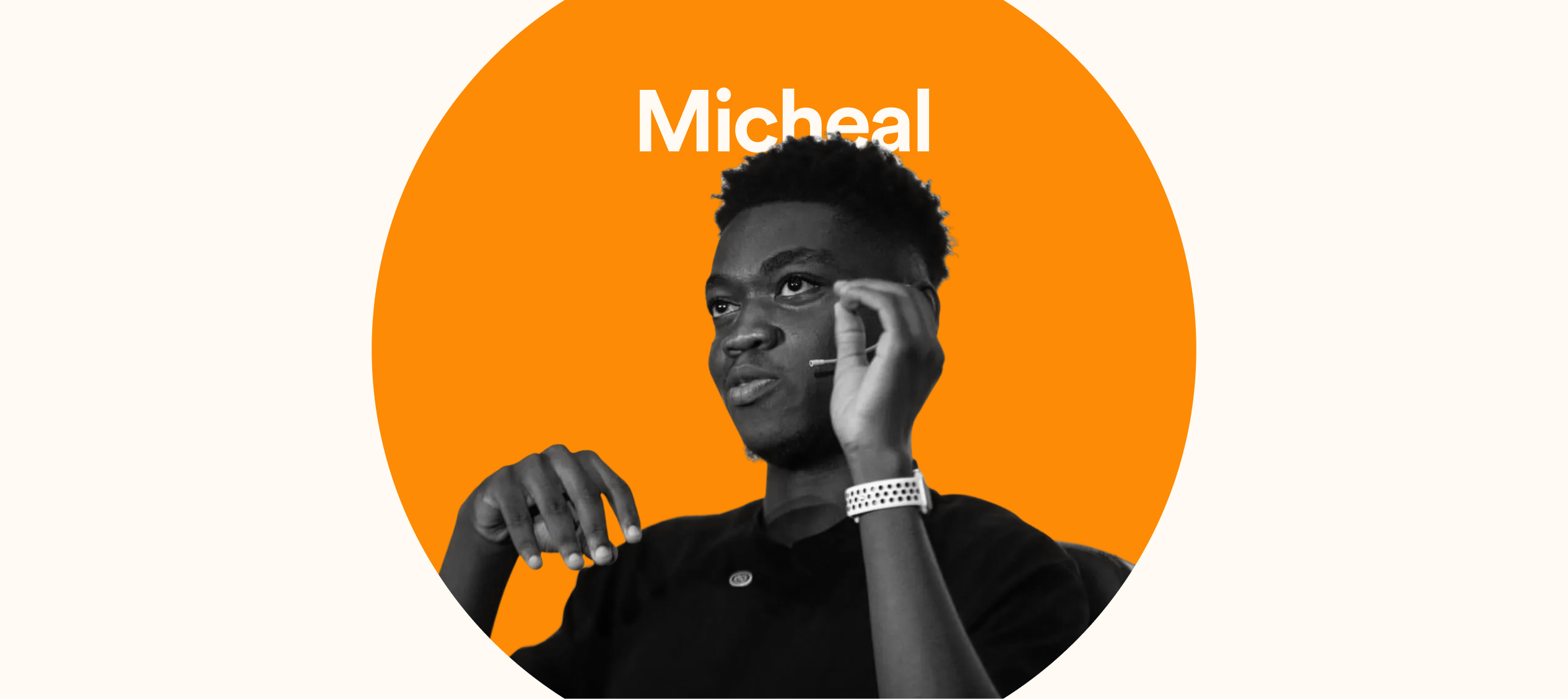
From posting witty replies on Snapchat, Michael, the brain behind Tech with areyouAgod has built a community that enjoys his tech content, which has been defined by platform strategy, resourcefulness, and obsessive consistency.
The Beginning
In 2023, during the long vacation between Level 200 and Level 300, Ghana’s “Fix The Country” protest in Ghana filled social media with debates, jokes, and viral clapbacks. Michael, a student of Information Technology at the University of Ghana, was just posting funny replies on Snapchat.
Then something shifted. His views began to rise quickly, and he realized that attention could be redirected toward something meaningful. He noticed a gap: tech content in Ghana was everywhere on Instagram and TikTok, but almost no one was doing it seriously on Snapchat.
So he switched. “I don’t know… a sharp thought came,” he says. “Why don’t you turn that attention into something?”
That decision became the foundation of his brand.
Starting Small and Learning in Public
The beginning wasn’t glamorous. He didn’t have money for equipment, so he started with what he could afford: writing.
He created tutorials as text posts, simple write-ups, and flyers. He sent them around for people to repost and tag him. Slowly, his Snapchat numbers grew.
He understood early that scaling beyond Snapchat would be difficult. Moving to Instagram and TikTok meant entering saturated spaces where people already had strong audiences and where written posts wouldn’t perform as well as they did on Snapchat. Video required equipment, and the equipment required money.
Still, Snapchat gave him something more valuable than reach: closeness.
Snapchat is built around daily stories and repeated viewing; he was able to form what he calls “personal currency,” a strong connection with his audience. That bond later became a safety net for everything else he tried.
In 2024, Michael was still trying to “get it.” During that vacation, instead of going home, he stayed with a friend. In his house, he found a ring light and a good shooting space and used it as his first real studio.
The setup was rough. He and his friends improvised. They bought a budget microphone that sounded so bad he joked it was “better to shout” than use it. He didn’t even have a great camera, so he borrowed phones to shoot. Sometimes it was his friend’s iPhone 12, sometimes another friend’s 12 Pro Max.
They kept filming anyway. “I shot my first videos… it wasn’t moving, but we were still shooting,” he says. He then made a decision that changed his output: he created content in batches, five to ten videos at a time, so he could post consistently when school resumed.
He learned quickly that consistency isn’t optional on video platforms. You can’t drop once and disappear. So he worked toward posting three to four times a week while still keeping up with academics.
Reinvesting Like a Business
Michael’s biggest growth season came from a personal finance move. He moved hostels. The new place was better than his old “four in a room” setup, and that difference created extra money. He took that margin and reinvested it into his content by buying better microphones, small gadgets, lights, and tools that made his work look more professional.
He also cut spending aggressively. “At that time, I was saving at least 60% of what my mom would give me,” he says.
At first, he didn’t even move to create content. He intended to keep the equipment at his sister’s house and shoot only on weekends, but he discovered his new room had enough space to create a mini studio beside his bed. This discovery increased his output.
Losing Everything
In September 2024, Michael lost his Snapchat account, which had 20,000 subscribers.
For many creators, that would be the end. For Michael, it became proof of skill.
He created a new account, and within eight months, he grew it to 100,000 followers. He now describes himself as having the largest tech-focused Snapchat following in Ghana, with engagement driven by daily audience interaction.
“I’m very active,” he says. “If they ask questions, I pick it and use it to create content.”
Money and Brand Deals
For about a year, Michael earned nothing from content creation. Then brands started reaching out, but early offers didn’t match the work required.
One brand wanted mentions in 70% of his videos for three months. Total pay a few dollars wasn’t worth the effort. They also wanted him to commit to a fixed number of videos.
He nearly accepted, because the temptation of “first money” is real, but he paused, evaluated, and walked away.
“It didn’t make sense,” he says.
Later, stronger deals came. In 2025, he earned between ₵3,000 and ₵10,000 per video, working with both international and local brands. That same year, he won a major recognition: Tech Influencer of the Year.
A Content Creation Career
Michael is now a full-time creator. His immediate goals are self-investment: bigger studios, higher-quality equipment, greater growth, and more opportunities (including future travel). The foundation stays the same: start small, build trust, reinvest, and keep showing up.