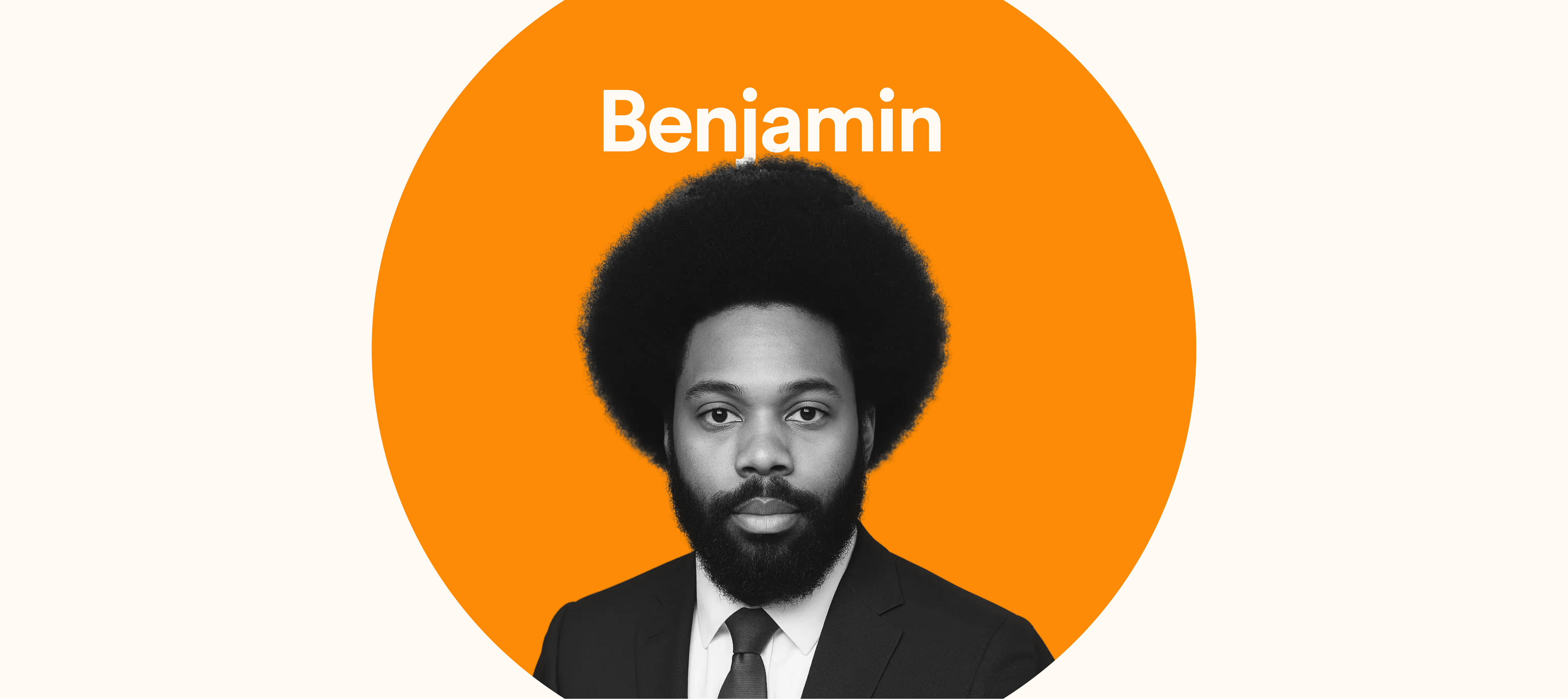
Benjamin Shotala, popularly known as Technical Ben is a builder shaped by pressure, resourcefulness, and reinvention. Trained in mechanical engineering, he now works at the intersection of marketing, business, and product, while also building a gamified productivity startup.
The Beginning
Benjamin’s path into marketing began with necessity.
He studied mechanical engineering because, like many people from difficult backgrounds, he saw education as a route out of poverty. His goal was simple: create a better life for himself and his family, but by the time he graduated in 2023, he had started to confront a hard reality. The job market for mechanical engineers was limited, entry-level pay was low, and the path ahead looked far less promising than he had imagined.
So he asked himself a difficult question: Do you keep going in a direction that is not working, or do you build a new one?
“I came from a very poor background,” he explains. “Something just has to work for you.”
The Hard Season After School
He stayed with his parents and spent months focused almost entirely on learning. With very little money and inconsistent access to data and tools, he began teaching himself online. He explored widely, trying to find the skill that fit both his strengths and his reality.
Before marketing became the answer, he experimented with multiple directions: music, songwriting, 3D design, data analytics, sales, product management, project management, Figma, UI/UX, Canva, and even some coding. He was searching for something scalable, practical, and marketable.
“I was learning, failing, playing,” he says. “Trying to see what clicks.”
There were days when he had to ration data carefully. He avoided unnecessary videos, searched obsessively for opportunities, and stayed focused on anything that could improve his life.
At one point, things became so difficult that he had to ask people for money just to keep going.
“There were days in 2024 that I went hungry for two days,” he says. “I was always eating once in a day, just managing myself and staying very focused.”
A stranger who had seen one of his posts online once helped him with food, data, and even a laptop after his own stopped working. That support helped him continue, but the larger reality remained the same: Benjamin was in a race against time, trying to turn skill-building into income before the pressure overwhelmed him.
Finding Marketing
Eventually, marketing stood out. It made sense to Benjamin because it sat at the center of business. It helped him understand not just how to get a job, but how businesses grow, how people buy, how to position ideas, and how to sell value.
Coming from a technical background, he already knew how to think in systems. Marketing gave him another layer: business understanding. It showed him how companies make money, how brands communicate, and how people can create opportunities for themselves online.
Over time, he leaned deeper into email marketing, lifecycle marketing, and technical marketing, combining communication with execution.
“So now I kind of understand the concept of business,” he says. “How to make money, how to scale a business, how to position your business.”
Freelancing and Building Income
Benjamin’s first work opportunity was a low-paying sales job that offered around ₦50,000 a month and came with unrealistic expectations. He took it because he needed something, even if only to buy data and stay afloat, but it quickly became clear that the job was not sustainable, and he left after about a month.
Instead of forcing a bad fit, he returned to learning and relationship-building.
His real breakthrough came later through the relationships he had built online. Someone he had been consistently speaking with referred him to a marketing agency in the United States, and the role changed everything.
“That was how I made my first million naira,” he says.
Today, he still works with that agency, earning $15–$20 per hour, with hours varying depending on the work assigned.
Once Benjamin gained clarity in marketing, he realized that the skill could open more than one income stream.
He began taking on freelance work outside his agency role, especially through platforms like Upwork. That came with its own learning curve: job applications, experimentation, sleepless nights, and figuring out how to stand out in a crowded global market.
When speaking about his income, he notes that he earned more than $15,000 in 2025 across his work, with some larger projects alone reaching into the $4,000 range depending on scope.
Black Tax And Building Wealth
Benjamin speaks about money with unusual clarity for someone who has had to fight hard for it.
He is deeply aware of family pressure, but he is also intentional about boundaries. He does not believe that earning money automatically means carrying everyone’s responsibilities at once, especially when he is still building.
“I’m not rich,” he says. “I’m not there yet.”
Benjamin does not currently frame investing in the traditional sense as his main focus. He saves a lot of his money, but his strongest belief is in a different kind of investment: community. He has invested in empowering his community.
“Investing in community was one of the best decisions I made,” he says.
That investment has paid off in multiple ways. It built trust. It strengthened his personal brand and created leverage for his startup, because community support means his first users are already close to the work.
Building a Startup
He is also building a gamified productivity app, which he says already has more than 8,000 people on its waitlist ahead of launch. For him, this is where everything he has learned converges: engineering thinking, product understanding, project management, marketing, audience-building, and community.


I’ve lived many lives, but one lesson ties them all together: money is only as powerful as its utility. Through my work, I share stories about money and create guides for Africans who want to get the best out of theirs.
