

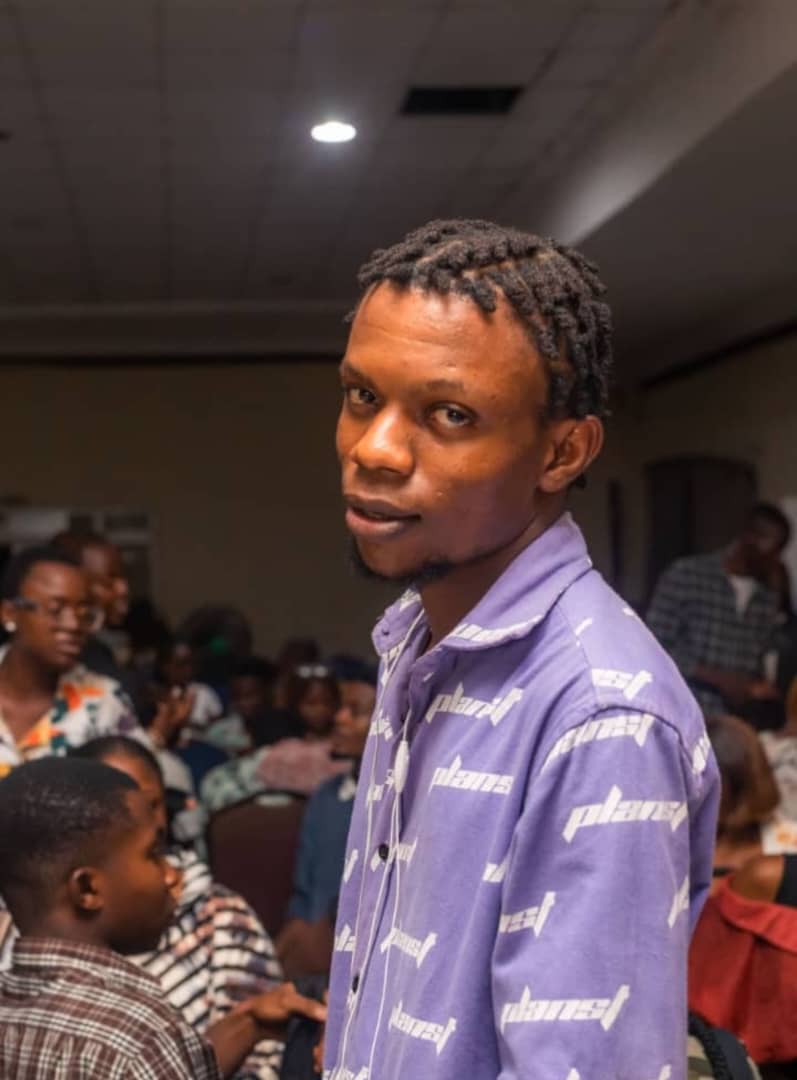
Gerry Oigiangbe has held various marketing roles across companies and has built NGNSTX, a platform that educates young Nigerians about investing in the Nigerian stock exchange. Accrue sat with Gerry to discuss his marketing career, the freedom allows him to pursue his interests, and how he arms Nigerians with knowledge about investing on the stock exchange.
Tell us, how did you end up in marketing?
It was an accident, honestly. I didn’t grow up thinking I’d work in marketing. I was studying Law, and somewhere in my third year, during a family law class, it hit me that this wasn’t what I wanted to do with my life. So I made what felt like a decision at the time: I switched to Mass Communication.
It meant dropping from 300 level back to 200 level, just weeks before exams. It was scary and uncomfortable, but the moment I got into Mass Comm, everything clicked. I focused heavily on advertising, PR, and brand strategy. Journalism was part of the curriculum, but I always saw it more as a foundation than an end goal.
Did you ever seriously consider journalism as a career?
I did. I learned from some excellent journalists, and I really respected the craft. But proper journalism is confrontational. You’re going to upset people. You’re going to make enemies.
I didn’t think I had the temperament for that long-term. Marketing felt like a way to shape narratives without constantly being in conflict. It still involved storytelling, just with a different objective.
What was your first real entry point into marketing?
Design. I don’t call myself a designer anymore, but that’s where it started. Freelancing, experimenting, and figuring out how ideas actually turn into outputs. That experience still helps me today. It makes working with creatives easier, and it also prevents designers from intimidating me unnecessarily.
At the time, I also had this idea of building a business media product, a podcast, and a newsletter focused on money and business. I was obsessed with Morning Brew. I even recorded episodes with founders and CEOs, but I never fully launched it. Life happened.
So how did startups enter the picture?
Twitter. As usual. After university, I tweeted that I was available for work, and that’s how I got pulled into a sports tech startup called Huddle. That was my first proper startup role. At the same time, I was doing NYSC and juggling side gigs just to survive Lagos.
What was money like during that period?
Tight. NYSC was paying ₦33,000. My place of primary assignment paid ₦15,000. The startup paid ₦50,000 at first, and later ₦100,000. Most of what I earned went into transport and basic survival. Lagos doesn’t negotiate with optimism.
When did things begin to change?
When I joined Anakle. I sent the application almost impulsively. I even missed their calls at first because I used the wrong phone number. Somehow, it still worked out. I asked for around ₦180,000 net, and they agreed. The money helped, but the exposure mattered more. Anakle sharpened how I thought about brands, campaigns, and scale.
You’ve joked before about privilege. How much did that play a role early on?
I wouldn’t call it nepo baby privilege, but I didn’t grow up under intense financial pressure or black tax. My parents absorbed a lot of that burden. That gave me room to take risks early, work for less, chase exposure, experiment, without panic. That freedom matters more than people like to admit.
What came after Anakle?
WellaHealth came right after. I actually got their attention by publicly critiquing one of their campaigns. Instead of being offended, they reached out. The onboarding process was solid; they even paid me for the test task, which already told me a lot about how they operated.
That role exposed me to serious B2B marketing at scale. We worked with thousands of pharmacies and large insurance companies, running campaigns that reached nearly a million users in a few months. I also worked on a UK out-of-home campaign, which showed me how much more rigorous marketing can be outside Nigeria.
Where do stocks enter this story?
Curiosity. In my final year of university, I started reading about Nigerian banks. That led me into the stock market, how it works, who’s listed, and why certain companies matter. I kept digging.
At some point, investing stopped being just a personal interest and became something I wanted to talk about publicly.
And that became NGNSTX?
Yes, organically. I met Daniel on Twitter, and we kept having long, detailed conversations about Nigerian stocks. Media outlets started turning our tweets into articles. I already ran a small investing WhatsApp group, so turning it into a proper brand felt natural.
Then one quote went viral. A small account quoted one of our posts, and suddenly we had hundreds of thousands of impressions in a few days. Our follower count jumped, and once we crossed 5,000 followers, we knew it was time to consider partnerships.
How did your first major partnership come about?
It was an eight-minute call. No long pitch. They already followed us and understood what we were building. That turned into a monthly six-figure deal.
We focused on trust, clear deliverables, weekly reports, and long-term thinking. Not hype.
What’s the bigger vision for NGNSTX?
Offline experiences. Trust is the biggest problem in Nigeria’s capital markets. I believe people trust what they can experience. Events where everyday investors can meet the companies they invest in, that’s where this is going. That idea is also central to my master’s thesis.
How would you describe your relationship with money today?
Messy, but evolving.
I’ve never been great at saving. When money comes in, it usually goes straight into execution, such as tools, projects, and ideas. For a long time, my “savings plan” was investing in stocks. I’m only now becoming more intentional about balance.
What’s next for you personally?
I’m currently not employed. I’m looking to work at a marketing agency in the UK.
Agency life is chaotic and often underpaid, but it sharpens you quickly. Long-term, I’ll probably move client-side, but right now, agency work fits how I think and operate.
For now, I’m building, learning, and staying curious about markets, money, and how young Nigerians can participate more confidently in both.
I’ve lived many lives, but one lesson ties them all together: money is only as powerful as its utility. Through my work, I share stories about money and create guides for Africans who want to get the best out of theirs.