
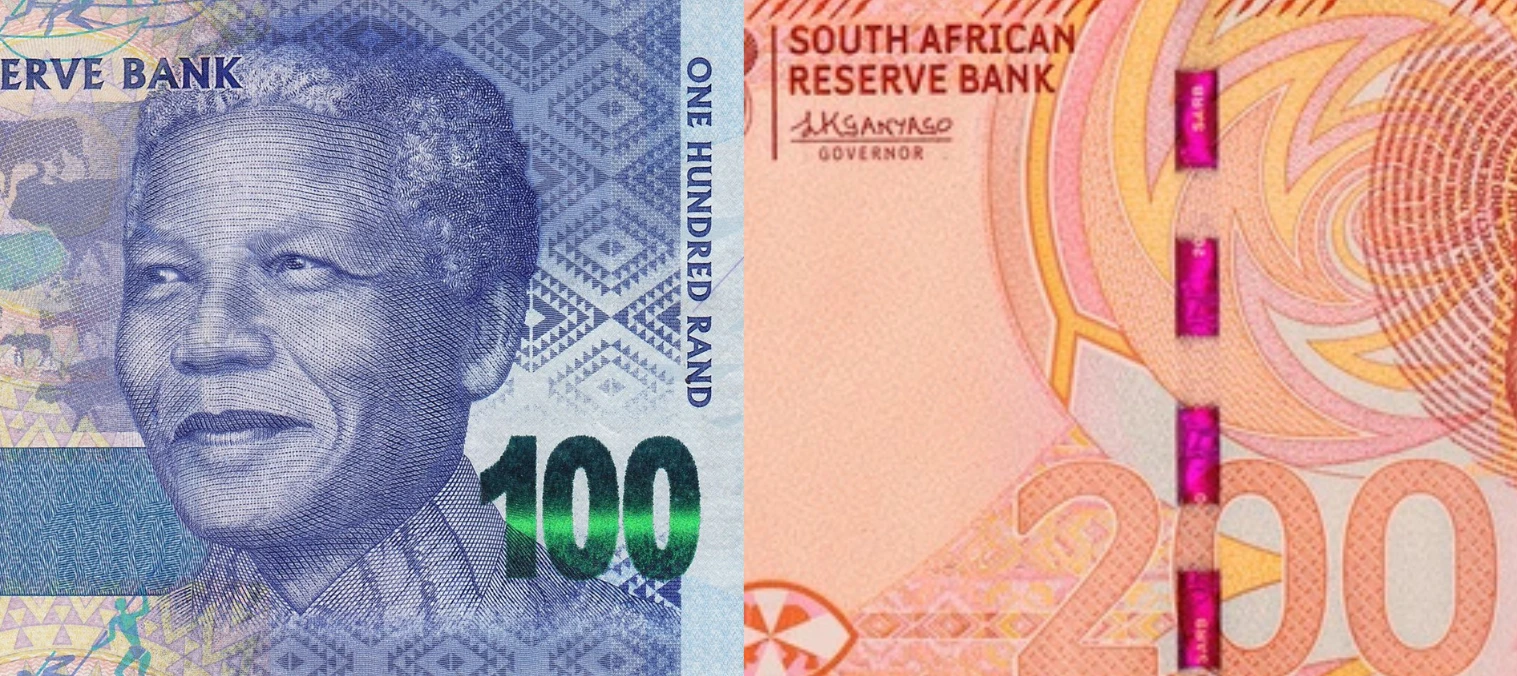

If you’ve ever sent money across Africa or are planning a trip to a neighbouring country like South Africa, you’ve probably wondered how the South African rand stacks up against other currencies on the continent. It will be interesting to know that the rand holds its own pretty well. In fact, there are quite a few African currencies that are weaker than it.
Currency strength
Before we look at some of the countries with currencies lower than the South African rand, it’s worth clarifying what “currency strength” actually means. A currency’s strength is typically measured by how much of another currency (usually the US dollar) it can buy. So if Currency A buys more USD than Currency B, Currency A is considered stronger.
As of early 2026, the South African rand trades at roughly R16.50 to the US dollar, meaning 1 USD buys about 16–17 rand.
Countries with lower currencies than South Africa
1. Nigerian Naira (NGN)
The Nigerian naira is one of the most well-known currencies on the continent, given that Nigeria is Africa’s largest economy by GDP. However, size doesn’t always equal strength. The naira currently trades at around 1,355 to the US dollar, meaning you’d need roughly 85 naira to buy just 1 South African rand. The naira has faced significant pressure in recent years due to foreign exchange shortages, declining oil revenues, and policy reforms, including the removal of fuel subsidies.
For Nigerians sending money to South Africa or receiving funds from South African contacts, the exchange rate is a key consideration, and it’s exactly where platforms like Accrue help you get the best deal.
2. Ugandan Shilling (UGX)
The Ugandan shilling currently trades at approximately 3,776 per US dollar, placing it among the weaker currencies in East Africa. One South African rand gets you more than 225 Ugandan shillings.
Uganda’s economy is heavily dependent on agriculture, which makes the shilling vulnerable to commodity price swings and weather-related disruptions. According to XS.com’s 2026 analysis of Africa’s weakest currencies, a widening trade deficit and inflationary pressures have also contributed to its weaker position.
3. Tanzanian Shilling (TZS)
Tanzania’s shilling trades at around 2,584 per US dollar, making it considerably weaker than the rand. That means 1 rand is worth roughly 156 Tanzanian shillings.
Despite recent economic reforms and some appreciation, Tanzania’s shilling continues to be pressured by rising import bills and limited foreign exchange reserves. If you are sending money between South Africa and Tanzania, understanding this gap is important to making the most of your transfer.
4. Malawian Kwacha (MWK)
The Malawian kwacha has had a particularly rough few years. It lost nearly 40% of its value in 2024 after Malawi devalued it to address a foreign exchange crisis. Today it trades at around 1,740 per US dollar.
Malawi’s economy relies heavily on tobacco exports, and recurring droughts, high inflation, and external debt continue to weigh on the kwacha. The rand is significantly stronger, with 1 ZAR currently worth over 100 Malawian kwacha.
5. Congolese Franc (CDF) — Democratic Republic of Congo
The DRC franc trades at approximately 2,559 per US dollar, according to Vanguard Nigeria. Political instability, limited industrialisation, and heavy import dependency have historically kept the franc weak against major currencies, including the rand.
The DRC is rich in natural resources — including cobalt, coltan, and gold — but economic mismanagement has prevented those resources from translating into currency strength.
6. Zambian Kwacha (ZMW)
Zambia’s kwacha currently trades at about 19.59 per US dollar. While this makes it nominally stronger per unit than some currencies on this list, over the past month, the Zambian Kwacha has weakened 3.52%, but it’s up by 32.38% over the last 12 months.
Zambia’s economy is heavily tied to copper exports, and fluctuating global copper prices, combined with external debt pressures, have kept the kwacha under pressure relative to the rand.
7. Rwandan Franc (RWF)
The Rwandan franc trades at about 1,460 per US dollar. Rwanda has made impressive economic progress in recent decades under a stable government, but the franc remains weaker than the rand on a per-unit basis.
For Accrue users moving money between South Africa and Rwanda, this exchange rate dynamic means your rand goes a long way in Kigali.
8. Malagasy Ariary (MGA)
Madagascar’s ariary trades at roughly 4,483 per US dollar, making it one of the weaker currencies in Sub-Saharan Africa. One rand buys approximately 250 ariary.
Madagascar’s economy is largely import-dependent, with heavy reliance on vanilla and other agricultural exports. Ongoing fiscal constraints and vulnerability to climate shocks, particularly cyclones, continue to weigh on the economy and pressure the ariary.
9. Guinean Franc (GNF)
The Guinean franc trades at around 8,657–8,700 per US dollar, placing it among Africa’s weakest. Guinea is the world’s largest producer of bauxite, yet political instability and limited infrastructure have prevented that mineral wealth from benefiting the currency.
The franc is also prone to parallel market exchange rates that differ significantly from official rates. This dynamic makes transparent, platform-based transfers especially valuable.
10. Sierra Leonean Leone (SLE)
The Sierra Leonean leone is currently the weakest currency in Africa, trading at over 20,000–22,000 old leones per US dollar (or roughly 24 new leones post-redenomination). Even after a currency redenomination in 2022, the leone has continued to depreciate, driven by inflation exceeding 30%, a weak fiscal base, and growing trade imbalances.
Why is the rand stronger than these currencies?
Commodity-backed economy
South Africa is one of the world’s leading producers of gold, platinum, and diamonds. When global commodity prices rise, the rand tends to strengthen.
Stable monetary policy
The South African Reserve Bank (SARB) operates independently and has maintained credibility in managing inflation, which reached a 21-year low in 2025.
Free-floating currency
The rand is a free-floating currency and one of the most liquid in Africa, as GroundUp explains, meaning it responds dynamically to market conditions rather than being propped up artificially.
Improving economic fundamentals
The end of load-shedding, improving investor sentiment under the Government of National Unity, and five consecutive quarters of GDP growth have all boosted confidence in the rand.
What does this mean for you?
Sending money home takes on new weight
If you’re a South African or diaspora professional sending rand to family in Nigeria, Malawi, Uganda, or Sierra Leone, the exchange rate determines how much your recipient actually receives. A stronger rand means more naira, shillings, or kwacha on the other end, but only if you’re using a platform with fair, transparent rates and low fees. The exchange advantage disappears quickly if you’re losing it to hidden charges or unfavourable conversion spreads.
Receiving money across a weaker-currency border
For Accrue users in Nigeria, Malawi, or the DRC who receive payments from South Africa — whether from an employer, client, or family member — the rand-to-local-currency rate matters a lot. Getting paid in rand and converting at the right moment can meaningfully increase the local value of what you receive. That’s why access to real-time rates and fast payouts is not just a nice-to-have; it can affect your actual income.
Freelancers and remote workers: the rate is part of your pay
If you’re a Nigerian, Ugandan, or Malawian professional doing work for a South African client or employer, the exchange rate is effectively part of your compensation. Knowing that the rand is stronger than your local currency means you can negotiate in rand (or USD) and convert strategically, rather than accepting local-equivalent rates that don’t reflect the true value of your work.
Cross-border trade and small business owners
For entrepreneurs and traders moving goods between South Africa and countries like Tanzania, Zambia, or the DRC, currency differences affect your cost of goods, your pricing power, and your margins. Buying from South Africa with a weaker local currency makes those imports more expensive, while selling into South Africa from a weaker-currency country can make your goods more competitively priced. Understanding which way the rate is moving can be the difference between a profitable quarter and a costly one.
Protecting yourself from rate volatility
The flip side is that currency rates don’t stay still. The rand has historically been one of Africa’s more volatile currencies, sensitive to global commodity prices, political news, and investor sentiment. A rate that favours you today can shift tomorrow. That’s why timing your transfers and using a platform with competitive live rates genuinely matters.
Send money across Africa with Accrue
Whether you’re sending money from South Africa to Nigeria, Malawi, Uganda, Tanzania, Zambia, or the DRC — or the other way around — understanding the exchange rate is just the first step. Getting the best rate and the lowest fees is what really matters.
Accrue makes it simple to send money across Africa and receive USD, with payouts in under five minutes to any bank, MoMo, or M-Pesa. Get started with Accrue today and make your money work harder across borders.
Conclusion
So, which currency is weaker than the rand? As we’ve seen, quite a number of African currencies fall below the rand in terms of exchange value. The rand’s relative strength reflects South Africa’s commodity-rich economy, sound monetary policy, and improving macroeconomic conditions.
That said, currency values shift constantly in response to global events, commodity prices, and domestic policy. It’s always worth checking the latest rates before you send money or make financial decisions across borders.
Need a quick conversion? Use the Accrue Currency Converter to check live rates between the rand and any African currency in seconds.
Disclaimer: Exchange rates mentioned in this article are approximate figures sourced from market data available in March 2026 and are subject to change. This article is for informational purposes only and does not constitute financial advice.
MORE ARTICLES FROM ACCRUE