
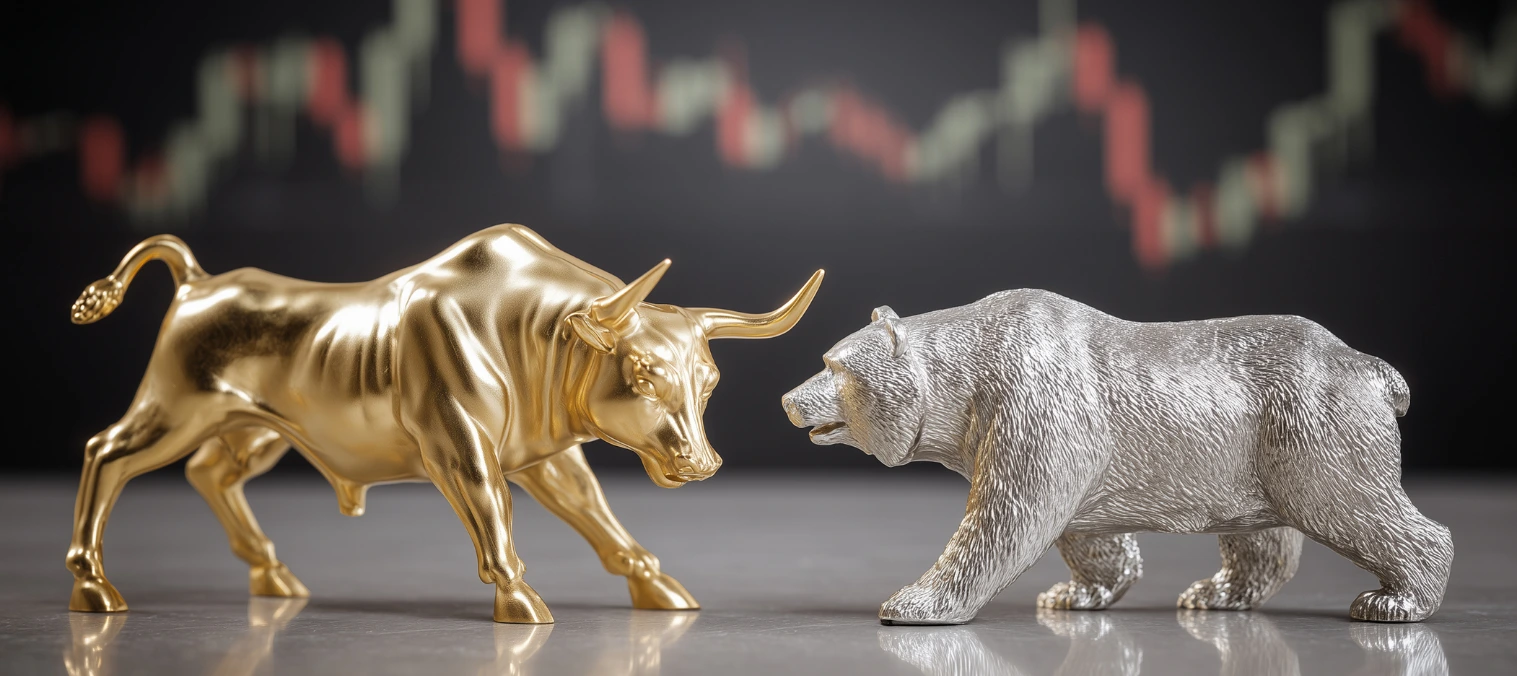
Financial markets operate in cycles. Prices rise, optimism builds, and investors enter the market. Eventually, the trend reverses, prices decline, caution grows, and investors begin to sell. These two phases are commonly referred to as bull markets and bear markets.
Recent gains in the S&P 500, along with growth from AI-driven companies such as NVIDIA Corporation and Microsoft Corporation, have contributed to optimism in markets entering 2026. Nonetheless, analysts continue to highlight the risks posed by geopolitical tensions, elevated interest rates, and energy price volatility, which could further amplify market volatility.
Let's start by understanding how bull and bear markets operate.
What is a Bull Market?
A bull market refers to a period when asset prices rise consistently over time. Investors are optimistic, economic conditions are strong, and corporate profits tend to grow.
The term “bull” comes from the way a bull attacks by thrusting its horns upward, symbolizing rising prices.
Bull markets are typically characterized by:
- Rising stock prices
- Strong economic growth
- Increasing corporate earnings
- High investor confidence
- More initial public offerings (IPOs)
One recent example began after the 2022 market downturn, when stocks rebounded strongly. By 2024 and into 2026, major indices like the S&P 500 reached record highs again, largely fueled by investment in artificial intelligence infrastructure and cloud computing.
Historically, bull markets last much longer than bear markets.
What is a Bear Market?
A bear market occurs when stock prices fall by 20% or more from recent highs. It usually happens during economic slowdowns or financial crises.
The name comes from the way a bear swipes downward with its paws, symbolizing falling markets.
Bear markets typically feature:
- Falling stock prices
- Weak investor confidence
- Slowing economic growth
- Rising unemployment
- Increased market volatility
Recent examples include:
- The COVID-19 crash in 2020
- The 2022 global bear market which was triggered by inflation and aggressive interest rate hikes.
Bear markets tend to be shorter but more intense than bull markets. Historically, the average bear market lasts about 9–12 months, though severe downturns can last longer.
Bear markets are often sharp and uncomfortable, though typically shorter.
Some recent examples:
- 2020 pandemic crash: about -37% decline
- 2008 financial crisis: about -57% decline
- 2022 bear market: about -25% decline
Bull vs Bear Market: Key Differences
| Feature | Bull Market | Bear Market |
| Market Direction | Prices rise consistently | Prices fall 20% or more |
| Investor Sentiment | Optimistic and confident | Fearful and cautious |
| Economic Conditions | Strong GDP growth and low unemployment | Economic slowdown or recession |
| Corporate Earnings | Growing profits | Declining or uncertain profits |
| Investment Strategy | Growth investing and risk-taking | Defensive investing and capital preservation |
| Market Volatility | Generally lower | Often very high |
What Causes Bull and Bear Markets?
There’s no singular reason for these market cycles. They are usually driven by a combination of economic, financial, and psychological factors.
Interest Rates
Central banks strongly influence markets through interest rates. When the Federal Reserve System lowers interest rates, borrowing becomes cheaper. Companies invest more, consumers spend more, and stock markets often rise. Higher interest rates, on the other hand, can slow economic growth and push markets lower.
Corporate Earnings
Stock prices are a good indicator of company profits. When earnings grow rapidly, markets tend to enter a bull phase. The recent boom in corporate investments in artificial intelligence, led by NVIDIA Corporation, has significantly boosted tech-sector profits.
Economic Growth
Strong GDP growth and rising employment usually support bull markets. Recessions often trigger bear markets.
Global Events
Wars, pandemics, and financial crises can quickly shift markets. For example, the pandemic shock in 2020 triggered one of the fastest market crashes in history, followed by a massive recovery.
Investor Psychology
Markets are driven not just by data but by emotion. Greed can push markets too high during bull runs, while fear can cause panic selling during downturns.
How to Invest in a Bull Market
Bull markets are conducive to wealth creation, but they can also encourage overconfidence and increased risk-taking. With prices rising and confidence high, it may seem as though the trend will continue indefinitely. However, this is often when lapses in judgment occur.
Here are specific steps to help you navigate and invest during a bull market more intentionally:
Focus on Growth Stocks
Bull markets tend to reward companies that are expanding fast, especially those tied to new technology or major shifts in the economy.
In recent years, much of that growth has come from artificial intelligence, cloud computing, and semiconductor demand, as they sit at the center of these trends.
However, not every popular company represents a strong investment. During robust bull markets, even companies with weak fundamentals can see prices rise due to a general influx of capital.
To invest wisely, seek companies with sustainable revenue growth and healthy profits, not just those receiving the most attention. Review financial statements and future earnings potential before investing, and avoid buying stocks solely due to recent surges if their underlying performance isn’t clear or their prospects are uncertain.
Invest in Index Funds
If you aren’t sure about picking individual stocks, consider index funds, which let you participate in overall market gains with less effort. Index funds are suitable for most investors looking for steady, broad exposure.
Funds that track the S&P 500 give you exposure to hundreds of large companies at once. Instead of trying to guess which stock will win, you’re effectively betting on the overall economy.
This approach is effective in bull markets because broad exposure increases your overall returns, reduces risk from poor individual picks, and generally offers lower fees than active strategies. Over time, many investors find that this method outperforms trying to time the market or select winning stocks.
Stay Invested (Avoid Timing the Market)
A critical error during a bull market is exiting investments early out of fear of a possible downturn, as this can lead to missing out on significant gains.
The problem is that no one consistently predicts the top. Investors who exit too soon often miss the rally's strongest part. For example, after the 2022 downturn, many investors stayed on the sidelines expecting further declines. But markets recovered faster than expected, and those who waited missed a significant portion of the gains.
A more effective strategy is to remain invested if your long-term objectives are intact. Resist the urge to make decisions based on short-term market shifts, and rebalance your portfolio periodically to maintain your preferred risk level. Missing even a few top-performing days can significantly affect your overall returns.
Manage Risk (Even When Things Look Easy)
Don’t overlook risk management, even when the market is rising. Stay aware of potential downturns and prepare for possible volatility.
Even strong bull markets experience pullbacks, and some eventually turn into bear markets.
To control investment risk, diversify across different sectors and asset classes, such as stocks, bonds, and international funds. If one stock or sector dominates your portfolio, consider selling some shares to restore balance. For example, if a single stock grows far beyond your target allocation, rebalancing reduces your exposure to that risk.
Instead of asking, “What’s the best stock right now?” ask, “How should I position my investments to consistently participate in market gains over time?”
That shift in thinking leads to better decisions. You focus less on short-term wins and more on building a portfolio that can grow steadily over time.
Conclusion
Bull markets create opportunity, but they also test discipline. It’s easy to make money when prices are rising. It’s harder to stick to a strategy, manage risk, and avoid getting carried away.
The investors who come out ahead are usually the ones who stay consistent, stay invested, and stay realistic about risk. In the end, a bull market isn’t something you need to outsmart. It’s something you need to participate in wisely and consistently.
MORE ARTICLES FROM ACCRUE
Passive Income Ideas With Low Investment
How to Earn Passive Income in Dollars
Best Side Hustles for Quick Cash