
You know, sending money used to be simple: cash in an envelope or a direct bank deposit. Today, you’re spoiled for choice and slightly overwhelmed. Local cash pickup**,** bank transfers, and digital wallets all offer speed, security, and convenience. Yet choosing the wrong option can mean high fees, long delays, or a frustrated recipient.
In this guide, I break down how local cash pickup, bank transfer, and wallet work, where each one shines, and how to choose the best option based on real-life situations, not marketing slogans.
Local Cash Pickup vs Bank Transfer vs Wallet: Which Is Best?
Before comparing local cash pickup, bank transfer, and wallet, it's helpful to understand what’s happening behind the scenes.
1. Local cash pickup
With cash pickup, you send money through a provider that partners with local agents (shops, banks, kiosks). The recipient visits one of these locations, presents identification and a reference code, and receives cash.
This system exists to solve one big problem: access. Not everyone has a bank account or smartphone, but almost everyone can walk into a nearby agent.
2. Bank transfer
A bank transfer sends money directly into the recipient’s bank account. This can be: domestic (within the same country) and international (between countries, often through correspondent banks)
Bank transfers prioritize formality, traceability, and scale. They are the backbone of salaries, rent payments, tuition, and business transactions.
3. Digital wallet transfer
Wallet transfers send money to a mobile or app-based account linked to a phone number or email address. The recipient can:
· Pay bills or merchants
· Send money onward
· Withdraw cash (if cash-out is supported)
Wallets are popular in places where mobile money leapfrogged traditional banking.
How fast does money actually arrive?
Speed is important when sending money and is often the deciding factor; it varies widely.
· Cash pickup: Minutes to a few hours in many corridors
· Wallet transfers: Instant, hours, or same-day (if networks are integrated)
· Bank transfers: domestic is usually instant to same day (in many countries) and international: 1–5 business days (sometimes longer)
If someone needs money today*,* international bank transfers are rarely the best option. Cash pickup and wallets are designed for immediacy.
How do fees power money movement?
Most people look only at the transfer fee. That’s a mistake. The true cost of sending money includes:
Transfer fee
Exchange rate markup (FX spread)
Cash-out fees (for wallets)
Intermediary bank deductions (for international transfers)
Typical cost patterns
Cash pickup: higher fees or worse exchange rates, and paying for physical infrastructure and agents
Bank transfer: domestic transfers are often cheap or free, and international transfers may hide costs in FX rates or intermediary fees
Wallets: often low-cost to receive, although cashing out can be expensive
Key insight: A “zero-fee” transfer with a bad exchange rate can cost more than a transfer with a visible fee and a fair rate.
Convenience: Sender Ease vs Recipient Reality
The best option for you may be terrible for the recipient.
Cash pickup
Pros
· No bank or smartphone required
· Works in remote or underbanked areas
Cons
· Travel required
· Agent opening hours matter
· ID mismatches can delay payout
Bank transfer
Pros
· No travel or queues
· Strong records and confirmations
· Ideal for recurring or large payments
Cons
· Requires a bank account
· Slower for cross-border transfers
Wallet transfer
Pros
· Extremely convenient for digital-first users
· Great for bills, airtime, and everyday spending
· Fast and flexible
Cons
· Requires phone access and digital literacy
· Cash-out availability varies by location
What can go wrong?
This is the part most people don’t think about until something goes wrong. When a money transfer fails, it doesn’t just “delay” things; it creates stress, confusion, and sometimes damage. I’ve learned that the way a transfer fails matters just as much as how fast or cheap it is when everything goes right.
Cash pickup failures
· Agent runs out of cash
· Name doesn’t exactly match ID
· The recipient doesn’t meet ID requirements
Bank transfer failures
· Incorrect account details
· Compliance or fraud checks
· Delays through correspondent banks
Wallet failures
· Wrong phone number or wallet ID
· Network downtime
· Cash-out limits or unavailable agents
Rule of thumb: For official or high-value payments, bank transfers are easier to dispute and trace. For urgent support, cash pickup is often more forgiving, even if it’s messier.
Security and fraud considerations
All three options can be safe, but risks differ.
· Cash pickup: vulnerable if reference codes are shared or intercepted
· Bank transfers: safest for large sums but difficult to reverse if misdirected
· Wallets: strong app security helps, but SIM swaps and phone theft can be issues
Best practice: Match the security level to the amount. Large sums deserve bank-level controls.
When each option is the best choice
Choose local cash pickup when:
· The recipient is unbanked
· Cash is urgently needed
· You’re sending money to rural or low-banking areas
Choose bank transfer when:
· You’re paying rent, tuition, or invoices
· You need a paper trail
· You’re sending large sums
Choose wallet transfer when:
· The recipient already uses mobile payments
· You send small amounts often
· Speed and convenience matter
Conclusion: What Works For You
In conversations about sending money, especially across borders, people often ask the same question*:* Which method is best? Cash pickup, bank transfer, or digital wallet? The honest answer is not especially satisfying, but it is far more useful: there is no universal winner**.**
Each method exists because it solves a different problem. Each one succeeds where the others struggle. Understanding this is what separates stressful money transfers from reliable ones.
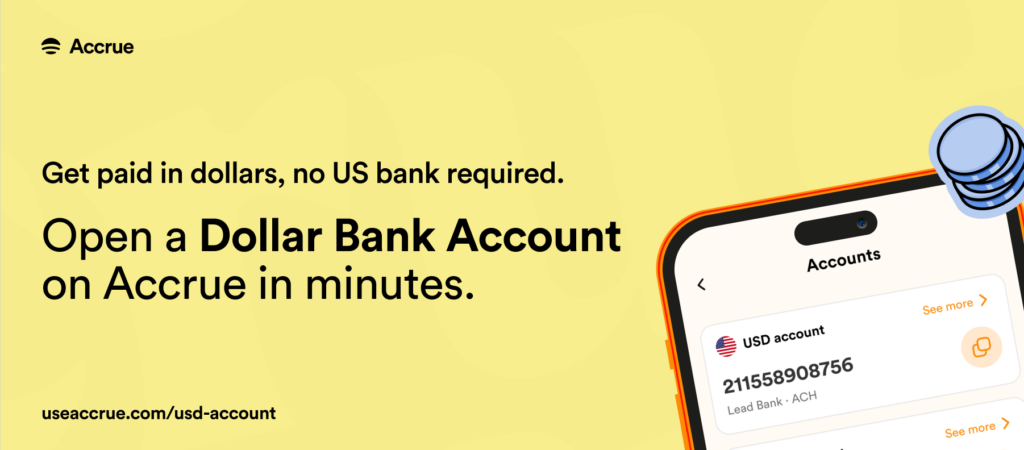
Wallet-based solutions, however, have increasingly emerged as the most balanced option for cross-border payments, particularly between Africa and the United States. This is where platforms like Accrue represent a meaningful shift. Accrue is built on a wallet-first model that prioritizes speed, transparency, and cross-border accessibility. For recipients who are already digitally active, this approach often delivers the best combination of convenience and cost without sacrificing reliability.
Ultimately, the most important principle is also the simplest: optimize for the recipient, not just the sender**.**