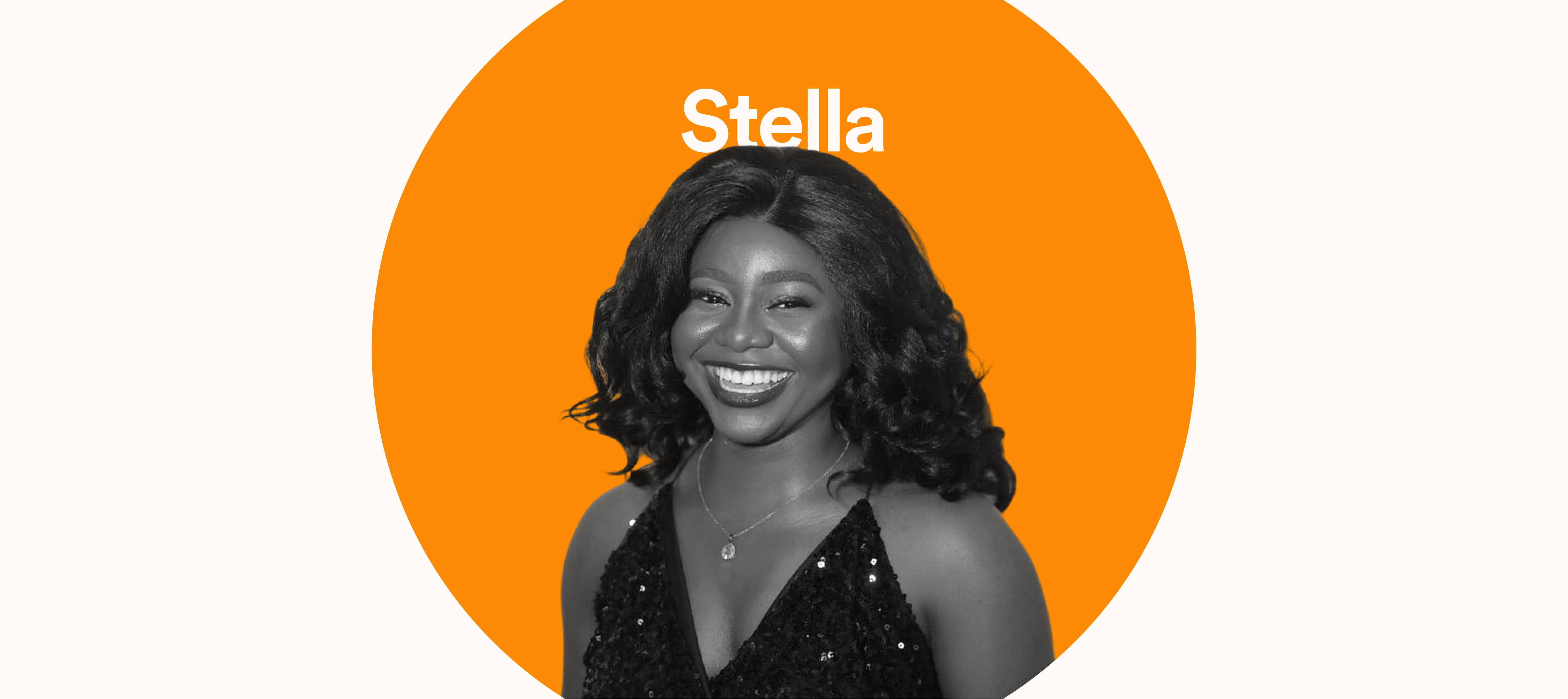
Stella Inabo went from ₦3,000 per article to making as much as $9,000 a month in-house at a B2B SaaS company.
She now runs her own consultancy, advises businesses on content strategy, and has built a reputation as someone who understands both the craft and the business side of marketing.
It Started With Writing
Stella has always loved writing. Around 2018, someone helped her set up a blog, and she started publishing whatever came to mind.
Then someone who had seen her work connected her to her first paid gig. “Three articles, I think, were what I did for them at 3k per article,” she said. That first payment may have been small, but it changed how she saw writing.
“So it was like 9K. I’m like, ah, there’s money here.”
That realisation pushed her forward. She started taking on more work wherever she could find it, including outsourced jobs that came through a WhatsApp group. Some of those jobs paid very little. Some did not even pay properly. But even in that messy phase, she was building something valuable: experience.
When Writing Became Marketing
As Stella kept working, she began to see that writing was not just about putting words on a page. It was tied to a bigger commercial goal.
“It was when I started cold pitching to find work with international companies that I started realising that all the writing I’ve been doing was a part of something larger, which was content marketing.”
That shift changed everything. She began taking courses, learning more about marketing strategy, and paying closer attention to customer psychology, conversions, and how content actually supports revenue.
“Writing was supposed to support a bigger goal of marketing and eventually selling products to people,” she said.
That insight marked the real beginning of her marketing career. She started developing a point of view about how businesses grow.
A major turning point came around the end of her NYSC period. She had been writing for a Malaysian agency, but when COVID disrupted things, the work dried up. She bought a course, joined a community, pulled together her writing samples, and started cold emailing companies.
A lot of companies. “I think I cold emailed over a hundred people,” she said.
Most of them did not respond, but a few did, and two of those opportunities turned out to be life-changing.
“Out of those five people or so, two of them I got to work with, and that totally changed my life.”
Her clients paid $150-200 per article, and by the time she joined a U.S. content marketing agency, she was earning around $4,000 to $4,500 a month. Later, when she moved in-house, that range rose to $7,000 to $9,000 monthly.
Looked at from the outside, it sounds like a clean upward trajectory, but Stella is honest about the uncertainty that came with freelancing.
“The thing about freelancing is that it’s fun, right? Because you get to set your own hours. If you work a lot, you can make a lot of money. But it’s not steady work. So I had a lot of anxiety.”
Her next big leap came through community, and by this point, Stella had become deliberate about building relationships online. She reached out to people, joined communities, and built relationships. One of those connections eventually led her to Animalz, the well-known U.S. content marketing agency.
She got in, and the experience changed her about working in a structured environment, and it saw her writing improve.
“They have a very rigorous editing and review process, so it improved everything that I already knew.”
The role also strengthened her confidence. She was placed on one of the agency’s major accounts, and succeeding there reminded her that she could perform at a high level.
Agency life was fast-paced, and Stella knew she wanted something different.
She also wanted to be closer to the product, customers, and the company’s core mission. That desire led her to Float, where she moved into an in-house role. She spent about 3 years and 7 months there and increased her income during that time.
Building Wealth With Caution
Stella understood early that remote work, high salaries, and easy hiring would not last forever. She also knew marketing roles are often vulnerable when companies start cutting costs.
So she approached money carefully. “I’m paranoid, right?” she said.
It sounds funny, but in practice, that paranoia became discipline.
“I was extremely frugal. I would live on like a portion of my salary, maybe 30 to 40 per cent, and then I’d save and invest the rest.”
That habit gave her options.
Instead of inflating her lifestyle with every pay raise, Stella focused on savings and investments. She invested in stocks, mutual funds, real estate, and startups. She built a buffer because she understood something many people only learn late: high income is powerful, but keeping and growing it matters just as much.
What’s Next
After leaving Float in late 2025, Stella stepped into a new chapter. She began focusing on consulting through her own content strategy practice, helping businesses think through strategy, content direction, and execution support.
She describes this current phase with refreshing honesty. It is still evolving. She is not pretending it is some perfectly polished empire already. She is building, testing, advising, and giving the next chapter room to take shape.
Lessons From Stella Inabo’s Journey
- The first is that small beginnings are not a disadvantage. A ₦3,000 article can still be the start of something meaningful if it helps you build skill, confidence, and momentum.
- Skill alone is not enough. Relationships matter. Communities matter. A lot of her biggest career opportunities came through people, not just applications.
- Timing matters. She entered remote content marketing during a strong period, but she also understood that markets shift. That is why she emphasises fundamentals. Trends change, tools evolve, and AI will continue to reshape marketing, but the ability to write clearly, understand audiences, and think strategically still matters.

I’ve lived many lives, but one lesson ties them all together: money is only as powerful as its utility. Through my work, I share stories about money and create guides for Africans who want to get the best out of theirs.