
Behind the Build: How Accrue Turned Ambassador Program into a User Acquisition Engine
A campaign doesn't always deliver its biggest lesson as originally designed. Sometimes, the most valuable insight comes from what happens when a team experiments, pays attention to how users respond, and discovers an opportunity it hadn't fully considered.
The Ambassador Program began as an idea to get more users involved in promoting the brand, but after the team adapted elements of our successful Christmas campaign into a gamified experience, we uncovered something bigger: users were willing to invite friends, complete challenges, and explore more of Accrue's products when there was a clear incentive to participate.
The results were worth it. We went from averaging around 8,000 sign-ups a month to 15,000 during the campaign period, making the programme a promising customer acquisition channel.
For the first edition of Behind the Build, I spoke with Esse-Oghene Udubrah, Accrue's marketing lead, about the thinking behind the programme, the teams that helped bring it to life, the challenges of execution, and what the next version could look like.
Let's start with the idea behind the Ambassador Program. What were you and your team hoping to achieve when the team first conceived it?
The idea was to create an ambassador programme that would encourage our users to refer friends and family to Accrue and take meaningful, revenue-generating actions on the app.
Initially, we imagined a more physical approach to the programme for users in the countries we operate in, but we had already seen the traction our Christmas campaign generated, and we had largely treated that format as seasonal. We didn't fully appreciate how much more we could do with it.
We adapted the system behind that campaign into an experience that encouraged users to participate in challenges, refer people, and engage with our products.
You mentioned the Christmas campaign. What made you decide to adapt that approach for the Ambassador Program, and what did the results look like?
The Christmas campaign showed us that people enjoy interactive, gamified experiences. We'd also seen this with our quizzes, interactive social media posts, and other activities where users had something to figure out or participate in.
With the Ambassador Program, we applied that learning to customer acquisition. Instead of simply asking people to tell others about Accrue, we gave them activities to complete and incentives to work towards.
One of the strongest results came during a month when we recorded 15,000 sign-ups through the campaign, compared with our usual average of around 8,000 a month. That was almost twice our usual sign-up volume and showed the programme's potential as an acquisition channel.
We also saw people refer friends and family, complete tasks, and adopt products they might not have explored otherwise. One user, for example, earned up to $100 in referral bonuses through the programme.

Wow!
Yes, we had a dashboard where we tracked referrals, so it showed that a well-designed campaign could do more than attract attention; it could also encourage people to take actions that were valuable to both the user and the business.
Beyond bringing in new users, how did the programme influence adoption of Accrue's products?
One thing we noticed was that some users already had a specific reason for using Accrue. For example, they might send money across countries without necessarily paying attention to our other products.
The Ambassador Program helped bring those products to their attention.
We had four tasks over the six-week campaign that encouraged users to create Virtual Dollar Cards, and we saw increased card adoption during that period. Users also created the Dollar Bank Account, which makes receiving international payments easier and offers different fee advantages.
The important thing was that users weren't simply spending money on things they didn't need. They were discovering tools that could solve real problems for them, while earning rewards for participating in the campaign.
It’s the outcome we hoped for. When people understand what our products can do and find value in them, it creates more opportunities for adoption beyond their original reason for downloading the app.
Running a programme like this requires more than a good idea. What did execution look like, particularly for the marketing team?
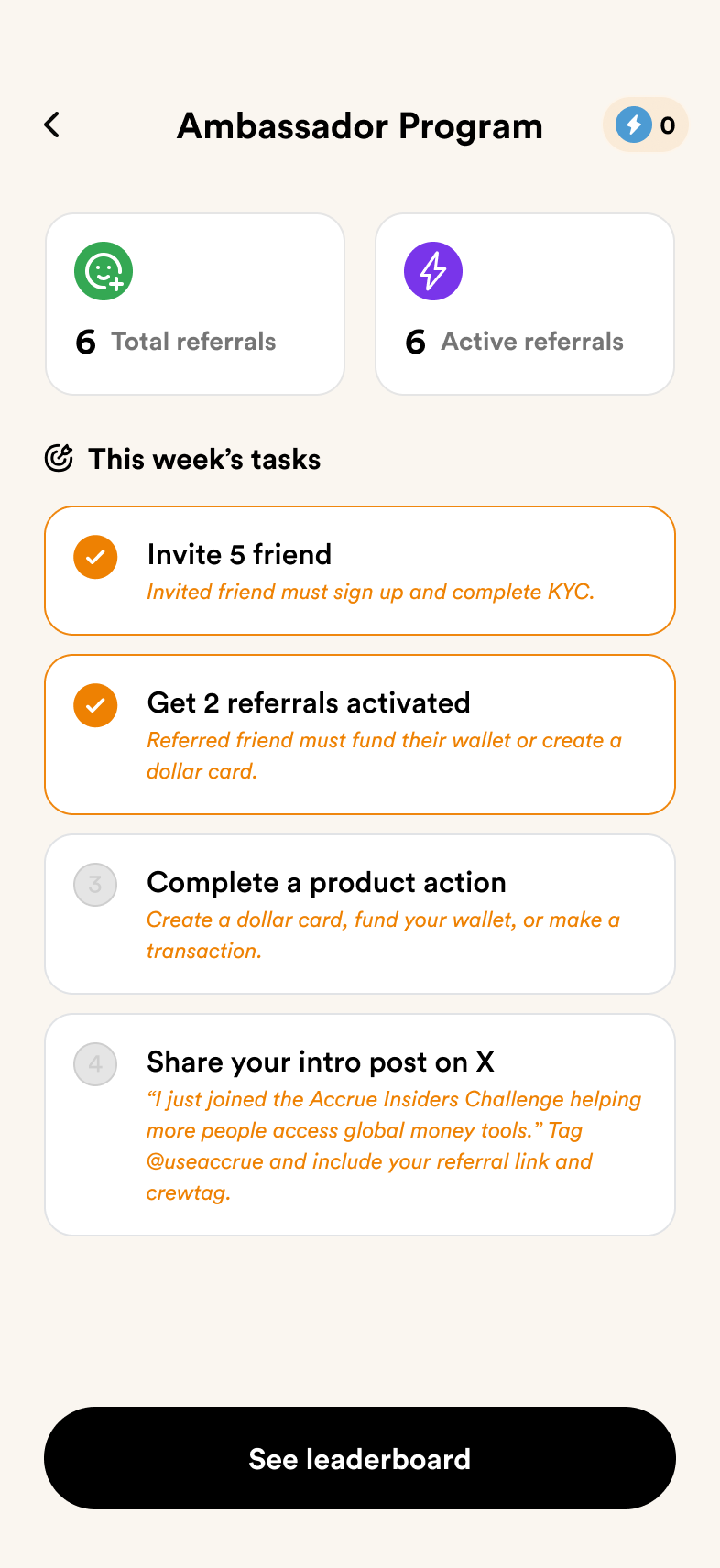
Mehn! It was challenging, especially for marketing and product. Setting up the tasks involved a lot of design work, communication, and planning.
We wanted to keep the programme interesting throughout the six weeks, so we had to think carefully about the activities we introduced each week. We didn't want the tasks to feel too repetitive, although some naturally appeared more than once because they were important to the campaign.
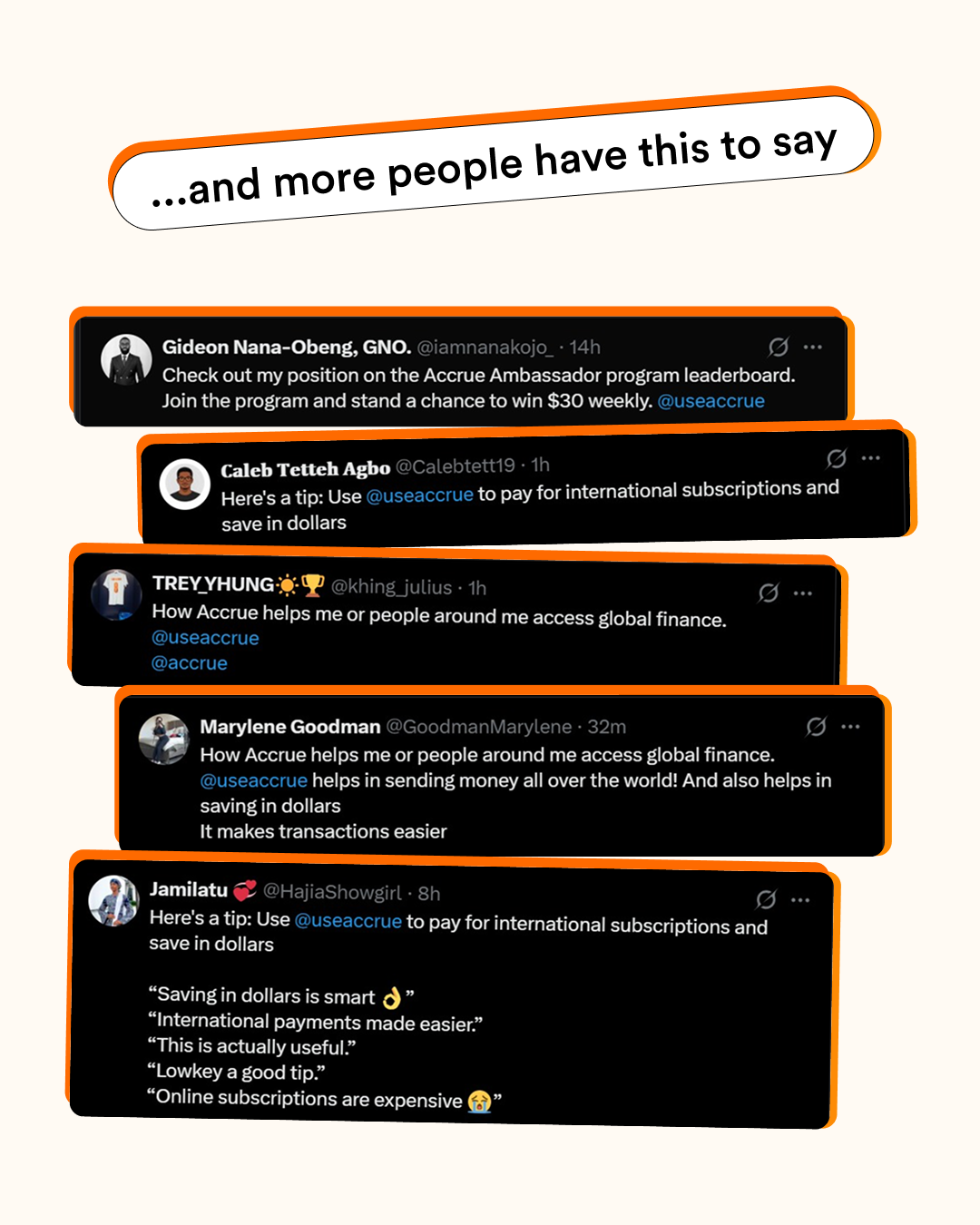
We also had to communicate the tasks clearly, make sure users understood what they needed to do, and create an experience engaging enough to keep them participating.
A lesson for the entire team and me was that gamification isn't just about adding challenges and prizes. You have to think about the experience as a whole: what users are being asked to do, why they'd want to do it, and how each task connects to the product.
You work closely with product, engineering, and design to bring campaigns like this to life. What does that collaboration look like behind the scenes?
I think we have a really good relationship with the wider product, engineering, and design teams because, despite our different responsibilities, we share the same goal: getting Accrue into the hands of more Africans and helping them move money seamlessly.
Marketing can come up with exciting ideas and use data to make a case for why we think a campaign will work, but engineering helps us look at those ideas objectively. They consider what the user experience will be like, what could break, and what is technically possible.
There's a lot more involved in launching something than making it look good. You have to consider the backend, the user journey, and even the requirements for getting features approved on the app stores.
Sometimes, we disagree. In marketing, we are usually excited about an idea, while engineering raises concerns about how it would work, but those conversations are necessary. They help us identify gaps before we commit too much time and effort to an idea.
I wouldn't take full credit for the campaigns we execute because the product, design and engineering teams do a lot of the work that makes them possible. Marketing may be the team people see communicating the campaign, but there's a lot happening behind the scenes to make sure the experience actually works.
Were there any challenges or ideas from the process that didn't quite work out as expected?
One challenge is that an idea can sound great from a marketing perspective, but once you work through the details with product and engineering, you realise there are other things to consider.
We sometimes get very excited about what a campaign could achieve, whether that's attracting more users or generating more revenue, but practical questions remain about the user experience, the technical requirements, and how everything will work together.
Not every idea makes it to execution, and sometimes ideas are dropped along the way. That's part of the process, and it has also made it more objective and helped us think more carefully about what we're proposing.
For the Ambassador Program specifically, keeping the tasks fresh and coordinating the design, communication, and product experience were also significant parts of the work.
Given the results, why continue developing the programme instead of treating it as a one-off campaign?
We've seen the programme show promise not only in sign-ups but also in social media engagement and product adoption. That tells us there's something worth building on.
The more we learn about what users respond to, the more we can refine the experience and make it more exciting. We don't want to stop at something that worked once. We want to understand why it worked and how we can make it better.
The programme has also shown us that users enjoy being involved in challenges and having a clear reason to participate. That's a useful insight we can apply to future campaigns.

This means that there will be a third one. What can users look forward to in the next edition?
The next version will have a different look and feel. We're planning something more energetic, with more tasks and higher prizes.
We want the programme to feel exciting and rewarding for the people who participate. Users are putting in effort when they refer friends and encourage others to use Accrue, and we want them to feel recognised for that.
The rewards are also an important part of the experience. In the previous programme, users could earn referral bonuses, and we want to continue creating opportunities for people to benefit from helping others discover Accrue.
We also haven't abandoned the idea of a more physical ambassador programme. It's something we'd like to revisit with better structure and clearer execution plan.
Finally, we want to keep refining the programme based on what we've learnt, give users more reasons to participate, and make it a stronger channel for bringing new people to Accrue.
It Took a Village
The Ambassador Program was never a one-person show. Different teams brought their ideas, skills, and perspectives together to build something that worked.
Marketing — Adesuwa, Esse and Alex
Developing the campaign strategy and shaping the messaging, coordinating the program, and keeping things moving.
Engineering — Alan, Essilfie, Gabby, Victor, and Ifeanyi
The engineering team helped bring the program to life on the product side, turning ideas into immersive experiences for ambassadors.
Design — Richard and Tema
The team translated the campaign into visuals that communicated the idea, captured attention, and gave the program a recognisable look and feel.