
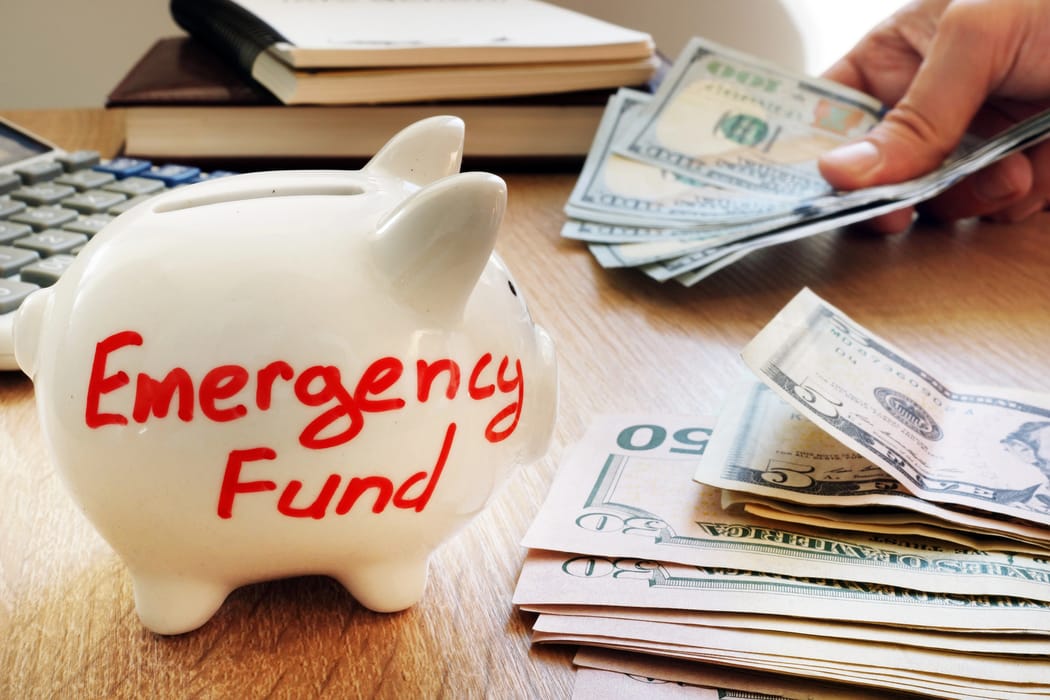
What would happen if your income stopped for two or three months?
Would you still be able to pay rent, buy food, cover transportation, manage medical bills, and keep life moving without borrowing from friends, begging family, or taking out a high-interest loan?
For many Africans who earn in dollars, that question is uncomfortable because the cost of living keeps rising while income does not always keep pace. One emergency can scatter a carefully planned month. A sudden hospital bill, job loss, family responsibility, rent increase, laptop repair, or business slowdown can quickly become a financial crisis.
A dollar emergency fund gives you a financial cushion in a stronger, more stable currency. It helps protect your savings from local currency devaluation and inflation
Let us break down how to build one, even if you are starting small.
What Is a Dollar Emergency Fund?
A dollar emergency fund is money saved in US dollars or dollar-based assets for urgent, unexpected expenses. Think of it as your financial backup generator. You may not use it every day, but when there is a blackout, you will be grateful it exists.
For Africans living in economies where inflation and currency depreciation can reduce the value of local savings, keeping part of your emergency fund in dollars can help preserve your purchasing power.
How Much Should You Save in a Dollar Emergency Fund?
The usual advice is to save three to six months of essential expenses, but for many people, that can feel overwhelming.
So let’s start with a target. Instead of trying to save $3,000 immediately, begin with your first milestone.
For example: if your essential monthly expenses are around $250, your first goal can be $500. If your monthly expenses are around $400, your first goal can be $1,200, and if you are just starting out, your first goal can be $100.
The amount matters, but what matters more is consistency.
A $50 emergency fund is better than no emergency fund. A $200 emergency fund is better than relying on debt. A $1,000 emergency fund can give you breathing room when life becomes unpredictable.
Start with what you can manage, then build gradually.
Calculate Your Essential Expenses
Before you build a dollar emergency fund, you need to know how much your basic life costs.
Do not calculate everything you spend money on. Focus only on essentials. These may include, but are not limited to, rent, food, transport, electricity, data, healthcare, debt repayment, and basic family responsibilities
Let us say your basic monthly expenses are:
Rent contribution: $180
Food: $120
Transport: $70
Data: $40
Healthcare essentials: $60
That gives you a monthly survival cost of $470. A three-month emergency fund would be $1,410. A six-month emergency fund would be $2,820.
Remember, you do not need to save all of it at once. Your first goal can be $150, then $300, then $750, and eventually three to six months of expenses.
Choose a Safe Place to Keep Your Dollars
Your emergency fund should be accessible, but not too accessible. If it is too easy to spend, you may touch it for non-emergencies. If it is too difficult to access, it may fail you when you need money urgently.
Good places to keep a dollar emergency fund may include: a domiciliary account, a regulated digital savings platform, a dollar wallet; the Accrue Dollar savings wallet is best for this, a low-risk dollar savings or investment product with flexible withdrawal.
Avoid keeping your emergency fund in places where you can lose access easily or where the value can fluctuate too much. An emergency fund is not the place for risky investments. The goal is safety first, growth second.
Start With a Small Dollar Target
Many people delay saving because they think they need a huge amount to begin.
As a matter of fact, you don’t. You can start with $10, $25, or $50.
The important thing is to start. For example, if you save $20 every week, you will have about $1,040 in one year. If you save $50 every month, you will have $600 in one year. If you save $100 every month, you will have $1,200 in one year.
Small amounts become serious money when you give them time.
This is one of the simplest ways Africans can build a dollar emergency fund without waiting for a perfect salary or a big financial breakthrough.
Automate Your Savings
Discipline is good, but automation is better. If you wait until the end of the month to save what is left, there may be nothing left. Bills, cravings, family needs, and unexpected expenses will always compete for your money.
Instead, pay into your emergency fund first by setting a fixed amount to transfer to your dollar savings each week or month. The amount does not have to be large. It only has to be consistent.
For example: save $15 every Friday, save $40 every payday, save 10% of every freelance payment, save half of every bonus or cash gift or convert a fixed amount from local currency to dollars every month.
Automation removes emotion from the process as you do not have to debate with yourself every time.
Refill It After You Use It
Using your emergency fund is not a failure. That is what it is there for. The real mistake is using it and never rebuilding it.
If you withdraw $300 to pay a hospital bill, create a plan to replace it over time. You can refill it slowly, just as you did the first time.
For example, you can save: $50 monthly for six months, $75 monthly for four months or $100 monthly for three months
The goal is to restore your protection as quickly as your income allows.
Keep It Separate From Other Goals
Your dollar emergency fund should not be mixed with your rent savings, business capital, school fees, travel fund, or investment portfolio.
When everything is in one account, it becomes easy to lose sight of the purpose of the money.
Separate your accounts clearly. You can have: one account for daily spending, one account for local savings, one account for investments, and another account for your dollar emergency fund
This makes your money easier to manage and reduces the temptation to spend your safety net on non-emergencies.
FAQs About Building a Dollar Emergency Fund in Africa
How much should I have in a dollar emergency fund?
Aim for three to six months of essential expenses, but start with a smaller goal, such as $100, $300, or $500. The most important thing is to begin with an amount you can maintain consistently.
Should I save my entire emergency fund in dollars?
Not necessarily. You can keep part in your local currency for quick daily access and part in dollars to protect against currency depreciation. A balanced approach can give you both liquidity and stability.
Is a dollar emergency fund an investment?
No. A dollar emergency fund is, first and foremost, a safety net. You can keep it in a low-risk dollar savings option, but avoid risky investments because the money must be available in an emergency.
Can I start a dollar emergency fund on a low income?
Yes. You can start with what you can afford, even if it is $10 or $20 monthly. Consistency is more important than saving a large amount at the beginning.
Where should Africans keep a dollar emergency fund?
You can keep it in a domiciliary account, a regulated dollar wallet, a trusted fintech platform, or a low-risk dollar savings product that allows flexible access. The key is to choose a safe option that gives you access when you need it.
Final Thoughts: Start Before You Feel Ready
The best time to build a dollar emergency fund was before you needed one. The next best time is now.
Start with $10. Start with $20. Start with whatever you can afford. What matters is that you begin building a financial cushion that protects you when life becomes unpredictable.
Keep reading
Building an Emergency Fund When Living Abroad
This article details steps on building an emergency fund when living abroad. How Africans can build an emergency fund when living abroad
How to Save Money on a Small Budget
Learn how to save money on a small budget, track spending, cut costs, build an emergency fund, and save more even with a low income.
How to Build a Rainy Day Fund When You Have Financial Dependents
Learn how to set up a rainy-day fund, protect the people who depend on you, and help prevent temporary financial problems from becoming long-term setbacks.