
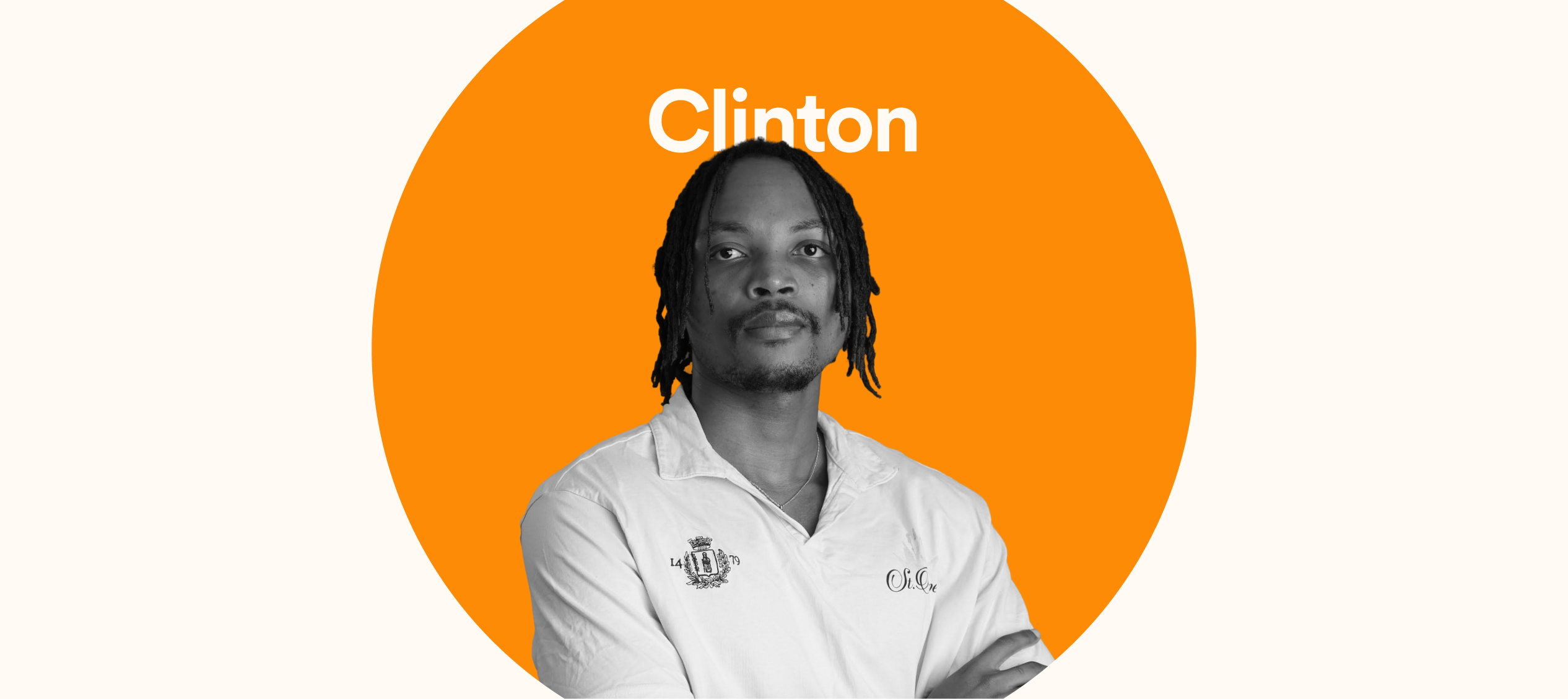
Clinton Mbah is the co-founder and CEO of Accrue, a financial technology company helping Africans send and receive money across Africa and the US.
Long before Accrue, Clinton — who is Nigerian and grew up in Ghana — made money first as a graphic designer, then a WordPress developer. Along the way, he also taught himself to code, which ultimately took him to Helicarrier, where he led engineering on Sendcash (one of Nigeria’s largest crypto-remittance products). His experience there — building the rails for moving money in and out of crypto — became the foundation for Accrue.
I sat down with Clinton to talk about his earliest memories of money, teaching himself to code, building in public, and what the early years of Accrue actually demanded of him.
What was the first thing you did for money?
The first thing I did for money was graphic design. I used to design flyers and banners for businesses that wanted to advertise their services. This was around 2014 or 2015, when I was still a teenager. I think I got paid GHS 200 for a design. Back then, before inflation, that was a reasonable amount of money.
Why did you start doing that?
Independence. I’ve always wanted my own money, to do what I wanted with it. After senior high school, I took a year off before applying to university, so I had time to explore my interests. Art has always been a passion of mine, so graphic design was a way to earn from it.
Did you ever think you would pursue design professionally?
Not really. I don't think I had a clear sense of what I wanted to do. I was mostly exploring my interests, hoping one of them would lead somewhere.
Computers were the other thing I was drawn to, so I started learning to program. I picked up HTML and CSS, then started building WordPress websites. That was the next thing that paid — I built sites for people and earned GHS 400–500 per project. After that, I got into university and shifted my focus there.
When did programming become serious for you?
At university, I reconnected with a friend from senior high school who got me back into programming. For the first time, I had the guidance and the motivation to take it seriously — and I did. I learned to build Android apps with C# and Xamarin.
In my second year, I applied for a job as a mobile software developer. I was promised a GHS 2,000 salary, which was a lot of money at the time. I did the interview and got the job — and then they told me the pay would actually be GHS 500 because it was my first job. I was upset at first, but I took it anyway. I figured the experience would still look good on my CV.
LOL. What was that experience like?
It was very stressful. I was on the day school schedule, but because of the job, I had to switch to an evening schedule. I moved closer to campus and rented a room with some classmates.
My routine was intense. I would take a bus to work, work from around 8AM to 4PM, come back home, freshen up, eat, and then head to school from 6PM to 9PM.
I did that for about a year. Eventually, I realised it was far too stressful, and I wasn’t learning much on the job anymore, so I quit. After quitting, I set out to learn other languages — until then, I'd mostly known C# and Xamarin for Android. I picked up JavaScript, then Vue.js and Node.js.
I used Glitch and freeCodeCamp a lot. Since I hadn’t switched back to a day schedule, I had from morning till 5PM to myself — I'd go to internet cafés, download programming tutorials onto my hard drive, go home to watch them, and build things. I was just learning and building as much as I could.
How did your next opportunity come?
My brother sent me a tweet about an internship. The internship was supposed to pay GHS 1,000 a week, which sounded like footballer money to me at the time. I applied and got it — and that was when I decided programming was something I wanted to do professionally.
The internship was with Edem Kumodzi, one of the OGs in the Ghana tech ecosystem. The app we were building ran on Ruby on Rails, so Edem was teaching me Ruby as part of the internship. But since I already knew Vue, I suggested we use it for the frontend and keep Rails on the backend. He let me try, and I rebuilt the frontend in Vue.
You were building in public on X
Twitter was different then. It wasn't what it is now — back then, it was high-signal, and you could build a real community around your work. I was deep in the Ghanaian tech scene, and I shared what I was building, knowing people were paying attention.
If your work was good, people noticed — they'd recommend you for jobs or trust you with theirs. Building in public increased my luck surface area.
How did you get your first full-time role?
Edem was contracting for Africa Foresight Group, a management consultancy, and had brought me on as his intern to help build their software. As I was finishing school, he told them I was graduating soon and could join full-time. I interviewed and got the job before I'd even graduated, in 2019.
I joined as their only in-house engineer, building the internal system; later, they brought on two others to help.
I left after a year — I was doing the same thing every day. Nothing felt new anymore, and my growth had plateaued. I wanted something more challenging. That was when I started looking at companies where I could actually grow and learn from more senior programmers. Ghana's tech scene was still nascent back then, so I looked to Nigeria.
Helicarrier? What was it about them?
I used to see Helicarrier on Twitter. There was this video where the founders did an outfit-swap TikTok challenge they'd cross-shared to Twitter, and I remember thinking, "This seems like such a cool company."
Since I grew up in Ghana, my reference point was mostly Ghanaian tech. Around 2018, though, I deliberately started following more Nigerian tech people to keep up with the scene there — and that's how I started seeing more of Helicarrier.
How did you eventually get in?
In 2018, I applied for a back-end developer role at BuyCoins — one of the products that would later sit under Helicarrier, alongside Getcards and Sendcash. I got selected to interview, and I was ecstatic; it was exactly the direction I wanted my career to go, and the team was full of senior engineers I knew I could learn from.
Then I hit a wall: the role meant relocating to Lagos, and I was in my final year of university in Ghana. So I made a case for working remotely — I laid out that I had the setup for it: stable electricity, fast internet, a decent machine, and only an hour's time difference.
Timi, the CEO, was remote-friendly himself — he told me most of the work he'd ever done was remote. But BuyCoins was only about a year old and still figuring itself out, and he felt early hires needed to be onsite while the team worked out what its culture and its remote setup would even look like. So it was a no, for fair reasons.
I took it well. I remember writing back that my promise to stay professional probably didn't mean much — he barely knew me, and a crypto exchange has a lot to lose if a new hire goes rogue — but that it was the best I could offer, and that I understood if they went with someone else. I just hoped the opportunity might come around again at a better time.
It did. Around 2020, COVID had hit, and remote work had become normal, so I applied again. My former boss put in a good word for me. They gave me a shot, I interviewed, and eventually I joined — Helicarrier's first remote hire, and its first based in Accra.
How much were you earning when you joined?
I started on a fairly modest salary, paid in stablecoins. Over time, it grew — I came in as a mid-level engineer and moved up to senior, and by the time I left, my pay had roughly doubled.
What accelerated your growth at Helicarrier?
I took on a lot of responsibility. When I first joined, the codebase felt massive and hard to wrap my head around. Timi would assign tasks, and I had to figure them out, and for the first three to six months, I often felt like an impostor. After that, I got comfortable with the codebase and started contributing a lot more.
I worked on Sendcash (including adding GHS remittance) and Getcards, among other things. I really enjoyed the work, so I took on whatever they gave me. That's probably why I moved up quickly.
How did Accrue come into the picture?
Zino reached out to me. At Helicarrier, we'd worked together a lot — he was in support, I was an engineer, so whenever there was an issue, he'd come to me to fix it.
I didn't know he was working on an app with Adesuwa at the time. Then he messaged me asking if I knew any engineers who could help build an MVP. He had gotten a $10,000 investment from Aleph, one of the Helicarrier co-founders.
By then, I'd become obsessed with the idea of building my own startup — I already had ideas around crypto and a vision of the good it could do for Africans. So instead of pointing him to someone else, I told him I wanted in. For me, it was a way to build something and work my own ideas into it over time.
When did you launch the MVP?
Zino first reached out around May 2021, and by September, we'd launched the MVP. We had a Telegram community that users joined after completing KYC, and we'd post a changelog after every update so people could see what was new. In February 2022, we came out of beta.
You had to leave Helicarrier?
It became clear I had to leave — I was barely doing any Helicarrier work anymore.
The Helicarrier founders were very good to us. They invested in Accrue and gave us the money to start. They introduced us to people who helped us raise our first outside capital. And as I transitioned out, they were generous enough to keep supporting me even while my focus had clearly shifted to Accrue.
What does it take to build a company?
Delusion.
I don't think you can start a company without it. I recently watched an interview where Dangote said that if he'd known the full scope of what it would take to build a refinery, he wouldn't have done it.
For me, Accrue started as something that felt like a fun side thing. I wasn't really thinking about whether it would turn into a big deal — I was just nurturing something new with my friends, using my skills, working on things I cared about.
I love art. I love design. I love code. I love bringing things to life. And I love building for people — especially Africans. A startup seemed to pull all of that together. But I didn't really know what building one would involve.
If I'd known the real nitty-gritty, I probably wouldn't have done it. I'd have built some SaaS product, or just worked for a company. There were points where we were really going through it, and I'd ask myself why I didn't just go work for someone.
My life would have been a lot easier.
How did you hire the first set of people at Accrue?
Referrals were a big part of how we hired. We brought on a lot of ex-Helicarrier people — Alan, Antoinette, Shalewa. Mostly people we knew, or whose work we already had a sense of.
When we wanted to hire a designer, for example, I asked Peter, a former coworker, if he knew anyone great who'd be a fit for an early-stage team. He mentioned Richard. I interviewed him, and I remember telling my brother this was someone we needed to hire.
What do you look for when hiring?
The main things I look for are smarts, an ownership mindset, and someone who cares deeply about their craft. I'm not someone who wants to micromanage. I need you to know your stuff, and then I'll get out of the way and let you use your judgment to figure out what needs doing to hit our shared goals.
You've said Accrue is something you want to work on for a long time. What does that mean?
It means seeing the vision through: Africans being able to send money and move across the continent simply, without friction. A lot of the systems we have are broken, or just don't serve us well — and crypto lets us leapfrog them without having to fight entrenched interests.
A good chunk of what we're doing is me solving my own problems. I'm a Nigerian who grew up in Ghana; these are problems I've lived. So, however long it takes, I'm in for it. When I've solved my own problem — and by extension the problems of other Africans like me — that's when I'll feel the job is done.
I'm less attached to exactly what the endpoint looks like than to the goal itself: crypto being genuinely accessible and useful to everyday Africans. As long as that happens, I'm open to what the company becomes.
You, Adesuwa, and Zino seem very close. How was that friendship built?
I'd give the credit to Helicarrier. It goes back to the point I made about culture — everyone there was smart, took real ownership, and was also just a good person. So when the three of us came together, we meshed.
We're quite different people. Adesuwa is religious and somewhat strict; I'm not, and I colour a bit outside the lines. Zino is exuberant; I'm reserved. But our ideals and values line up — and we've got real tolerance for people who aren't exactly like us, as long as that core is shared.
I think it was the curation Helicarrier did — bringing together people with the same values and a similar vibe — that made it possible for the three of us to work so well together.
You Will Enjoy Reading: How Adesuwa Omoruyi Went From Teaching To Building Accrue
Keep reading
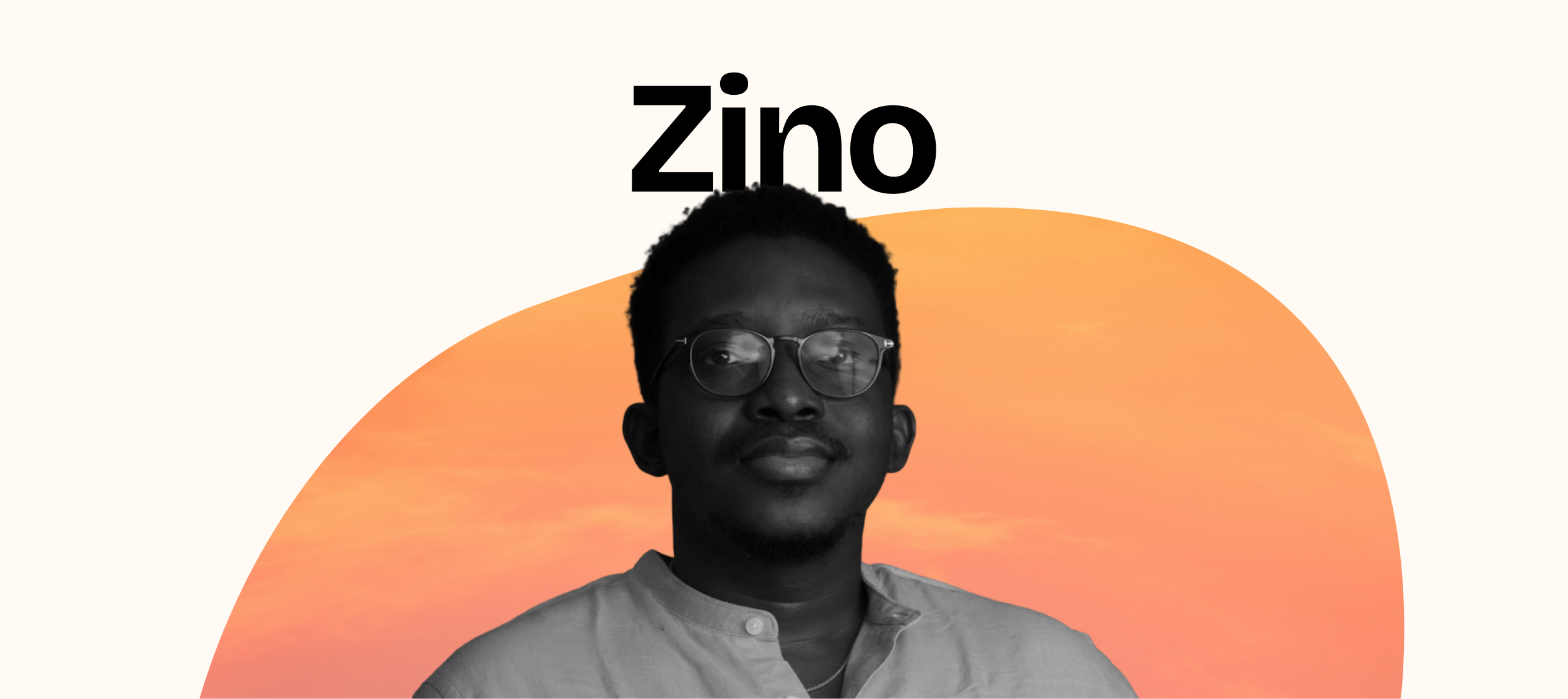
How Zino Asamaige Went From Accounting To Building Accrue
I sat down with Zino Asamaige to talk about his earliest money memories, his shift from banking to crypto, the support that helped him take chances, and how he learned to build a business around what customers actually needed.
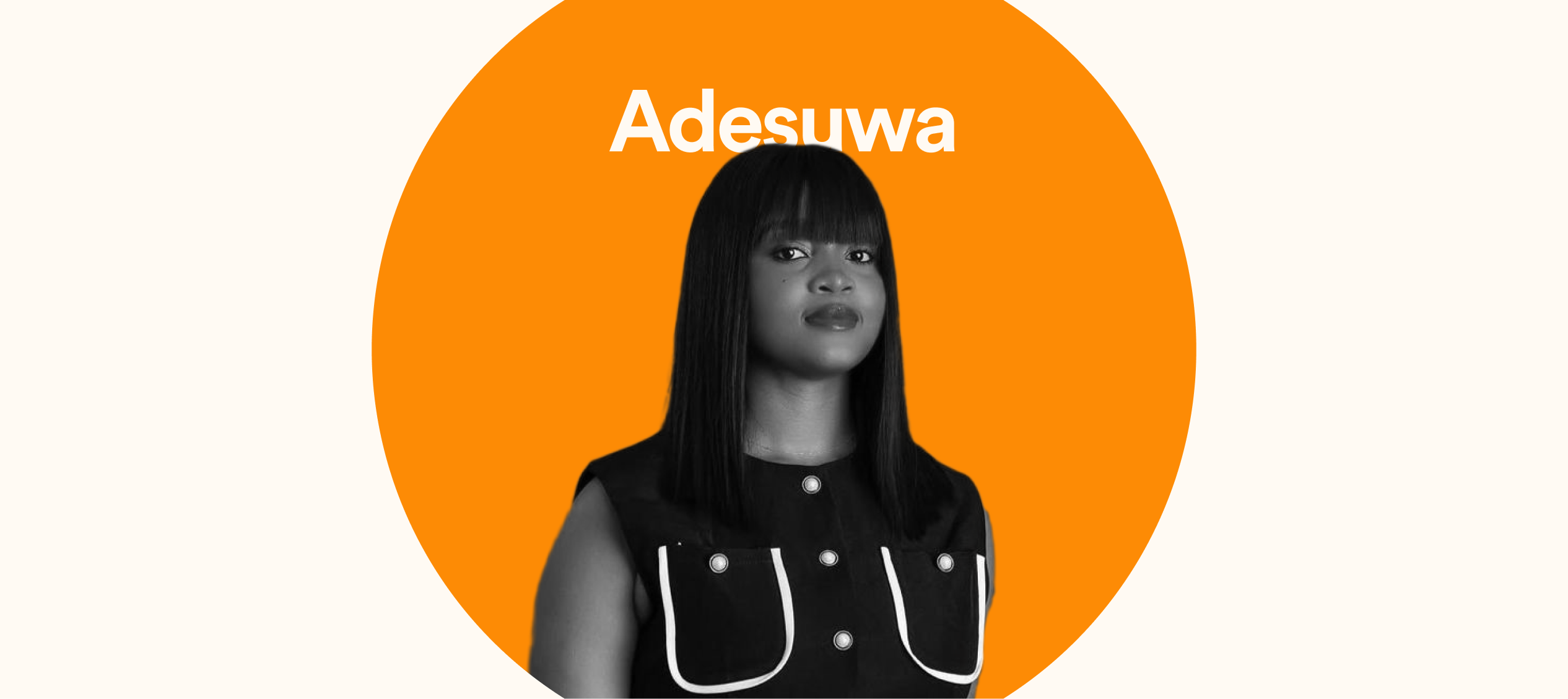
How Adesuwa Omoruyi Went From Teaching To Building Accrue
I sat with Adesuwa to discuss how she built small businesses in university, career leaps, and building Accrue’s difficult early years
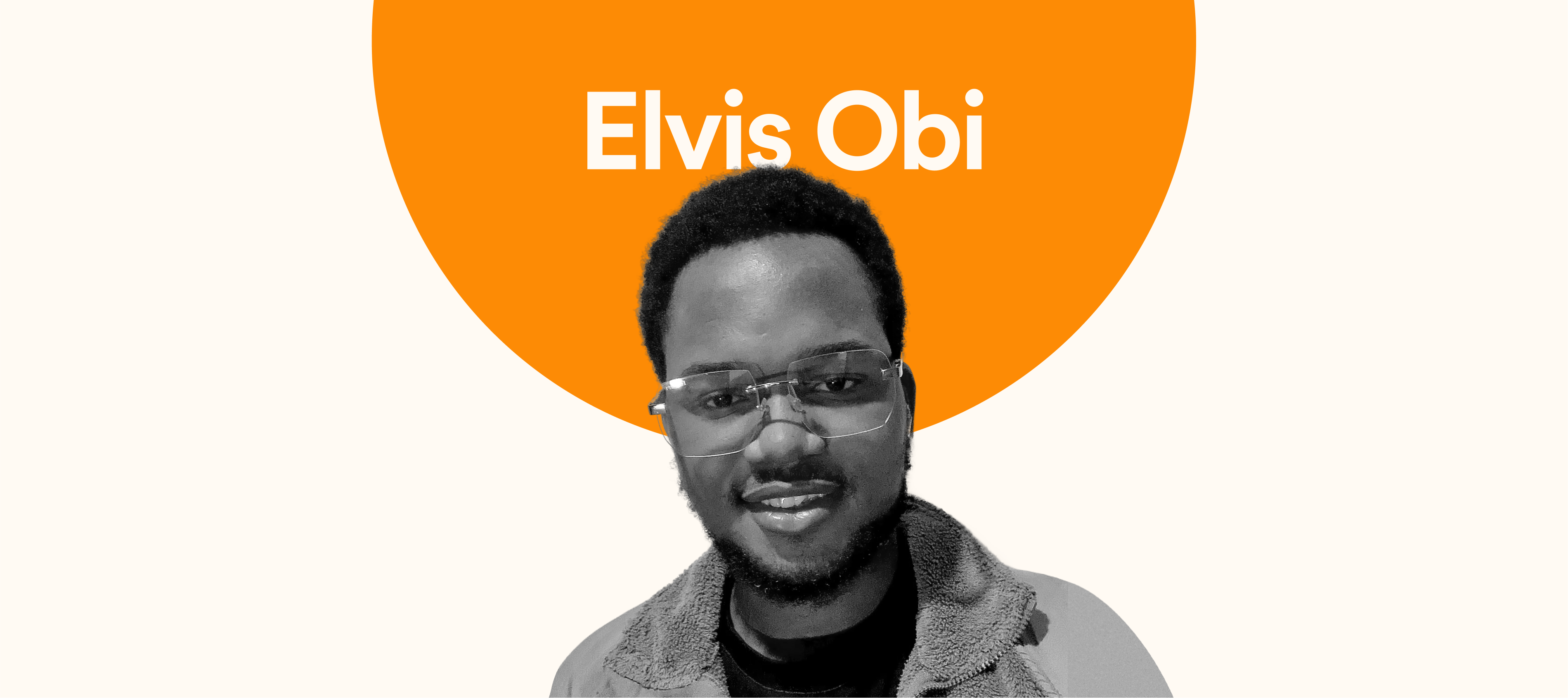
This Nigerian Designer Is Building The Most-Talked About Videogame Company
This Money Move article is about Nigerian product designer, Elvis Obi, from being fired at work to building a videogame company, Mazerance