How Zino Asamaige Went From Accounting To Building Accrue
Zino Asamaige is the co-founder and chief operating officer of Accrue, a financial technology company helping individuals and businesses in Africa send, receive and manage money.
Before Accrue, he studied accounting at Covenant University, worked in agriculture and banking, and joined BuyCoins, later renamed Helicarrier, as an early employee. There, he led customer success and later growth, and built friendships with his future co-founders, Clinton Mbah and Adesuwa Omoruyi.
He wasn't looking to start a company. He wanted a simpler way to invest his own money. That frustration became the starting point for Accrue, where he would go three years before taking a salary.
I sat down with Zino Asamaige to talk about his earliest money memories, leaving banking for crypto, the support that helped him take chances, and learning to build a business around what customers actually needed.
What was the first thing you did for money?
I washed cars for my uncles in our compound, and they paid me ₦50. This was in the mid-2000s, when I was in junior secondary school.
LOL. Was that a lot of money at the time?
It felt like a lot. I remember a bottle of Coke costing about ₦20, so I had enough to buy a bottle and still have some money left.
Did you keep finding ways to earn money at university?
Apart from a couple of paid summer internships, I mostly focused on being a student. Thankfully, I was a pocket-money baby. My parents supported me, so I didn't need to run a business or work alongside my classes.
I did get into photography and photo editing. I'd take photos of friends, or edit pictures they already had, but I did that for fun.
Tell me about those internships.
I worked as an accounting intern at the Nigerian Ports Authority during the summer holidays in 2011 and 2012. The pay was ₦30,000 a month.
After university, I did my National Youth Service Corps programme in Lagos. I worked at a Local Council Development Area (LCDA) office, which paid me ₦5,000 a month in addition to my ₦19,800 NYSC allowance.
Why stay somewhere that paid ₦5,000?
It gave me time to do other things. I negotiated a flexible schedule, so I only went in three days a week, from 8 AM to 4 PM, and had my weekends free. On the weekdays I wasn’t at work, I went to New Horizons in Ikeja to learn digital skills. I did that for about six months.
I was still living with my parents, and they were supporting me, so I could afford to make that choice. If I’d had to cover everything myself, ₦5,000 wouldn’t have worked.
What happened after NYSC?
I was always signing up for courses and programmes that could help me learn or get a good job. Just one month of job hunting and I was already thinking, “What if I’m unemployed forever?” The courses gave me something to do while I kept applying, and I felt like I was improving my chances.
I enrolled at Poise Graduate Finishing Academy, a finishing school that helped prepare graduates for the workplace. Before the programme ended, a guest speaker held a competition with a job opportunity attached. I answered the question, and he offered me a job.
He ran a farm and a tech startup and had raised money for his businesses. I liked his drive and was excited about what he was building.
So you took the job?
Yes, and my family didn’t like that. Looking back, I get it. I was 20 and moved to Abuja for a job without even agreeing on a salary. Who does that?
But at the time, I was excited. There was accommodation, a car, and we even had a chef. All of that, and I hadn’t asked how much I’d actually be earning.
I wasn’t getting paid at first. After a while, I asked about it and started earning ₦50,000 a month.
How did you end up working on the farm?
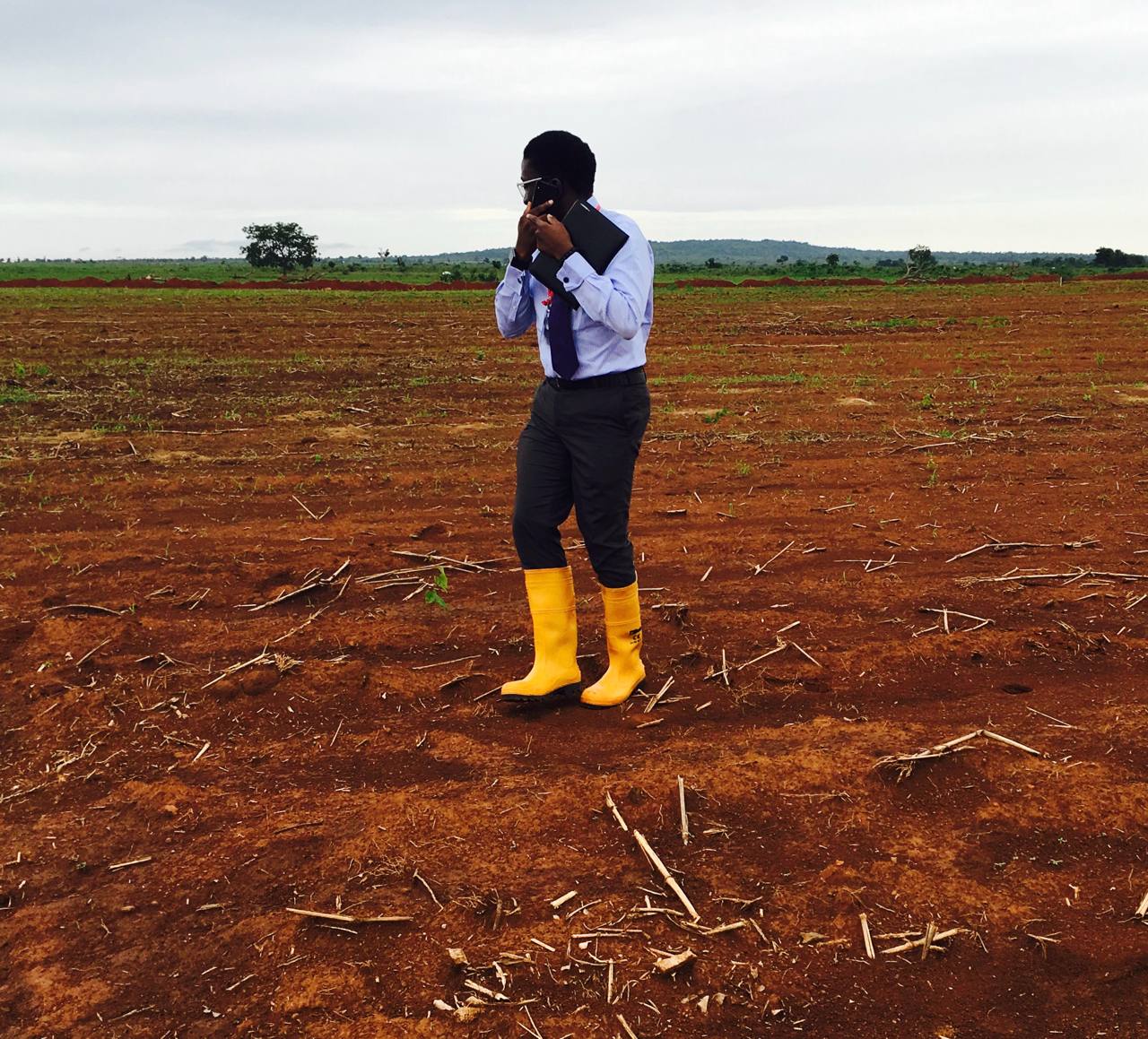
I worked at his startup for a while as an accountant, then got promoted to a management accounting role in his farming business, which had operations in Abuja, Kaduna and Jos.
The salary was about ₦150,000 a month, with a car and accommodation. I worked there for almost two years, travelling between Jos, Kaduna and Abuja for work. I also took trips with friends to other parts of Nigeria. I loved that period. Shoutout to Jos!
What made you leave?
I wasn’t really interested in accounting as a career. I had a degree in it and could earn a living from it, but I didn’t enjoy the work.
After I quit, I tried digital drawing and graphic design. I’d been good at visual art in secondary school, so I thought, let me give this a try, but being good at art and making money from it were two different things. Who no go, no know. After a few months, I had to be honest with myself. I needed an income.
So I went back to applying for accounting and finance roles. I wasn’t excited about the work, but I had the degree and experience. After a few job exams and interviews, I got a job at a bank.
What was the pay like?
It was a pay cut, and I had to move to Lagos! I went from earning ₦150,000 in Jos, with free accommodation and a car, to earning less in Lagos with no perks. Just imagine that downgrade. It’s me that wanted to chase passion, so I deserved it.
LMAO
I needed to live close to the office, so my dad helped with the first year’s rent. But he made it clear that the next year was on me. If I couldn’t afford it myself, I’d have to move back home. My dad wasn’t one to make empty threats, so I knew he meant it. As far as he was concerned, if the job couldn’t cover my next rent, I needed to find another job or put up with a longer commute until I could afford to live closer on my own.
As my rent renewal got closer, I still hadn’t saved enough, and I didn’t want to move back home. That was around the time I found the opening at BuyCoins. (Later rebranded as Helicarrier, with BuyCoins continuing as one of its products.)
How did that happen?
This was 2018. I was on leave, scrolling through Twitter, when I saw an opening for a customer success role at BuyCoins.
I'd been using BuyCoins, when they were Bitkoin Africa, for about a year. It was the first place I'd bought and traded Bitcoin, and I just loved what they were building.
The first interview felt like one of the worst of my life. I get anxious in interviews, and afterwards, I told everyone who knew I'd applied, "I'm not getting this job."
A couple of days later, I got an email inviting me to the next round. I was surprised. Maybe it hadn't gone as badly as I'd thought.
My sister helped me prepare for the next interview, which was with Aleph. Afterwards, I got an offer.
What was the offer?
₦180,000 a month after tax. Once I had the offer, I went to my branch manager's office and told her I was resigning. I sent in my resignation notice afterwards.
Energy! What did your manager say?
She was really nice about it. She suggested I take some more leave, try BuyCoins for a couple of weeks and then come back if I didn’t like it there. I knew she was looking out for me, but I was so sure of my decision to leave.
Were your parents convinced?
Not really. People had barely heard of Bitcoin, and many didn't understand it. My parents were asking, "What is a Bitcoin company?"
To them, a bank job was about as stable as it got, and they weren’t wrong. But I felt that if there was ever a time to take that kind of risk with my career, it was when I was young. Leaving a bank for a crypto company didn’t make sense to them, but to me, it felt like the opportunity of a lifetime.
What was Helicarrier like when you joined?
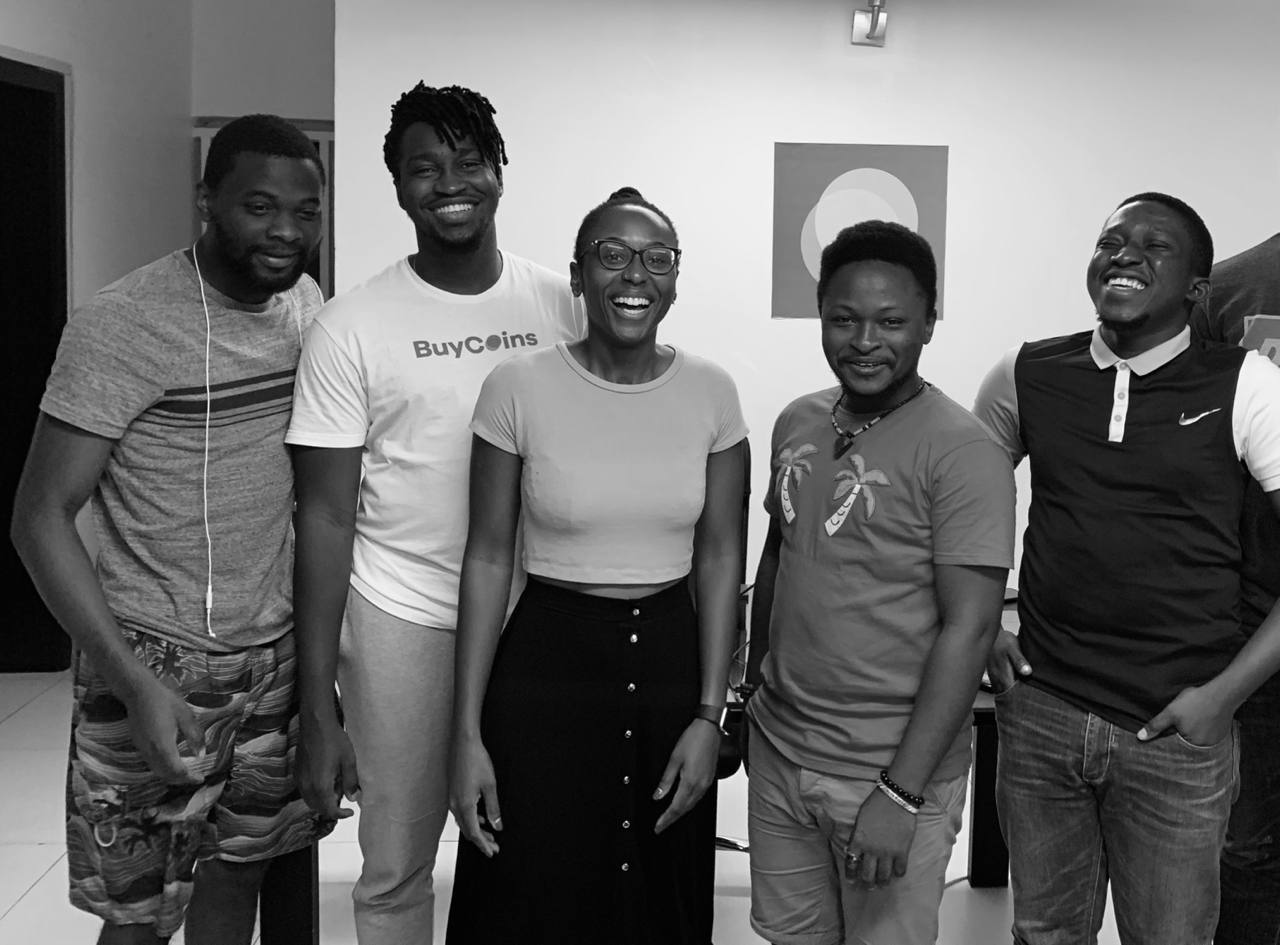
BuyCoins was only about a year old when I joined in 2018, the same year they got into Y Combinator. I was one of their early employees.
The Yaba office was still being put together. I lived in Yaba too, so it was only a five-minute bike or 10-minute keke ride, and I loved going to the office. It got even better as more people joined and the office became busier.
I started in customer success and later moved into growth. I got a few promotions and raises along the way, and at some point we started getting paid in USDC. By the time I left Helicarrier, my salary had grown roughly tenfold.
How had your relationship with money changed by then?
Once I started earning, I realised I wasn’t very good at managing money. I spent most of what I made. When I left my first job, I thought I had saved enough to last for a while, but it ran out much sooner than I expected.
I’ve gotten better with money over time, but I definitely didn’t get it right from the beginning.
How did the idea for Accrue come about?
It’s a long story. I was having a conversation with Aleph, one of Helicarrier’s co-founders, and Yanmo, one of Bamboo’s co-founders. I jokingly told them that if they merged their apps, it would make my life easier. I was complaining about how much effort it took to invest across different apps.
I used to invest in Bitcoin, Ethereum and stocks every month through dollar-cost averaging, and I had to make all the purchases manually. I wanted a simpler way to do that by automating my stock and crypto purchases in one app.
After I described the issue, Aleph said, “Why don’t you build it?” And I was like, “What do you mean, why don’t I build it?”
At the time, I was a growth lead at Helicarrier. I worked with engineers every day, but I wasn’t an engineer, and I had never pictured myself as a founder. I liked being an employee, and the prospect of being a founder didn’t excite me. They both encouraged me to give it a shot, but I wasn’t keen on doing that.
What changed your mind?
A bunch of things, really. Helicarrier had very interesting founders. Aleph was my boss, and he kept pushing me to build it. Timi, the CEO, also called me and wondered why I didn’t want to build it out.
In my head, I was like, “If you guys want to fire me, just fire me. Which one is this one that my employers are encouraging me to start a company and offering to support it?”
While I wasn’t excited about building a company at first, I was eager to solve the investing problem I had. I thought that if other people were dealing with the same thing, it would be cool to solve it for them too. Honestly, Clinton’s desire to build it with me was really what made me lock in.
How did you bring the team together?
I’d worked with Clinton at Helicarrier and knew how good he was, so I reached out to ask if he knew an engineer who might be interested. He didn’t know what I was building at first, but after I explained the idea, he was super interested and said he wanted to build it with me. That’s how he became my co-founder.
Adesuwa had joined Helicarrier a few months earlier. She was always talking about marketing and even had a newsletter, so I asked if she was interested in helping with the marketing, and she said yes.
As we kept working on Accrue, Adesuwa became very invested and told us she thought she should be a co-founder. Clinton and I agreed. Best decision ever!
And the early funding?
Aleph was our first investor, and the other two Helicarrier co-founders, Ire and Timi, also invested. Aleph also helped with a bunch of intros. Friends introduced me to people they knew too. My sister introduced me to one of her friends, and he wrote us a cheque.
I remember getting on a call to pitch Accrue to Odun Eweniyi, the co-founder of PiggyVest. Before we got off the call, she said she was going to invest. I was very excited. Having her believe in what we were building was a huge validation for me. She also gave us advice and was very supportive in the early days.
Clinton and I weren’t taking salaries at the start, which extended our runway as we brought more people onto the team.
When did you start taking a salary from Accrue?
Not until three years later.
Accrue started with investing. How did it become a payments business?
We started with dollar-cost averaging. When we expanded into Ghana, we built Cashramp so customers could fund their accounts in local currency, and made it available in Nigeria too. We also added dollar savings along the way.
Then we noticed customers using it for something else. People in Ghana were sending money to friends and loved ones in Nigeria and making payments there. They'd found a use for the app beyond what we'd originally built it for.
We watched that behaviour and followed it. We spent more time building Cashramp, and it started generating more revenue than the dollar-cost averaging product ever had.
What does your work as COO involve today?
My job is to make sure our colleagues have the tools they need to do their best work and that our users get the best experience with our products.
How did Helicarrier influence the culture you wanted to build?
All three of us loved working at Helicarrier. We liked how people were treated and trusted to do their jobs, and we wanted to bring that into Accrue.
One thing we brought with us was the idea of hiring great people and letting them do their work. No sitting on anybody’s head. Give people the tools they need, trust them and give them the freedom to do their best work.