
A few years ago, an international vacation could be planned around a familiar formula: save in naira, book a flight, get a visa if necessary, convert some money and go. Today, every part of that calculation carries more weight. The naira has lost significant value against major international currencies over the past few years, while the cost of living at home has risen sharply.
For Nigerians, the desire to travel has not disappeared. If anything, there are more places to see, more travel content to consume and more reasons to want to leave the country for a few days. What has changed is the amount of money required to make that desire a reality.
Even though Nigeria's inflation rate has eased from its 2024 peak, the World Bank says inflation remained high at 23% in 2025, with an estimated 63% of Nigerians living below the national poverty line. The Bank's 2026 assessment also notes that household incomes1 have yet to fully recover even as some macroeconomic indicators improve.
For someone earning in naira, this changes the meaning of a holiday and the question is no longer simply “Where do I want to go?” It is increasingly now, “Where can I go without putting an unreasonable amount of money into one week of leisure?”
That distinction matters because international travel is unusually exposed to currency exchange rate.. A Nigerian travelling to Europe is not only paying for a plane ticket; they are entering an economy where accommodation, food, transport and entertainment are priced in pounds or euros. The exchange rate effectively follows the traveller throughout the trip.
The initial cost of getting there is already enormous. Current airline listings, for example, show return Lagos–London economy fares from roughly ₦1.08 million on some October 2026 dates, with other dates considerably higher. KLM's current listings similarly show fares from about US$889 for some September and October dates. Those are flight costs alone, before accommodation, food, transportation or activities. Airline fares2 also change constantly, so these figures are best treated as snapshots rather than fixed prices.
For many Nigerians, that makes the traditional European holiday harder to justify, but the interesting part: people haven't stopped wanting the holiday3.
They still want to see somewhere new. They still want to eat food they haven't tried before, take pictures in new places, stay in a nice hotel and come back with stories, but the budget is constrained and this creates an interesting shift in where Nigerians look for their holidays.
This means that instead of automatically looking towards Europe, Americas, travellers are looking towards the rest of West Africa and sitting at the centre of that calculation is a country that is close enough to Lagos to make an international road trip possible: Benin Republic.
Cotonou is close enough to Lagos to be reached by road, while Benin's tourism offering extends well beyond its economic capital. The country has beaches, historical sites, the lake village of Ganvié, the royal palaces of Abomey and the coastal destination of Grand-Popo.
It gives Nigerians a way to enjoy an international holiday without necessarily making international travel the biggest expense of the holiday.
A change in the holiday budget
There is an important distinction between saying Nigerians can no longer afford to travel and saying Nigerians are becoming more selective about travel.
The latter is much closer to the story.
A person who might have once spent heavily on a long-haul trip may now decide that they would rather take two shorter regional holidays. Someone else may still want Europe but decide that this isn't the year for it. Another traveller may realise that they can get the novelty of an international trip by travelling a few hours by road rather than spending millions of naira on a flight.
This is where West Africa becomes the choice. For Nigerians, regional travel has a structural advantage that Europe cannot replicate: proximity.
Nigeria shares land borders with Benin, Niger and Chad, and a relatively short flight or road journey can also take Nigerians to destinations such as Ghana, Togo and Côte d'Ivoire. That means a Nigerian traveller does not have to choose between staying home and spending a large amount of money on a European holiday.
There is a middle ground and Benin Republic sits particularly neatly inside it.
Why Benin Republic is becoming an attractive holiday destination for Nigerians
A New Environment
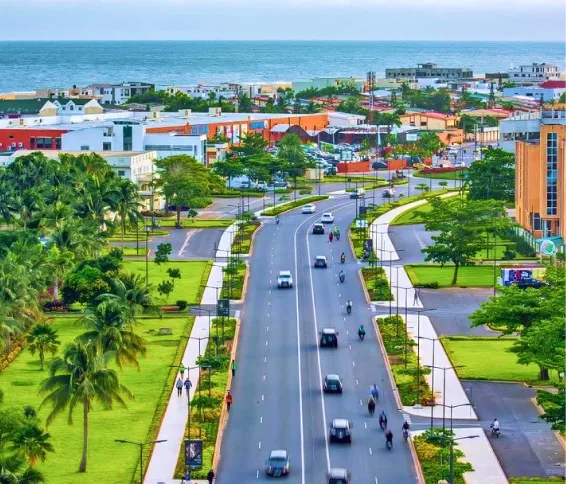
One of the biggest reasons to cross the border is simply to experience somewhere different. From Cotonou’s streets to Grand-Popo’s coastline, Benin offers a change of scenery from what’s obtainable in Nigeria. There are palm-lined roads, lagoons, coastal landscapes and a generally different pace to the cities and towns.
The Coastline & Beaches
Benin sits along the Atlantic, with beaches and coastal areas stretching through places such as Cotonou, Ouidah and Grand-Popo. You can spend a day by the water, explore quieter coastal areas, or make a weekend of it at a beachside hotel or resort. Grand-Popo is particularly known for its beaches, lagoons, coconut groves and fishing villages.
Beyond the beach, Benin has lagoons, rivers, mangroves and wetlands to explore. At La Bouche du Roy, for example, the Mono River intersects with the Atlantic Ocean, while the Grand-Popo area combines beaches with lagoons, coconut groves and fishing communities.
The Food
A holiday is also an excuse to eat differently. Benin gives Nigerian travellers the chance to explore another side of West African food, from local dishes and seafood to French-influenced cuisine and street food. The fun is less about finding food that is completely unfamiliar and more about discovering how another country interprets flavours and ingredients that may feel unfamiliar but tasteful.
A Different Culture
Benin offers a distinct cultural experience despite being Nigeria’s neighbour. French is widely used, the CFA franc is the local currency, and the country's history and traditions have been shaped by the ancient kingdoms of Dahomey, Vodun traditions and centuries of interaction with the wider Atlantic world. For a Nigerian traveller, it is close enough to feel familiar but still different from the Nigerian culture and tradition.
History You Can Walk Through
In Ouidah, the city is associated with Vodun traditions and the history of the transatlantic slave trade. Visitors can explore the Route of the Enslaved, the Temple of Pythons and the Kpassè Sacred Forest.
You can build a wider itinerary around places such as Porto-Novo, Grand-Popo, Ganvié and Abomey, each offering a different experience, from history and architecture to waterways, and beaches.
The Slower Pace of Life
Perhaps one of the biggest attractions is something you can't put on an itinerary: the pace. Away from the urgency and constant movement of Lagos, parts of Benin are slower and less hurried. A morning can be spent taking your time over breakfast, an afternoon by the beach and an evening wandering around town without trying to squeeze ten activities into one day. The point isn't that everyone in Benin lives slowly; it's that the holiday gives you permission to.
The People
Travelling is also about interacting with people. From local vendors, to guides, drivers and people you meet along the way, these encounters become part of the experience and because Benin is so close to Nigeria, it offers an easy introduction to travelling around Francophone West Africa.
Benin Republic vs West Africa vs Europe: where does your holiday budget go?
Don’t think of the three options as a competition over which destination is “better,” but as three different types of international holiday.
A European holiday generally has a higher upfront cost and greater planning requirements. A West African holiday can reduce the distance and, in some cases, the transport and visa burden. Benin takes that regional advantage even further for Lagos travellers because it can be reached by road.Benin Republic Other African destinations European destinations Getting there from Lagos Road or regional flight Usually regional flight; some road options Long-haul flight Travel time Relatively short by road Usually a few hours by air Often several hours by air Visa friction for Nigerians ECOWAS free-movement framework applies, subject to requirements Varies by destination; many ECOWAS destinations offer visa-free movement Visa may be required depending on country Currency CFA franc (XOF) Usually local currencies; CFA franc in several Francophone countries Euro, pound or other European currencies Holiday length Can work as a weekend or short break Short break to longer holiday More likely to justify a longer trip because of travel cost Beaches Atlantic coastline, including Grand-Popo, Ouidah and Cotonou Several coastal destinations across the region Extensive coastline, depending on country Culture Vodun heritage, Ouidah, Dahomey history, local arts and traditions Highly diverse West African cultures Very different historical and cultural experience Main financial advantage Low travel friction from Lagos Regional proximity Wider range of established tourism infrastructure Biggest cost consideration Transport, accommodation and FX Flights and accommodation vary by destination Flights, visas where applicable, accommodation and stronger currencies Best suited to Short international escapes and regional exploration Regional holidays and city/beach breaks Longer, more traditional international vacations
The table is not meant to say that Benin is universally cheaper than every West African destination or that every European trip is unaffordable. Travel costs vary enormously by destination, season, accommodation and how someone travels.
What it shows is where Benin's advantage comes from.
It is not simply that things in Benin cost less. It is that a Nigerian traveller can potentially eliminate one of the largest expenses associated with international travel altogether: the long-haul flight.
Under the ECOWAS free-movement framework, citizens of member states can travel within the community without a visa for stays of up to 90 days, subject to the required travel documents and applicable conditions and that removes another layer of friction for a Nigerian planning a trip to Benin.
How much does a Benin Republic vacation cost?
There’s no cost estimate set in stone. A three-day trip from Lagos should be budgeted across transport, accommodation, food, local movement, activities, currency conversion and with Accrue, you can pay directly without losing money on conversions and an emergency buffer.
Transport will depend on whether you use a bus, shared vehicle, private car or another option. Accommodation can range from budget stays to hotels, Airbnbs and serviced apartments. Food can be local and inexpensive or considerably more expensive if you choose upscale restaurants. Activities can range from simply spending time on the coast to paying for guided excursions.
Benin Republic isn't simply the “cheap” option but the cost of accessing the holiday can be relatively low for someone coming from Lagos.
When a traveller has an unlimited budget, distance is less important, but the fundamental desire remains the same: to get away, see something new and experience somewhere that isn't home.
At its core, Nigerians aren't necessarily giving up on travel, but when the naira doesn't stretch as far as it used to, they're changing the distance their money can take them.