
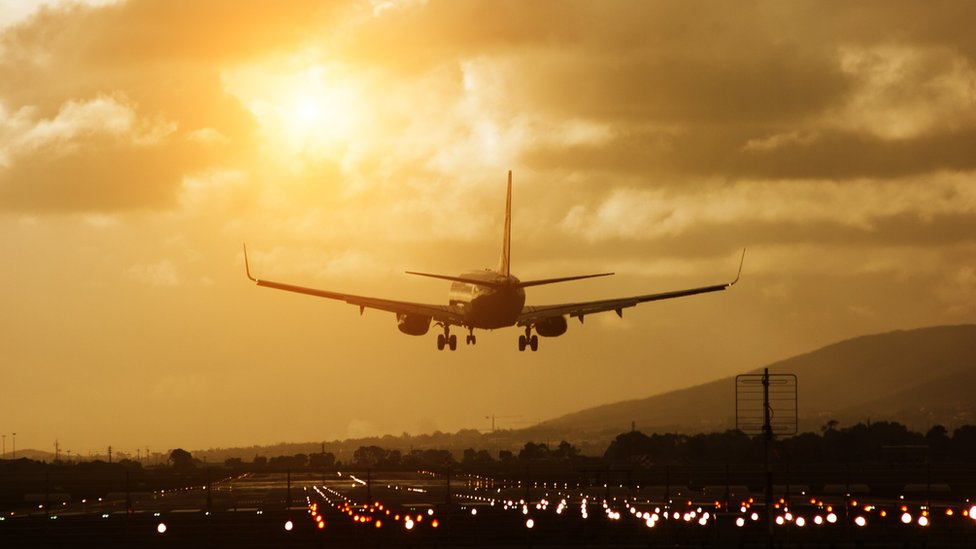
The distance between Lagos, Nigeria, and Freetown, Sierra Leone, is roughly the same as the distance between Berlin and Athens. Yet travelling between the two West African cities can involve two flights, a ferry, a seven-hour layover in Ghana and a bill approaching $2,000. Taking an alternative route through Ethiopia can add another 20 hours to the journey.
Meanwhile, a three-hour return flight between Berlin and Athens can cost around €150 ($173).
The difference goes beyond geography. Africa's aviation industry is held back by expensive operating costs, fragmented markets, restrictive government policies and poor regional connectivity. For travellers, this means that getting to a neighbouring country can sometimes be more expensive and complicated than flying to another continent.
For Amara Okeke*, a Nigerian travel creator who began documenting her journeys across Africa in 2021, the experience of exploring the continent comes with a recurring frustration: getting there. A destination might be only a few hours away by air, but the cost of reaching it can make the trip difficult to justify.
The problem extends beyond tourists. Entrepreneurs and travel agencies face similar challenges. Indirect routes turn relatively short journeys into day-long expeditions, while visa fees, airport charges and accommodation during lengthy layovers push the final bill even higher.
Africa accounts for roughly 2% of global air traffic despite being home to nearly a fifth of the world's population, according to the International Air Transport Association (IATA). The imbalance reflects more than the purchasing power of African travellers. It also exposes how difficult it is for airlines to connect cities across the continent profitably.
The economics behind expensive tickets
Consider a flight between Ghana and Lagos. The journey takes approximately 45 minutes, yet a ticket can cost as much as $600. Travelling to Dakar, Senegal, can be even more complicated, sometimes requiring a full day of travel and a four-hour layover in Abidjan, Côte d'Ivoire.
It is tempting to blame airlines for charging exorbitant fares, but the economics of operating across Africa are complicated. Fuel, aircraft maintenance, financing and insurance can be expensive. Currency fluctuations also make it difficult for airlines to manage costs, particularly when their expenses are denominated in dollars but much of their revenue comes from local currencies.
Then there is the problem of demand. Airlines operating routes with relatively few passengers must spread their fixed costs across a smaller customer base. Without enough passengers to fill seats consistently, maintaining frequent direct flights becomes difficult.
The industry's profitability figures illustrate the challenge. IATA estimates that African airlines make approximately $1.30 in net profit per passenger, compared with a global industry average of $7.90 and $28.60 in the Middle East.
This creates a difficult situation for both airlines and passengers. Carriers need to charge enough to cover their operating expenses, but higher fares make flying less accessible. As fewer people travel, airlines have even less incentive to introduce additional routes.
The comparison with Europe is not entirely straightforward. European routes benefit from dense populations, established low-cost carriers, extensive airline networks and decades of market integration. Africa's larger distances, uneven infrastructure and fragmented markets make operating conditions different.
Still, the disparity is striking. An IATA report found that intra-African flights are approximately 45% more expensive than comparable intra-European flights. Making air travel cheaper will require more than asking airlines to reduce their fares. It will mean creating an environment where more carriers can compete and operate routes sustainably.
Governments are part of the problem
Airlines are not entirely responsible for the high cost of flying across Africa. Governments contribute through taxes, airport charges and restrictions that make operations more expensive.
Average air taxes in Africa are roughly twice those in the Middle East. In countries such as Gabon and Sierra Leone, international departure taxes can approach $300.
For passengers, these charges increase the cost of travelling regardless of the distance covered. For airlines already struggling with high operating expenses, they can make less profitable routes difficult to sustain.
Government policies also restrict competition. Some countries protect their national carriers by limiting foreign airlines' access to domestic markets. While the intention may be to support local aviation businesses, the outcome can be fewer flights, limited passenger choices and higher fares.
There is a historical reason for this approach. Following independence, several African countries established national airlines as symbols of sovereignty and economic ambition. Ghana Airways and Air Afrique, for example, once played important roles in connecting cities across West and Central Africa.
Both eventually collapsed amid financial difficulties, mismanagement and other operational challenges. Their decline left significant gaps in regional connectivity.
Ethiopian Airlines has since built an extensive network connecting African destinations through Addis Ababa, while regional carriers such as ASKY have helped reconnect West African cities. However, these hub-based connections can still add considerable time and expense to journeys that would otherwise require only a few hours.
A border can be more difficult to cross than an ocean
Even when flights are available, visa restrictions can make travelling between African countries unnecessarily complicated.
The African Development Bank's Africa Visa Openness Index 2023 found that only 28% of intra-African travels were visa-free for African citizens. In 46% of scenarios, travellers needed to obtain a visa before departure.
For a Nigerian entrepreneur hoping to attend a meeting in another African country, this could mean gathering documents, paying application fees and waiting for approval before booking a flight. Travel agencies face similar uncertainty when organising holidays for clients who must coordinate flights, accommodation and time away from work.
These restrictions have consequences beyond tourism. They can make it easier for businesspeople from different African countries to meet in Dubai or London than in each other's cities. In the process, spending and commercial opportunities that could benefit African economies are diverted elsewhere.
Poor air connectivity compounds the problem. In 2023, only 28% of flights operated by African airlines were to other African countries. In comparison, 80% of flights operated by European airlines were within Europe.
The difference highlights how much more integrated Europe's aviation market has become. It also shows why building more airports will not solve Africa's connectivity problem. Passengers need affordable routes between those airports and border policies that make travelling across them easier.
Can opening the skies change the numbers?
One proposal that could change the situation is the Single African Air Transport Market (SAATM), an African Union initiative launched in 2018 to liberalise air transport and reduce restrictions on routes between participating countries.
The idea is simple: allow airlines greater access to one another's markets, encourage competition and make it easier to introduce new routes. With more carriers competing for passengers, travellers could have more choices and potentially lower fares.
Research by InterVISTAS and IATA suggests that full implementation of SAATM could reduce airfares by as much as 35% and increase air traffic by between 51% and 141%.
These projections, however, depend on governments following through. Signing an agreement is one thing; changing the regulations and policies that determine how airlines operate is another.
Even with liberalised markets, airlines will still contend with expensive fuel, currency risks and inadequate infrastructure. Not every route will automatically become profitable, and less popular destinations may require additional investment to maintain regular connections.
There is also the question of whether governments are willing to give up some control over their aviation markets to make regional integration work.
Visa reform must also happen alongside aviation reform. Cheaper flights will mean little if travellers still have to navigate lengthy application processes, unpredictable border restrictions and expensive entry requirements.
The cost of keeping Africans apart
For Okeke, travelling to another African country offers an opportunity to experience unfamiliar cultures, histories and local industries. But the benefits extend beyond individual travellers. Tourism creates business for hotels, restaurants, transport operators and local communities.
When a trip between neighbouring countries costs nearly $2,000 or requires an additional 20 hours of travel, however, the decision becomes a calculation of whether the experience is worth the money and time.
The same calculation applies to entrepreneurs deciding whether to attend a conference, artists considering regional collaborations and small businesses looking for customers beyond their home markets.
The consequences are not always visible in the price of an airline ticket. Money that could have been spent in another African city instead goes to international carriers, transit hubs and accommodation during lengthy stopovers. Face-to-face business opportunities become more expensive, while regional tourism struggles to reach its potential.
Africa's aviation problem is therefore not simply that flights cost too much. It is that the continent has yet to build a system where airlines can operate profitably, passengers can afford to travel and neighbouring countries are genuinely accessible to one another.
Fixing this will require governments to reconsider aviation taxes and market restrictions, airlines to build sustainable regional networks and countries to make cross-border movement easier.
For a continent that has spent decades pursuing regional integration, the ability to travel between its countries should be one of the most practical measures of progress. Until getting from Lagos to Freetown becomes easier and more affordable, the promise of a connected Africa will remain frustratingly out of reach.
Keep reading

Why African Freelancers Need a USD Account
African freelancers need a USD account to receive international payments, reduce unnecessary currency conversion costs, and manage income from global clients more easily.

How This Malawian Man Became "Africa Fintech Guy"
Wiza Jalakasi journey from fixing viruses on neighborhood computers to helping scale fintech infrastructure across the continent

How to Pay Contractors Across Africa
This guide explains how businesses across Africa can simplify payments to contractors, vendors, and teams.