
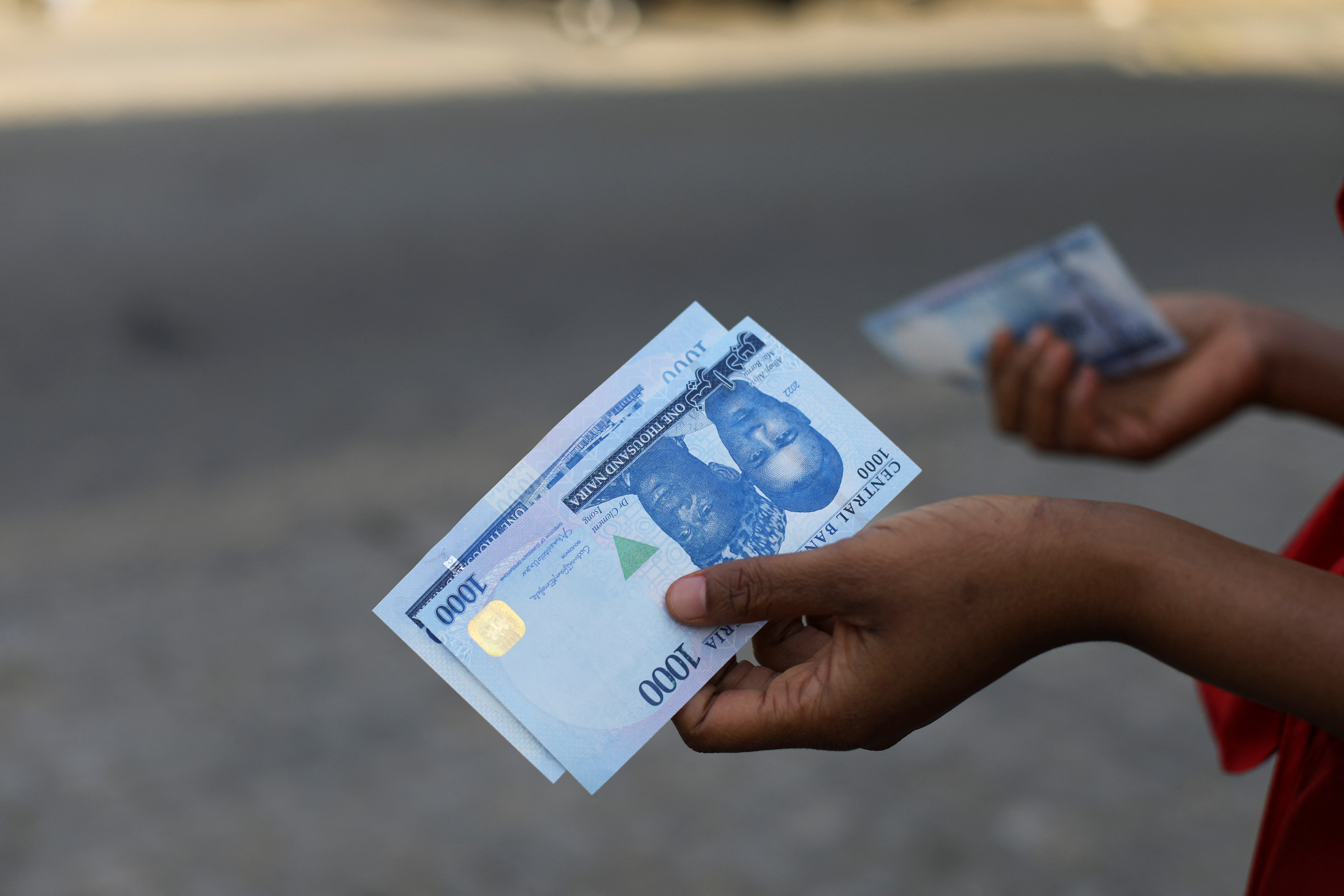
Currency devaluation can quietly reduce the value of your savings, increase the cost of imported goods, and make everyday expenses harder to manage. Even when the number in your bank account remains unchanged, the amount you can buy with that money may fall significantly.
For example, the naira has fallen from about ₦460 per dollar before the 2023 election to roughly ₦1,500 today, weakening purchasing power and driving inflation following the CBN’s move to a floating exchange rate.
Fortunately, you do not have to leave your finances completely exposed.
Learning how to protect your money from currency devaluation involves diversifying your savings, owning assets with long-term growth potential, reducing currency mismatches, and maintaining enough liquidity to handle emergencies.
This guide explains practical ways to protect your purchasing power without relying on a single currency, asset, or financial strategy.
What Is Currency Devaluation?
Currency devaluation occurs when a country deliberately lowers the official value of its currency relative to another currency, a group of currencies, or a monetary standard.
People also commonly use the term to describe currency depreciation, which happens when market forces cause a currency to lose value under a floating exchange-rate system.
Although the technical causes differ, the effect on households can be similar: the local currency buys less abroad, and imported products become more expensive.
For example, imagine that one US dollar initially costs 10 units of your local currency. If it later costs 15 units, your currency has lost value against the dollar. A product priced at $100 would rise from 1,000 to 1,500 local currency units before accounting for taxes, shipping, or retailer markups.
Currency depreciation can contribute to higher domestic prices because imported goods and production inputs become more expensive. However, the extent to which exchange-rate changes pass through to consumer inflation varies by country and over time.
Why Currency Devaluation Can Hurt Your Finances
A weakening currency can affect more than international travel. It may influence:
- Food, fuel, medicine, electronics, and other imported goods
- Rent and property costs in markets tied to foreign currencies
- Tuition or medical expenses abroad
- Foreign-currency loans
- Business equipment and raw materials
- The real value of cash savings
- Investment returns after inflation
Inflation reduces purchasing power, meaning the same amount of money buys fewer goods and services. Cash and fixed-interest investments can be especially vulnerable when their returns fail to keep pace with rising prices.
The goal is therefore not simply to accumulate more units of currency. It is to preserve and grow what those units can purchase.
How to Protect Your Money From Currency Devaluation
1. Keep an Emergency Fund in Your Spending Currency
Protecting yourself from devaluation does not mean converting every unit of local currency into investments or foreign money.
You still need local currency for:
- Rent or mortgage payments
- Utility bills
- Food and transportation
- Taxes
- Medical costs
- Unexpected repairs
Maintain an emergency fund that can cover several months of essential expenses. The appropriate amount depends on your income stability, household obligations, insurance coverage, and access to credit.
Keep this money somewhere secure and readily accessible, such as an insured bank account or an appropriate short-term savings product.
An emergency fund is not designed to maximise returns. Its purpose is to prevent you from selling long-term investments at a bad time or taking expensive debt during a crisis.
2. Diversify Across More Than One Currency
Holding all your savings in one currency creates concentration risk.
Where legally permitted, consider keeping part of your liquid savings in one or more comparatively stable foreign currencies, particularly when you expect future expenses in those currencies.
For example, holding some euros may make sense when you plan to study in Europe. Holding dollars may be relevant when your business imports products priced in US dollars.
However, foreign currency is not risk-free. Exchange rates can move in either direction, and conversion fees, account charges, taxes, withdrawal restrictions, or capital controls can reduce the benefit.
Avoid treating one foreign currency as a guaranteed safe haven. A diversified approach is generally more resilient than simply replacing dependence on one currency with dependence on another.
3. Match Your Assets to Your Future Expenses
One of the most practical currency-management principles is to align your money with your anticipated liabilities.
This is sometimes called currency matching.
Suppose you earn and save in your local currency but expect to pay university tuition in pounds sterling three years from now. Your future cost could rise sharply if your currency weakens against the pound.
Gradually building savings in pounds or using appropriately regulated investments denominated in pounds may reduce that mismatch.
Apply the same principle to:
- Overseas property purchases
- International tuition
- Imported business inventory
- Medical treatment abroad
- Foreign travel
- Retirement in another country
4. Own a Diversified Portfolio of Productive Assets
Keeping all long-term wealth in cash may expose you to inflation and currency risk.
Productive assets such as shares in profitable businesses have the potential to generate earnings, dividends, and long-term capital growth. Companies that operate internationally or earn revenue in several currencies may also provide some indirect protection against weakness in your domestic currency.
Possible options include:
- Broad domestic stock-market funds
- Global equity index funds
- International mutual funds
- Exchange-traded funds
- Retirement accounts holding diversified investments
Diversification is intended to reduce dependence on any single investment or market. It cannot eliminate the possibility of loss.
5. Consider Inflation-Linked Investments
Some governments issue bonds whose value or interest payments adjust with an official inflation measure.
Depending on your country, these may be called:
- Inflation-linked bonds
- Inflation-indexed bonds
- Real-return bonds
- Treasury inflation-protected securities
- Index-linked gilts
These securities may help preserve domestic purchasing power when inflation rises. They can be useful when devaluation drives up local prices.
Nevertheless, inflation-linked bonds have limitations. Their market prices can fluctuate, official inflation measures may not match your personal expenses, and taxes can affect your real return. They also primarily address inflation, not every consequence of exchange-rate depreciation.
Before investing, examine the bond’s maturity, credit quality, liquidity, tax treatment, inflation calculation, and redemption rules.
What Not to Do During Currency Devaluation
Fear can lead to expensive decisions. Try to avoid the following mistakes.
Converting all your money at once
A single large conversion exposes you to poor timing, spreads, fees, and a possible currency rebound.
Holding physical cash without adequate security
Foreign banknotes may help with limited emergencies, but they can be stolen, damaged, counterfeited, or difficult to exchange. Physical cash also earns no return.
Borrowing to buy foreign currency, gold, or cryptocurrency
Leverage magnifies both gains and losses. Interest expenses may continue even when the asset falls.
Chasing unregulated investments
Promises of guaranteed protection or unusually high returns are warning signs. Verify the provider and understand how withdrawals work before transferring money.
Ignoring taxes and transaction costs
A strategy can appear profitable before accounting for currency spreads, brokerage fees, fund expenses, capital-gains taxes, withholding taxes, and account charges.
Investing emergency money in volatile assets
Shares, commodities, cryptocurrencies, and long-term bonds can fall precisely when you need cash.
Assuming cryptocurrency is guaranteed protection
Some digital assets are designed to be scarce or linked to other currencies, but they can introduce extreme volatility, platform failure, fraud, custody problems, regulatory risk, and loss of access.
Stablecoins may also carry reserve, issuer, redemption, liquidity, and de-pegging risks. They should not automatically be treated as equivalent to an insured foreign-currency bank deposit.
Final Thoughts
The best way to protect your money from currency devaluation is not to search for one perfect asset. It is to build a financial system that does not depend entirely on one currency, institution, investment, or source of income.
Currency devaluation can reduce purchasing power, but preparation can make your finances more resilient. Focus on diversification, liquidity, cost control, and long-term discipline rather than predictions or panic.
You Asked. We Answered Them Here
Frequently Asked Questions (FAQ)
What is the safest way to protect money from currency devaluation?
There is no completely safe strategy. A balanced approach usually starts with an emergency fund, manageable debt, regulated financial institutions, currency matching for future expenses, and diversified long-term investments.
Should I keep all my savings in US dollars?
Not necessarily. The US dollar can also lose purchasing power or fall against other currencies. Holding all your savings in dollars simply replaces one concentration with another. Your currency allocation should reflect your expenses, goals, legal environment, and overall portfolio.
Is gold a good hedge against currency devaluation?
Gold may preserve value during some periods of currency weakness or financial stress, but it is volatile and does not produce income. It may be more appropriate as a limited portfolio allocation than as a replacement for cash, bonds, equities, and emergency savings.
Does real estate protect against devaluation?
Real estate may benefit when inflation raises rents, construction costs, and property values. However, it can also lose value and carries maintenance, financing, legal, tax, and liquidity risks.
Are stocks safe during devaluation?
Stocks are not inherently safe. However, diversified ownership of productive companies—particularly businesses with global revenue—may provide better long-term growth potential than holding all long-term savings in cash. Market prices can still decline substantially.
Should I buy foreign currency before a devaluation?
Gradual conversion may be reasonable when you have a clear future need for that currency. Attempting to predict a devaluation for speculative purposes is much riskier. Consider transaction costs, legal restrictions, deposit protection, and the possibility that exchange rates move against you.
Can cryptocurrency protect my savings?
Cryptocurrency can rise when confidence in traditional currencies declines, but it can also lose substantial value quickly. It introduces risks that ordinary bank deposits do not, including custody failures, hacking, fraud, regulation, and platform insolvency.
How much money should I hold in foreign currencies?
There is no universal percentage. A reasonable amount depends on your future foreign-currency expenses, income sources, debts, country risk, access to regulated accounts, investment horizon, and tolerance for exchange-rate fluctuations.